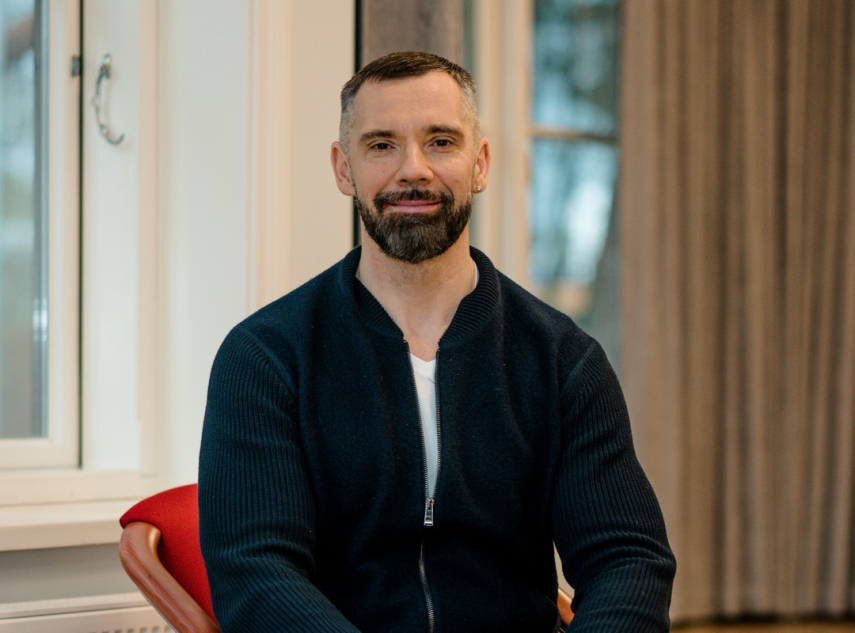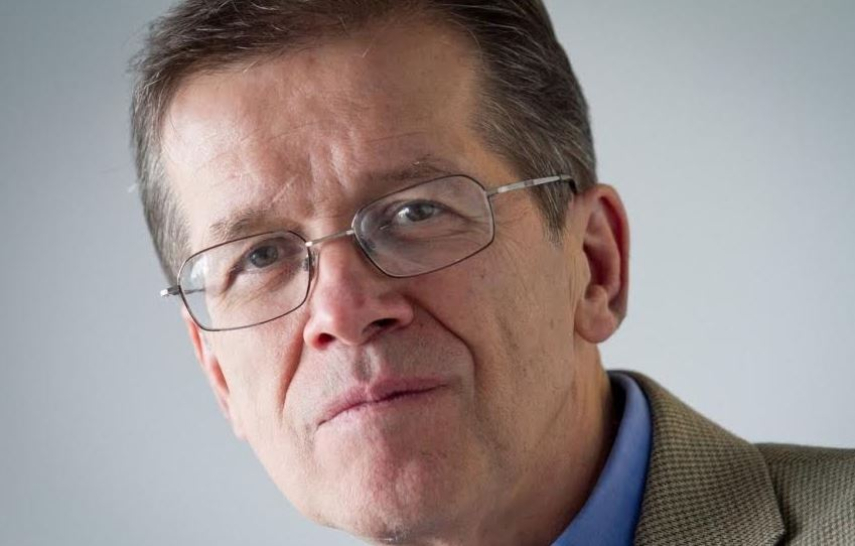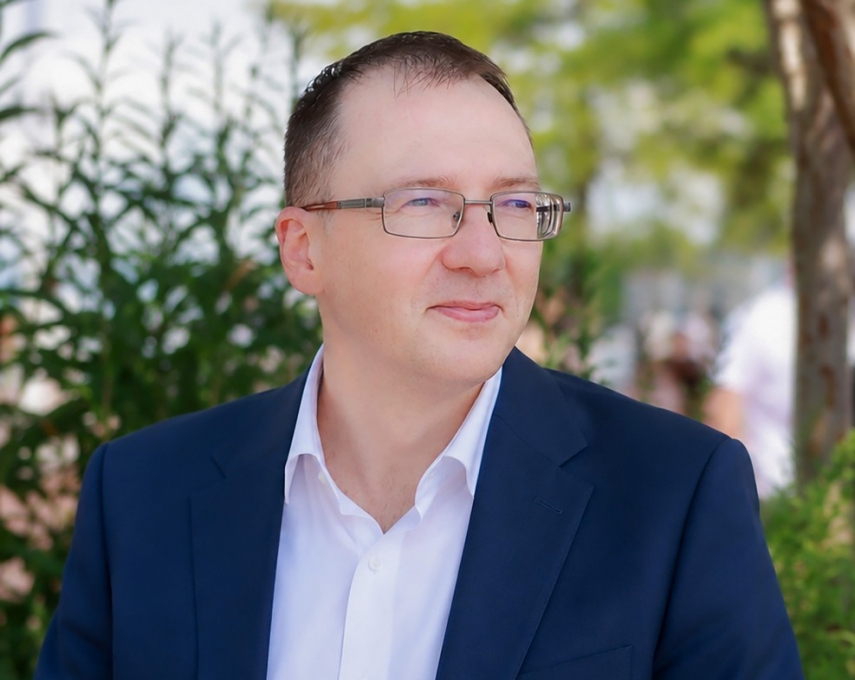
Tomas Janeliunas, a prominent Lithuanian political analyst and Professor at the Institute of International Relations and Political Science at Vilnius University, recently published his widely discussed study, Risks and Scenarios of Lithuania's Political Capture (2025/2026), which outlines several potential worst-case scenarios for Lithuania's democracy. The Baltic Times Magazine spoke with Janeliunas about his findings and their implications for the country.
In your study, the word “capture” appears repeatedly. Are you referring to a sudden political rupture or to a gradual erosion of institutions that may even come to be seen by society as normal politics”? Do you see signs of this already happening?
Not only in Lithuania but across Europe, preserving democracy is becoming increasingly challenging. We are hearing more often that countries may be only one election away from democratic backsliding. This trend is visible throughout Europe, where populist and radical parties continue to gain support. We see the possibility of radical candidates winning presidential elections in France or parliamentary elections in Germany. Lithuania has no special immunity to these developments.
After future elections, populist or radical forces could begin to dominate parliament and other institutions, eventually “capturing” them by creating barriers for opponents and civil society while entrenching themselves in power. Such a process can unfold very quickly. Gradual institutional erosion also contributes, as citizens lose confidence that the existing system can meet their expectations. However, major shifts are usually triggered by electoral victories of specific political forces.
How does Russia, which you identify as Lithuania's greatest external threat, exploit this situation? Could it attempt to do so?
Russia constantly monitors developments in democratic countries and looks for vulnerabilities. The Kremlin seeks to exploit declining trust in traditional parties and encourages social radicalisation. This is one of the most effective ways to destabilise a country and create opportunities for populist and extremist movements. Russia does not always succeed, but it will not miss an opportunity if it perceives weakness.
One of the more controversial arguments in your study is that democratic decline often occurs not through open authoritarianism but through the consolidation of interests. What does that mean? Where do you see the greatest risks of such consolidation in Lithuania today?
Over the past two years, Lithuania has seen how the openly anti-establishment party Nemunas Ausra found common ground with one of the country's largest traditional parties, the Social Democrats, eventually gaining significant influence over the political agenda. The Social Democrats invested considerable political capital in containing scandals surrounding Nemunas Ausra's leadership and maintaining the coalition simply to preserve a parliamentary majority.
In such situations, a political “parasite” can begin to control its “host”, turning the broader political system into a hostage of an unhealthy relationship. This type of interest consolidation is initially aimed at preserving a governing majority, but over time maintaining the coalition can become an end in itself or serve narrow personal interests.
You argue that Lithuania offers fertile ground for anti-system forces. Why? Is Lithuania unique in this respect?
The environment is highly favourable. Lithuania's major traditional parties have lost public trust, encouraging voter apathy and dissatisfaction with the political system. Such conditions create opportunities for radical politicians promising to fundamentally rewrite the rules of the game and transform the state.
This is not unique to Lithuania. Similar developments can be seen across the Western world. We have witnessed how easily voters can be convinced that the existing system is fundamentally flawed and requires a complete overhaul. Such messages resonate in Europe as well.
Your analysis criticises not only the government but also the opposition and political culture more broadly. What is wrong with the current situation?
Both governing and opposition parties suffer from similar weaknesses. Too much attention is devoted to short-term technical issues and struggles over power and budget allocations. Citizens increasingly feel that politicians operate in an alternative reality disconnected from everyday concerns.
As governance becomes more complex, politicians often fail to explain decisions in a simple and understandable way. Growing technocracy alienates ordinary people, while many talented citizens avoid political engagement because they see politics as excessively complicated and dominated by rituals rather than problem-solving.
Politics has long been viewed as a “dirty” profession, and politicians themselves bear much of the responsibility. When voters struggle to name a political party untouched by corruption allegations, low trust in political institutions is hardly surprising.
Does Lithuania's media still act as a democratic watchdog, or is it becoming a tool of political and economic influence?
Lithuania's media remains strong and competitive. Independent media outlets and investigative journalists continue to expose information that is often inconvenient for politicians. The resignation of former Prime Minister Gintautas Paluckas is one example where journalism played an important democratic oversight role.
However, media organisations can also become instruments of influence. Politicians often seek greater control over the media, particularly public broadcasters. Poland has provided a clear example of this, and similar tendencies have become increasingly visible in Lithuania in recent years.
One of your most striking scenarios involves public apathy, where people formally live in a democracy but no longer believe they can influence outcomes. Are we approaching that point?
Election turnout provides the clearest indicator. Lithuania has experienced relatively low participation rates for decades, and turnout has generally been declining. If this trend continues, it will be a worrying sign.
When citizens no longer care who forms the government, political opportunities emerge for forces that would otherwise struggle to gain power. In my scenarios, such passivity creates conditions under which radical groups can ultimately capture the political system.
To what extent do the risks of political capture stem from domestic factors rather than external developments such as the war in Ukraine, European transformation, security crises and global polarisation?
Lithuania does not exist in isolation. People see international crises and feel external threats. For some, these developments create resignation and a sense that a small country can do little against global challenges.
Fear can also undermine confidence in traditional politics. Some citizens may doubt whether established politicians can ensure security. Reports of military drones or smuggling balloons entering Lithuanian airspace, combined with recurring corruption scandals, reinforce an atmosphere of distrust.
If you had to identify one factor that could most effectively reduce the risk of political capture, what would it be?
I place the greatest faith in active citizens. Not in an abstract concept of civil society, but in individuals willing to speak publicly, conduct investigations and expose corruption or wrongdoing.
The more engaged and active citizens a country has, the stronger its democracy becomes. No special laws or reforms are required for this. The key is not to remain passive. At the same time, state institutions and political parties must not be allowed to restrict democratic processes or limit media and civic freedoms.
What do you think is missing from the work of most political scientists and analysts?
Political scientists and analysts often focus too heavily on immediate events. Media attention naturally centres on what is happening today or this week, creating a cycle of short-term commentary.
What is often lacking is a longer-term perspective. Analysts should not only explain what a political statement means today but also assess its significance for the country's future. Too much analysis contributes to daily political noise instead of identifying the genuinely important developments.
My aim in preparing these scenarios was to highlight political trends that could eventually produce dangerous outcomes. While there is still time to stop them, we should do so. Otherwise, we risk noticing only too late that democracy has already been lost.
The study was commissioned by European Parliament member Dainius Zalimas, who believes Lithuania's political system has in recent years drifted towards potentially dangerous anti-democratic tendencies. The objective was to provide a structured, evidence-based assessment of where current trends could lead if left unaddressed.

Please enter your username and password.


2026 © The Baltic Times /Cookies Policy Privacy Policy