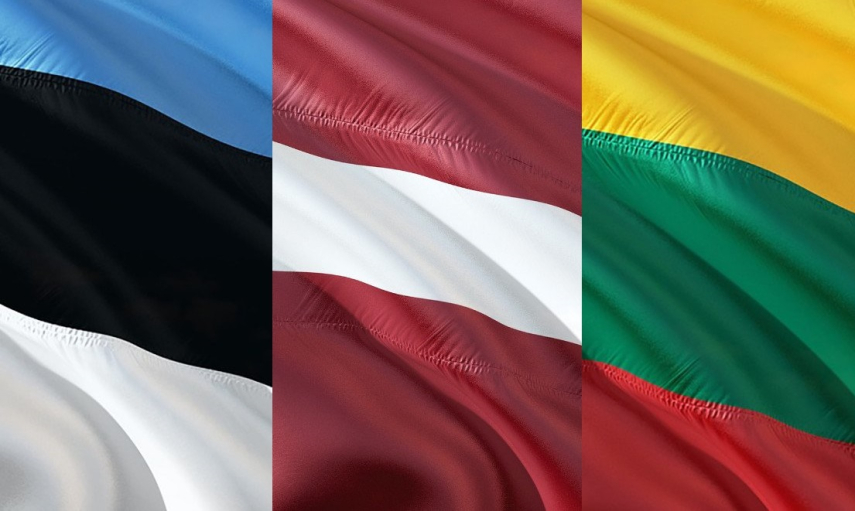
Near Cathedral Square in Vilnius stands a simple inscription commemorating the Baltic struggle for freedom: one word — “miracle.”
For the Baltic states, independence was never inevitable. It was earned through resilience, sacrifice, and the refusal to surrender sovereignty to a larger imperial power determined to reclaim it.
That history matters now more than ever, because the next great contest over sovereignty is already underway — not only on land, sea, air, space, or cyber networks, but inside the human mind itself.
We call this cognitive warfare.
And the Baltic states understand the threat better than almost anyone.
For years, Russia has refined the art of manipulating public perception through reflexive control operations: carefully engineered information campaigns designed not simply to change what people think, but to shape how they think and how they make decisions. Moscow exploits grievances, amplifies division, and erodes trust in democratic institutions from within.
Artificial intelligence is now accelerating this threat dramatically.
Today’s AI systems are extraordinarily powerful at recognizing patterns and amplifying content. That becomes dangerous when malign actors flood the information ecosystem with coordinated narratives. Algorithms interpret these narratives as authentic “trends,” unintentionally becoming force multipliers for disinformation.
But while AI in the hands of Putin creates new threats in the region, it also creates extraordinary opportunities for democratic societies willing to act boldly.
This is the great equalizer of the AI age.
Historically, smaller nations survived by making aggression too painful for larger adversaries — the “porcupine strategy” of sharp defensive quills. But AI-powered cognitive warfare changes the equation. Defense and offense increasingly become one and the same.
The Baltic states no longer need only quills. They can develop claws.
AI-enabled systems can now identify malign narratives early, map how they spread, determine who is amplifying them, and detect whether they are organic or manipulated. Instead of reacting after instability takes hold, democracies can anticipate and disrupt hostile campaigns before they metastasize.
The future battlefield is not simply physical territory. It is the decision-making environment itself.
Russian strategy already reflects this reality. The Kremlin understands that weakening democratic cohesion can be more effective than direct military confrontation. A divided society is easier to intimidate, destabilize, and coerce.
What makes the next generation of AI especially concerning is its movement beyond simple pattern recognition toward causal reasoning and counterfactual analysis. Future AI systems will not merely predict behavior; they will model vulnerabilities, emotional triggers, and decision-making pathways with frightening precision.
Imagine an AI system capable of determining not only what message influences a voter, soldier, or citizen, but when they are most psychologically vulnerable to receiving it. Instead of broadcasting propaganda broadly, adversaries will be able to personalize cognitive attacks at scale — engineering distrust, anger, apathy, or fear with unprecedented sophistication.
This is not science fiction. It is the trajectory of the technology now being built.
Democracies cannot afford to remain passive. AI systems capable of identifying and countering these threats in real time are within reach to map the information environment, track narrative propagation, and distinguish authentic public sentiment from coordinated manipulation.
That capability matters because cognitive warfare requires speed. Traditional institutions often respond slowly while hostile narratives spread instantly across digital ecosystems.
But the challenge is larger than any one company or platform. It requires democratic governments, NATO allies, technology firms, and civil society to recognize cognitive sovereignty as national sovereignty.
The Baltic states are uniquely positioned to lead this effort. They combine hard-earned historical understanding with advanced digital infrastructure and a clear-eyed appreciation of Russian tactics. They understand that deterrence in the 21st century is no longer measured only in tanks, missiles, or troop deployments.
It is measured in societal resilience, informational awareness, and the ability to maintain democratic cohesion under sustained pressure.
Russia is already fighting this war against Europe and the West — not primarily for territory, but for narrative dominance.
The good news is that free societies possess enormous advantages when they choose to innovate. Open systems adapt faster. Democracies generate creativity. Free people are harder to control than authoritarian regimes assume.
The Baltic miracle proved that small nations can outlast empires.
The next chapter of that story may prove that they can out-innovate them as well.
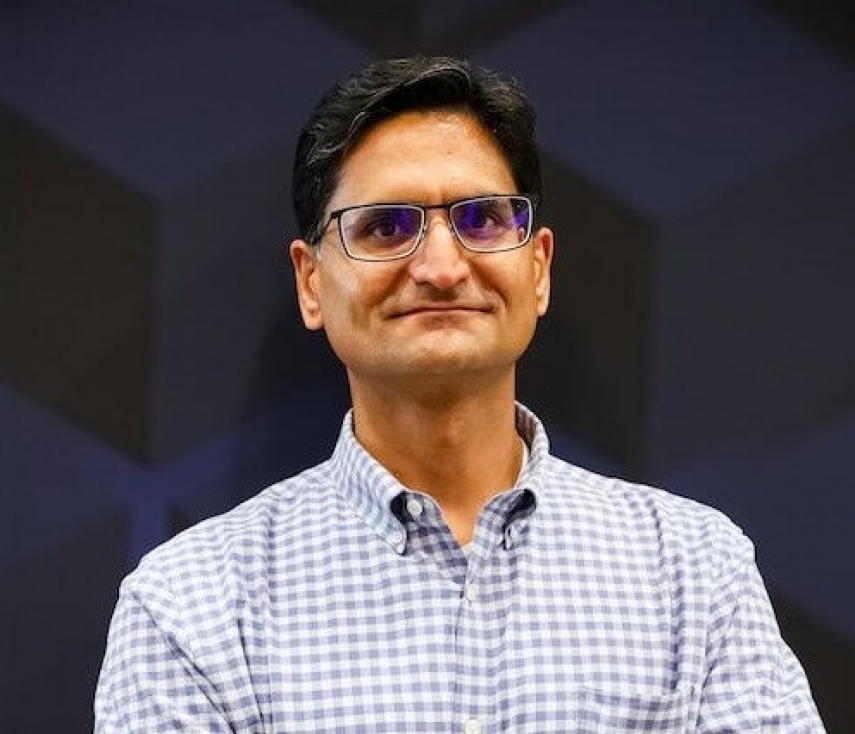
Dr. Anshu Roy is the Founder of Rhombus Power, the premier battle-tested AI predictive intelligence provider for the national security enterprise of the US and its closest allies

Please enter your username and password.

2026 © The Baltic Times /Cookies Policy Privacy Policy