Lithuania is increasingly attracting larger and more sophisticated foreign investment projects as it shifts its focus from cost competitiveness to long-term value creation. Elijus Civilis, General Manager of Invest Lithuania, the country’s investment promotion agency, told The Baltic Times that the country's future growth will be particularly driven by high-value sectors such as fintech, defence, life sciences and advanced manufacturing.
What is remarkable in Lithuania’s investment picture in 2025 and, so far, in 2026?
2025 closed a five-year strategic period during which Lithuania crossed the €1 billion mark in attracted FDI capital – a milestone that reflects a shift in the type of projects we're winning. In 2025, we confirmed 31 FDI projects expected to create 2,139 new jobs, with €196 million committed to fixed assets.
Several names stand out. In fintech, the bigger story is the sector itself maturing – moving from launchpad to a base for scale. Lithuania remains the EU’s largest fintech hub by number of licences issued, with 248 companies and nearly 8,000 professionals operating here, and sector revenue grew almost fourfold between 2020 and 2024. The latest wave of activity reflects that depth: US giant Robinhood received its MiCA licence and launched operations in Lithuania, fintech unicorn Tide expanded its technology centre, and Checkout.com acquired Lithuania-licensed stablecoin issuer Blue EMI and is establishing a technology centre here – a clear sign of growing strategic M&A interest in the businesses being built in Lithuania.
In defence manufacturing, construction began on Rheinmetall’s artillery ammunition plant, and a memorandum was signed with KNDS Deutschland, Rheinmetall Landsysteme and Lithuanian state-owned energy group EPSO-G on Leopard 2 A8 main battle tank assembly and maintenance infrastructure in Lithuania.
In business services, we saw a clear shift toward higher value-added activity: Danish greentech company Watts established a software competence centre, and Estonia’s Nortal expanded in Vilnius and Kaunas with an engineering team focused on AI and defence solutions.
It’s not only foreign investors driving momentum – Lithuanian companies are building serious industrial capability too. In life sciences, Northway Group’s BioCity in Vilnius is on track to become Europe’s largest biotech campus, with around €7 billion in total investment projected over the next decade. And this year, Pentasweet broke ground on a €65 million brazzein production facility at the Vilnius City Innovation Industrial Park, the second of its kind in the world and the first in Europe.
What I’d highlight as the bigger story: fewer projects, bigger impact. Lithuania is no longer competing on cost – we’re competing on quality, and that means more complex projects, longer negotiations, but significantly higher long-term value for the country.
Companies that have recently announced closures, restructuring, or significant downsizing in Lithuania include Vipps MobilePay, Fazer Lietuva, Danske Bank, Teleperformance LT, Baltika Group, Espersen Lietuva, HCL Technologies Lithuania, and Telia Lietuva. The reasons vary, but are there any underlying factors behind them?
Some movement of investment is a natural part of any healthy FDI ecosystem. Each of these decisions reflects a company’s own business logic, such as cost optimisation or wider restructuring, and these moves usually affect more than one country, not Lithuania alone. From our direct conversations with the companies involved, the reasoning consistently points to internal strategic and cost considerations rather than to anything specific about Lithuania as a location.
What is Lithuania doing differently to compete with Poland, Estonia, and the Czech Republic for major international investments?
Lithuania’s core advantages are well known to investors evaluating the region: access to highly qualified talent, mature and balanced sector ecosystems, and a clear, predictable regulatory environment. But in today’s environment of global uncertainty, our size has become a genuine competitive advantage – it allows us to align quickly on priorities and act on them.
The clearest example is the Investment Highway, which entered into force on 1 November 2025. It’s one of the most investor-friendly frameworks in the region – large projects can now move from decision to construction roughly twice as fast as before. Concretely, this means:
Construction can begin immediately after a construction notice is published, without waiting for traditional permitting, while environmental impact assessment and community involvement remain in place; phased construction is allowed – work can start on completed parts of the technical project while other sections are still being designed; land-use procedures and zoning changes are accelerated; foreign employees can start work in Lithuania from the day they apply for a temporary residence permit; qualifying projects can access 0% corporate income tax for up to 20 years; eligible projects receive National Importance status.
Invest Lithuania has been designated as the single coordination point for Investment Highway projects, actively managing inter-agency processes and ensuring timeline compliance
Is Lithuania losing out on potential investors because of rising labour costs and a shrinking population?
Cost is one of many factors that investors weigh, and to be direct – Lithuania is no longer a low-cost country, and we don’t try to position ourselves as one. Where we remain highly competitive is in advanced, high value-added manufacturing and services, where talent, infrastructure and the innovation ecosystem matter as much as cost.
How concerned is Invest Lithuania about geopolitical risks and their impact on foreign investment decisions?
There’s a lot of uncertainty in the world right now. The war in Ukraine, instability in other regions, shifting trade policies including new US tariffs – businesses and countries alike have to operate in conditions where stability and predictability can no longer be taken for granted.
That said, I'd push back on the assumption that geopolitical risk automatically equals investment risk for Lithuania. The honest question today is which countries are most resilient under uncertainty – politically stable, deeply integrated into NATO and the EU, with credible defence postures and diversified energy systems. By those measures, Lithuania performs strongly. We’ve ended energy dependence on Russia, synchronised with the continental European electricity grid, and we’re investing heavily in our own defence – Lithuania has committed to spending up to 6% of GDP annually on defence between 2026 and 2030.
The current geopolitical reality is also actively creating opportunities for Lithuania in sectors aligned with the new European reality – most clearly in defence. Rheinmetall’s ammunition plant, the Leopard 2 A8 infrastructure agreement with KNDS, and the €300 million Vytis initiative, launched by the Ministry of the Economy and Innovation to strengthen the domestic defence industrial base, show that we’re not simply absorbing geopolitical pressure, we’re building industrial capability around it. By 2030, the goal is to triple defence sector exports and attract at least five well-known foreign defence companies, with the sector’s added value exceeding €1 billion.
So yes, we monitor geopolitical risks closely, but Lithuania’s response has been to turn resilience itself into part of the investment proposition.
What are the latest initiatives and decisions to boost Lithuania’s investment targets?
In addition to the Investment Highway and the Vytis initiative, the Ministry of the Economy and Innovation is now preparing a broader package aimed at accelerating Lithuania’s transition toward higher productivity and more technology-intensive growth – with an ambition of reaching a €100 billion economy, a level that would require a significant expansion of Lithuania’s export base in goods and services.
The proposed measures include expanding the investment project tax relief for advanced manufacturing, with a 200% deduction on reinvested profits; simplifying R&D tax relief and how qualifying expenses are recognised; introducing a personal income tax incentive for individuals investing in early-stage startups; expanding infrastructure financing for Free Economic Zones and industrial parks; creating a new incentive instrument specifically for very large, high-productivity investments; strengthening domestic electricity generation and energy independence; improving business access to capital and reducing borrowing costs.
According to the Ministry’s estimates, expanding the investment project tax relief alone could add around 0.25 percentage points to annual GDP growth, with every euro of foregone tax revenue generating between €3.70 and €5 of additional GDP over time.
For investors, the underlying message is that Lithuania is consciously moving toward higher value-added, more productive, more technology-intensive investment. The policy framework being built around these forthcoming measures is designed to make that the most attractive proposition in the region.
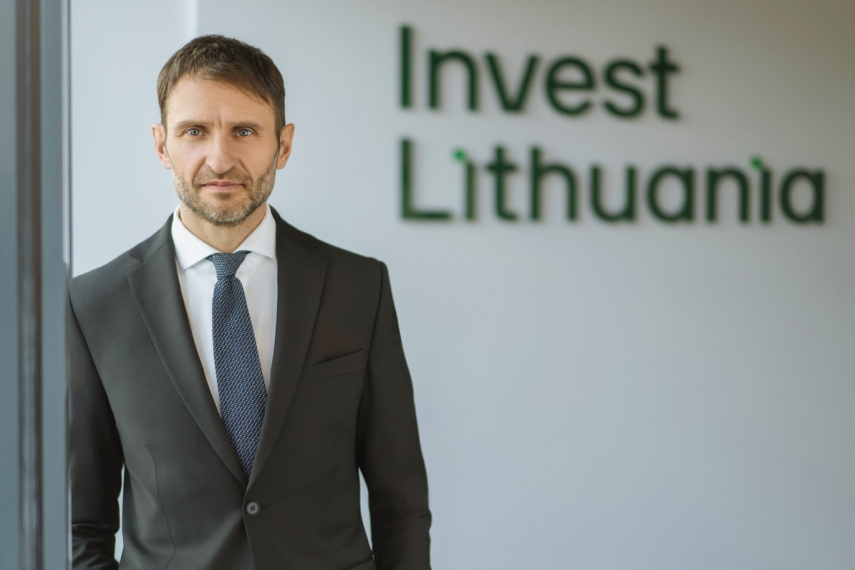
Elijus Civilis is General Manager of Invest Lithuania, the country’s investment promotion agency

Please enter your username and password.

2026 © The Baltic Times /Cookies Policy Privacy Policy