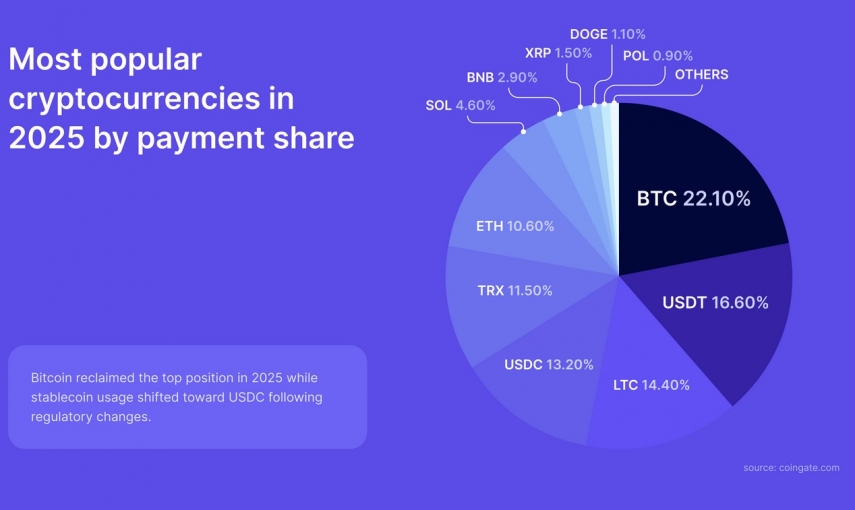
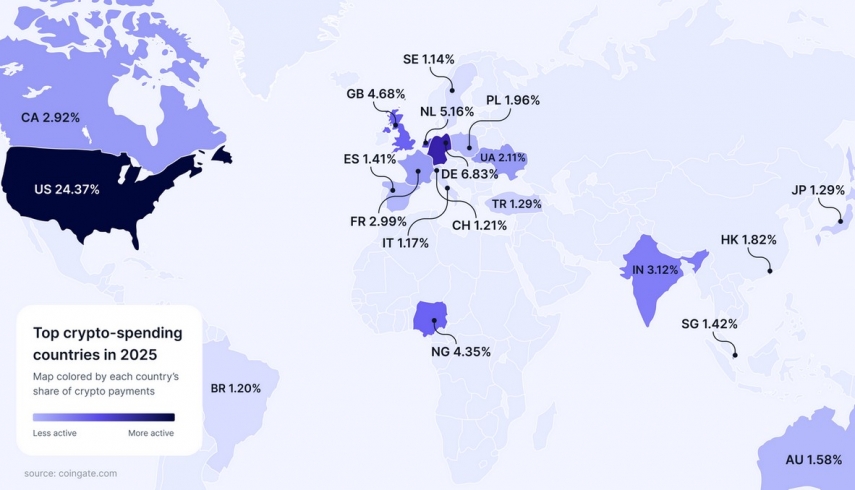
CoinGate, a Vilnius payments company holding both a MiCA and a Payment Institution license, says the hard part is no longer the technology or the law. It is that most merchants don't realize the demand is already there.
Every 22 seconds, somewhere in the world, a payment moves through CoinGate in crypto. Most of the businesses that could be receiving those payments never see them. The customer looks for the option, doesn't find it, and quietly goes somewhere that has it.
That is the problem the Vilnius-based company keeps pointing to. Founded in 2014 and operating as UAB Decentralized, CoinGate has processed more than 7 million crypto payments, with over 1.4 million in 2025 alone. In its first full year it handled roughly 1,100 orders. Ten years on, that figure has passed 1.4 million. These are international buyers who find crypto faster or cheaper than a card that may not work across borders. The demand is not theoretical, and it is not shrinking.
“What most businesses still miss is that the demand already exists, and it walks past their checkout every day,” says CEO Vilius Semenas.
In December 2025, the Bank of Lithuania granted CoinGate a license under the EU's Markets in Crypto-Assets framework, known as MiCA, alongside a Payment Institution license. That combination is still rare. It places the company among a small group of crypto payment providers operating with the same class of authorization as traditional payment processors, rather than under national exemptions or offshore arrangements. For a merchant, the practical effect is simple: working with a licensed provider carries no more regulatory exposure than working with any other payment processor. The long-standing “wait and see” objection has lost its footing.
The demand shows up first in industries that sell globally and deliver digitally. In the proxy and VPN space, CoinGate says crypto accounts for anywhere from 30 percent to 75 percent of payments depending on the provider, with clients including NordVPN, IPRoyal, and PlainProxies. One of them, Byteful, reported a 270 percent increase in crypto sales after switching. The same pattern is spreading into hosting, SaaS, and gaming. Once one player captures that audience, competitors tend to follow.
The appeal for merchants goes beyond reaching new buyers. Crypto payments are final, which removes chargebacks. Cross-border fees run lower than the 3 to 5 percent cards typically take. Settlement arrives in euros, so a business never has to hold crypto, and payouts to suppliers and partners can be automated and sent in batches. On the way in, a merchant can accept payments from customers in more than 180 countries.
Much of the momentum now sits with stablecoins, which offer the speed and cost of crypto without the volatility. CoinGate says USDC payments grew 1,264 percent year over year in 2025, after MiCA made USDC the compliant choice across Europe. The company recently added support for EURC, a euro-pegged stablecoin, across payments, payouts, refunds, deposits, and conversion. It's the same direction Stripe, PayPal, and Visa are all moving, which says less about hype and more about where moving money is actually heading.
Getting started is no longer the hurdle it once was. Integration can take as little as a day, and the merchant never has to touch crypto with settlements in EUR or USD. Recurring billing is already live, and persistent payment channels that let a merchant's clients top up at any time are launching soon.
“European businesses spent a decade waiting for crypto payments to feel safe,” says Semenas. “That moment arrived, and most of them haven't noticed. The ones who notice first will get a head start while the rest will spend years catching up.”
CoinGate was founded in 2014 in Vilnius and operates as UAB Decentralized. It holds both a MiCA license and a Payment Institution license from the Bank of Lithuania. More at coingate.com.

Please enter your username and password.


2026 © The Baltic Times /Cookies Policy Privacy Policy