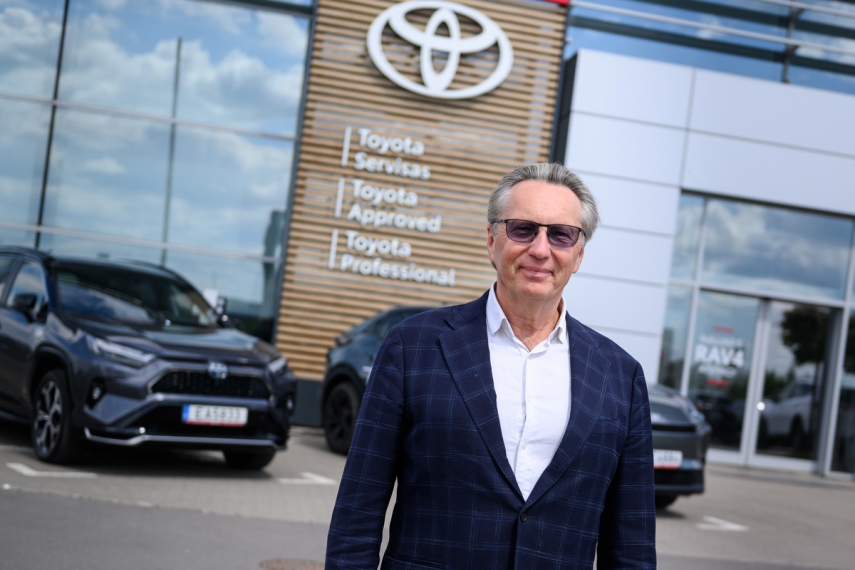
In an era when customers have more choice than ever before, UAB MOTOTOJA, the official sales and service center for Toyota and Lexus vehicles in Vilnius, Lithuania, believes lasting loyalty is earned not through discounts, but through trust and inspiration from two core Japanese principles – Omotenashi, the art of anticipating and caring for customers' needs, and Kaizen, the philosophy of continuous improvement. “Together, at MOTOTOJA, these values shape everything from customer service and employee development to long-term relationship building,” Edmundas Povilauskas, Director of MOTOTOJA, told The Baltic Times Magazine.
“Over the past two decades, Lithuania's automotive market has changed dramatically. Customers today arrive at dealerships better informed, more digitally connected and with far higher expectations than previous generations. Today's customer is not only choosing a vehicle – they are choosing the entire experience: service, trust, technology and a long-term relationship,” he emphasized.
In the third quarter of 2025, Toyota was the best-selling automotive brand in the Baltics, with 4,184 new vehicles registered, ahead of Škoda and Volkswagen. Lithuania is Lexus' largest Baltic market, benefiting from the region's largest new-car market and the strong presence of the official Lexus network operated by MOTOTOJA.
Yet despite rapid technological change, at MOTOTOJA, some priorities remain unchanged.
"Despite all the changes in the automotive industry, customers still value trust, professionalism and genuine care above everything else," says Povilauskas.
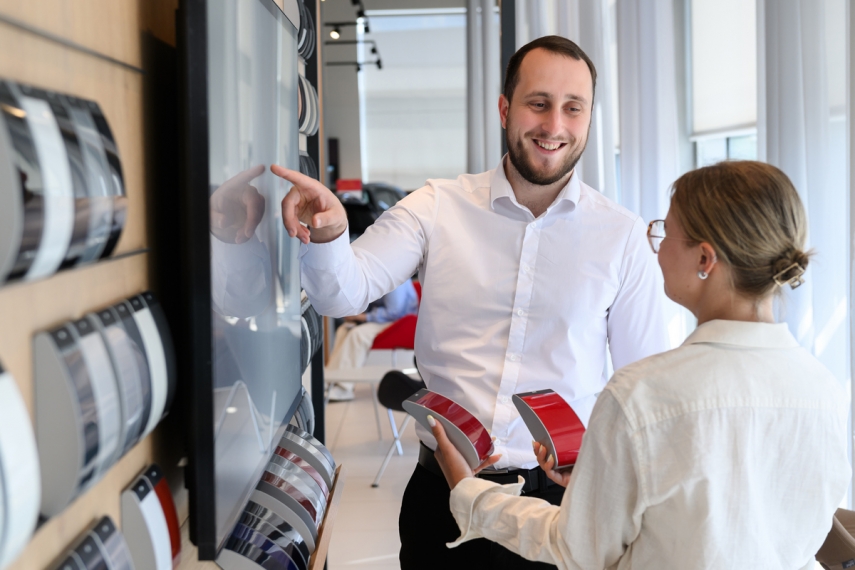
These values align closely with Omotenashi, a Japanese concept deeply embedded in the Lexus philosophy. Unlike traditional customer service, Omotenashi focuses on anticipating customer needs before they are expressed. At MOTOTOJA, this philosophy is reflected in meticulous preparation, personalized communication and attention to detail throughout the customer journey.
“Omotenashi is about caring for the customer before they even ask for help. Often it is the smallest details that make people feel genuinely valued,” Povilauskas notes.
Whether it is a seamless showroom visit, proactive communication or returning a vehicle in immaculate condition after servicing, the aim is to create a sense of genuine hospitality rather than simply completing a transaction.
At the same time, MOTOTOJA embraces another cornerstone of Japanese business culture – Kaizen, or continuous improvement. Rather than viewing improvement as a periodic exercise, Kaizen encourages organizations to seek small daily enhancements that compound into significant long-term results.
“At MOTOTOJA, Kaizen is not a theory – it is a daily habit of constantly asking how we can do things better, faster and with higher quality,” says Povilauskas.
This philosophy extends beyond processes to people. Employees are encouraged to share ideas, challenge existing practices and continuously develop their professional skills. Mistakes are viewed not as failures but as opportunities for learning and improvement.
The effectiveness of these principles is perhaps best reflected in customer loyalty. In an increasingly competitive market, where new automotive brands and technologies appear regularly, retaining customers has become more difficult than ever.
“Loyalty has become a luxury in today's automotive market because it cannot be bought with discounts or short-term promotions – it is earned over years of consistently delivering on promises,” underscores Povilauskas.
Many MOTOTOJA customers have remained loyal to the company for decades. Some who purchased Toyota or Lexus vehicles years ago now see their children choosing the same brands and returning to the same dealership.
“Many of our customers first chose Toyota or Lexus themselves, and years later their children make the same choice independently. Trust is passed from one generation to the next,” he says.
This generational loyalty is built on experience. Customers who repeatedly return signal something more meaningful than satisfaction.
“When a customer returns after several years, chooses the same brand again and recommends it to family and friends, it means their expectations were not only met but exceeded,” Povilauskas explains.
Trust remains central because purchasing a vehicle is unlike most consumer decisions.
“A vehicle is not an impulse purchase – it is a long-term decision built on trust,” he says.
For this reason, MOTOTOJA places considerable emphasis on maintaining relationships long after the sale is completed. Customers are invited to events, model launches and community activities, reinforcing personal connections with both the brand and dealership staff.
“Customers return to MOTOTOJA not only because they need a service, but because they trust the people behind it,” says Povilauskas.
As Lithuania and the Baltic States continue to embrace electrification, digitalization and changing mobility trends, MOTOTOJA sees opportunity rather than disruption. The company reports growing interest in hybrid and electric vehicles, while Toyota remains a market leader and Lexus continues to strengthen its position in the premium segment.
Through all these changes, the company believes one principle will remain constant.
“The customer who returns again and again is our greatest achievement and the clearest measure of success,” concludes Povilauskas.
In a business increasingly shaped by technology and innovation, MOTOTOJA's experience suggests that the most enduring competitive advantage may still be profoundly human: earning trust through continuous improvement and genuine care. The Japanese principles of Kaizen and Omotenashi may have originated thousands of kilometres away, but they are proving remarkably relevant in shaping customer loyalty in Lithuania today.

Please enter your username and password.

2026 © The Baltic Times /Cookies Policy Privacy Policy