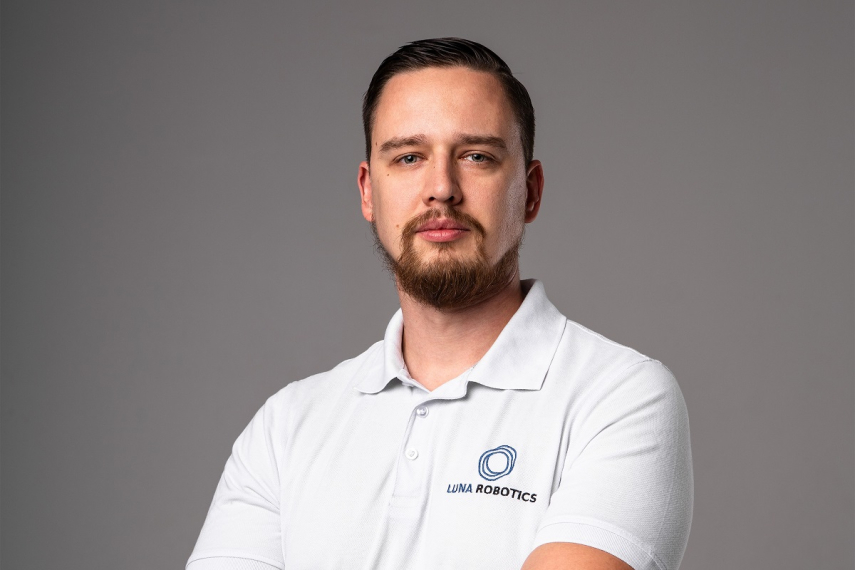
Photo: Donatas Budvytis, Chief Technology Officer at Surfshark
As artificial intelligence becomes an everyday technology, it is also giving cybercriminals increasingly powerful tools. Donatas Budvytis, Chief Technology Officer (CTO) at Surfshark, a cybersecurity company headquartered in Vilnius, says digital resilience will increasingly depend not only on technology, but also on people’s ability to recognise sophisticated scams and protect their digital identities.
“Both individuals and organizations are facing a sharp increase in AI-powered social engineering cyberattacks, which often lead to account takeovers, data breaches, and exposed sensitive data,” Budvytis told The Baltic Times.
Yet, according to him, the human factor is becoming particularly important. Companies face attacks on vulnerabilities in their supply chains, often involving human error, while individuals are increasingly confronted with convincing scams across email, social media, messaging applications and mobile phones.
“Lithuania is no exception. Fraudulent SMS messages sent to Lithuanian residents increased nearly fourfold in early 2026 compared with the same period of 2025. Such cyberthreats are spreading quickly and becoming more convincing because of AI. This is happening across all channels, including email, social media, and messaging apps,” he says.
AI has fundamentally changed the scale at which fraud can be conducted. Criminals can now produce personalised phishing messages, cloned voices and deepfake material with relatively little effort.
“Artificial intelligence has empowered bad actors, enabling them to increase the sophistication of their attacks with minimal effort,” Budvytis says.
The financial consequences are already substantial. Deepfake-related fraud had caused an estimated $3.7 billion in losses worldwide by mid-2026, according to Surfshark research.
For Surfshark, resilience therefore means reducing the opportunities criminals have to exploit people and their personal information.
“Digital resilience means empowering individuals to safeguard themselves against cyberthreats such as scams and fraud,” Budvytis says. “It involves minimizing online exposure to keep sensitive information secure, thereby preventing data leaks, financial loss, and reputational damage.”
Surfshark has sought to broaden its products accordingly. Alongside its VPN services, the company has introduced a web content blocker, email scam checker and scam text protection. Its technological developments include 100 Gbps servers, FastTrack technology and Everlink.
Another milestone was Dausos, Surfshark’s proprietary VPN protocol and the company’s first consumer-focused VPN protocol developed from scratch.
Yet technology alone cannot eliminate cyber risk. Budvytis stresses that individuals must remain informed and keep their systems updated.
“No individual is immune to the threat of cyberattacks, and Lithuanians are no exception,” he says.
The challenge is likely to become more acute over the next five years. As AI tools become cheaper and easier to operate, criminals are expected to rely increasingly on impersonation and manipulation rather than purely technical attacks on computer systems.
“Automated voice cloning and personalized targeted phishing campaigns will soon become standard tactics, making vigilance and ongoing security awareness essential to mitigate organizational and individual risk,” Budvytis says.
Surfshark, meanwhile, plans to continue expanding its security tools as the threat environment changes.
“Our mission is to build the most beloved security product for everyone,” Budvytis says. “Surfshark will keep developing and enhancing key security solutions against complex online scams and cyberthreats.”
In an environment where AI can make fraud faster, cheaper and more convincing, resilience increasingly means combining technological protection with informed and vigilant users.

Please enter your username and password.


2026 © The Baltic Times /Cookies Policy Privacy Policy