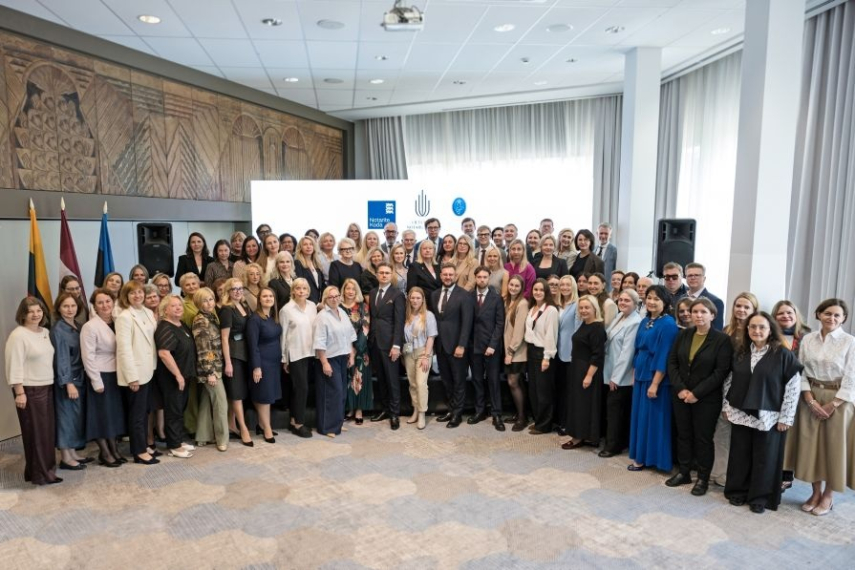
VILNIUS - Many human rights issues remain unresolved in Lithuania despite progress in several areas last year, with existing legislation often failing to bring about practical change, the country's parliamentary ombudsmen said.
"We must measure progress in human rights by the results for the individual – that is, whether a person actually manages to cross the bridge from formally existing laws to everyday reality without having to fight for it," Ombudsperson Erika Leonaite said on Tuesday during the presentation of the 2025 human rights monitoring report.
The report found no significant change in the prevalence of violence, with trends remaining consistent with previous years. Last year, 55,900 reports of domestic violence were received, an increase of about 1,500. Authorities registered 4,300 related criminal acts, with women accounting for 75 percent of victims. Notably, 54 percent of domestic violence protection orders were issued repeatedly.
Key challenges in this area include the lack of a legal definition for systemic violence, the absence of long-term protection mechanisms against repeat offences and the rise of cyber and sexual violence.
On reproductive rights, breakthroughs included the launch of home-visiting services for families in May and a Constitutional Court ruling on the accessibility of assisted reproduction. However, problems persist regarding access to contraception and medical abortion, as well as sexual and reproductive health education and personal autonomy.
The foreign population in Lithuania remains stable at approximately 7.5 percent. The report positively noted the strengthening of integration systems, including improved access to information for vulnerable and ethnic groups, the implementation of innovative tools, translation services and better vulnerability assessment procedures.
Regarding disability rights, the refusal to provide reasonable accommodation is now recognised as discrimination. However, community services remain scarce, institutional care is still widespread, and opportunities for labour market participation and independent decision-making are limited. Only 31.5 percent of working-age people with disabilities were employed last year, while 10,600 individuals were declared legally incapacitated in certain areas.
While prison infrastructure is seeing improvements, the project for a new prison remains stalled. Minor changes have yet to create the necessary breakthrough to align inmate rights with international standards. Major challenges include dormitory-style housing, shortages of staff and psychologists, violence, criminal subcultures, a lack of confidential reporting methods and insufficient rehabilitation and parole opportunities.
In the field of LGBTIQ+ rights, ombudsmen noted that while legal possibilities are becoming clearer, real change is lacking. Courts heard 27 cases regarding same-sex partnerships last year, granting 18 requests, yet the state has still not adopted a comprehensive regulatory framework for partnerships.
The year 2025 saw a 48 percent increase in reported violations of violence and harassment prevention. These were most frequent in manufacturing, education, construction and transport. In psychological violence cases, 42 percent of claims were rejected last year, 31 percent ended in settlements and only 1.5 percent resulted in full or partial satisfaction of the claims.
Regarding religious freedom, tolerance for minorities remains insufficient. The report found that 32 percent of Lithuanians would not want to work with Muslims, while negative attitudes toward religious minorities persist and hate crimes are most frequently directed at religious groups.
The parliamentary ombudsmen concluded that the monitoring of public attitudes in the country remains insufficiently consistent.

Please enter your username and password.


2026 © The Baltic Times /Cookies Policy Privacy Policy