Photo: Venipak
Estonia-based distributor of confectionery, snacks and beverages NML Group is targeting turnover of up to €3 million in 2026 — an increase of 40–50% compared to last year — as cross-border deliveries become an increasingly important part of fast-moving consumer goods (FMCG) distribution in the Baltics.
According to NML Group the growth comes not only from higher sales, but from bringing its Baltic operations closer together. “We have united teams from all three countries into one structure,” said Vladislav Strigunov, representative of NML Group. “That helps us make faster decisions and offer the same level of service across the whole region.” Estonia remains the company’s largest market, generating around 60% of turnover, while Latvia and Lithuania make up the rest. At the same time, cross-border deliveries are growing and are now estimated at around >40%.
Baltic markets may be similar, but they are not the same
Despite increasing regional integration, customer needs still differ from country to country. “There are clear differences between the Baltic markets,” Strigunov said. “You need one overall strategy, but you also have to adapt locally.” Demand across the region is strongest in everyday categories, such as confectionery and soft drinks. Juices and sweets continue to be strong sellers, while the company is also seeing growing interest in its own brand, Royal Bird. According to Strigunov, the ordering habits are also changing, “Large retail chains rely more on regular scheduled deliveries, while smaller partners often expect faster reactions when demand suddenly changes,” he added.
Reliable logistics matters more than ever
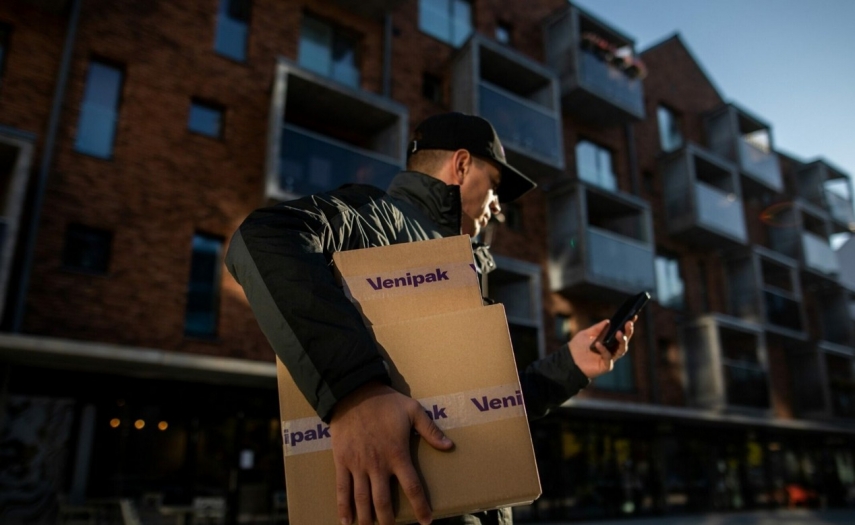
As business grows across borders, reliable logistics is becoming increasingly important. “In FMCG, even short delays are felt immediately,” Strigunov said. “If products do not arrive on time, it will directly impact product availability and sales.” NML Group says that cooperation with Venipak has helped make deliveries across the Baltics more stable and easier to manage. “One of the biggest advantages is speed,” Strigunov said. “Shipments collected in Tallinn in the evening can reach Riga or Vilnius the next morning. That solves a lot of distributional problems for us.” More predictable deliveries have also reduced uncertainty for partners and supported repeat orders. From Venipak’s perspective, this reflects a broader market trend. “FMCG logistics is not the fastest-growing area, but it is one of the most demanding,” said Andrius Ladauskas, CEO of Venipak. “Shipments are frequent, volumes are high, and expectations for reliability are very strict.”
Cross-border logistics is becoming key to growth
For companies that want to expand beyond one market, building their own regional logistics network takes time and investment. That is why external logistics partners are becoming a bigger part of growth plans. “For us, smooth deliveries make expansion much easier,” Strigunov said. “It allows us to focus on new products and new partnerships.” NML Group expects the Baltic FMCG sector to become even more connected in the coming years, with cross-border distribution continuing to grow and logistics playing a central role in connecting markets.

Please enter your username and password.

2026 © The Baltic Times /Cookies Policy Privacy Policy