A problem as ordinary as carrying watering cans around a greenhouse has developed into a Lithuanian technology business seeking to change how gardens, commercial landscapes and farms use one of their most valuable resources – water.
GRAAS AUTOMATION develops smart irrigation controllers that replace conventional timer-based watering with systems capable of responding to soil moisture, weather conditions and other real-time data. Designed and assembled in Lithuania, its technology now ranges from four-zone greenhouse controllers to professional agricultural systems capable of managing up to 100 irrigation zones and hundreds of sensors.
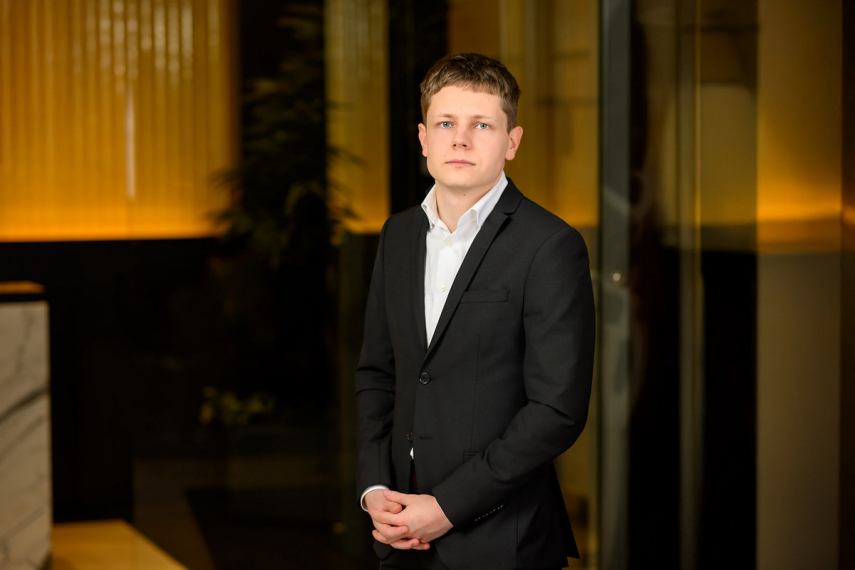
For CEO Mantas Lukosaitis, the starting point was not a grand technology strategy, but a familiar problem at home.
“Essentially, the idea of developing controllers arose from an existing problem. My mother has been a keen gardener for many years, and every evening she would carry watering cans around and water the plants in her greenhouse,” he told The Baltic Times Magazine.
That observation led Lukosaitis and a friend to investigate available irrigation technology. They concluded that the product they imagined – easy to install, compact and capable of watering according to actual conditions rather than simply following a timer – was missing from the market.
“We started testing and assembled our first proof-of-concept controller. We saw its potential and began improving the system,” the CEO said.
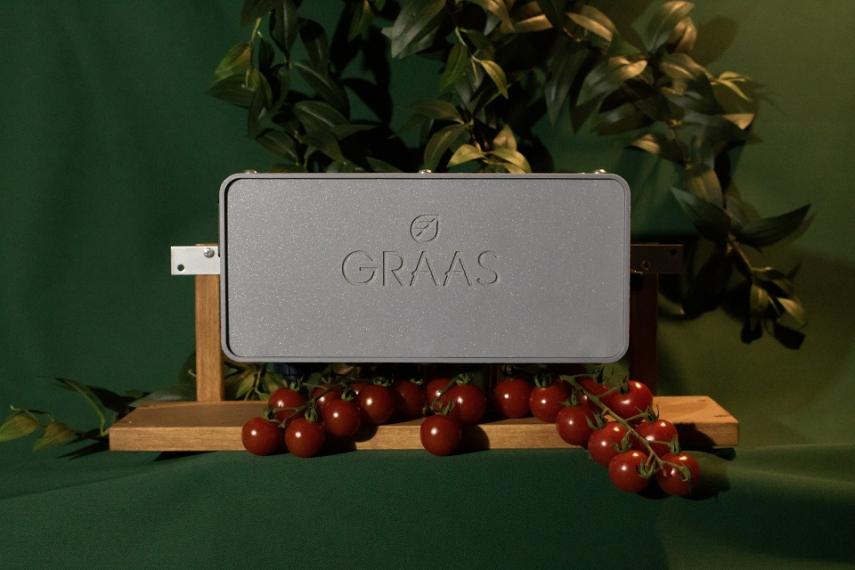
The resulting iRigator combines the controller and valve assembly in one unit and can manage four separate watering zones. GRAAS subsequently moved into lawn irrigation with LawnCare before targeting professional agriculture with AgroGator.
The shift matters because agriculture faces increasing pressure to use water more efficiently. For GRAAS, the underlying proposition is relatively straightforward: irrigation should be determined by what is happening in the soil rather than what time it is.
“The main difference is that our controllers make decisions based on actual soil conditions rather than the clock. Most solutions on the market are essentially timers: you set them to irrigate at 7 am on Tuesday, and they will do so regardless of whether the soil is already wet or completely dry,” Mantas Lukosaitis said.
From greenhouse to farm
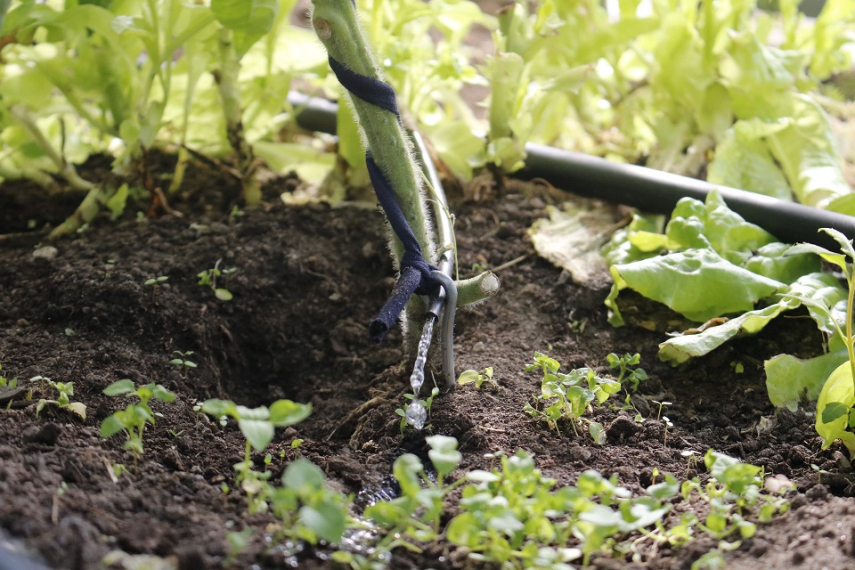
The company's technology uses sensors, a controller and an app to create a feedback loop. Users can establish desired moisture ranges for individual zones. If moisture drops below the minimum level, irrigation begins automatically and continues until the upper threshold is reached.
GRAAS also uses digital RS485 ModBus communication, while its agricultural system can integrate measurements including soil moisture and temperature, pH, EC conductivity, water pressure, light, wind and precipitation.
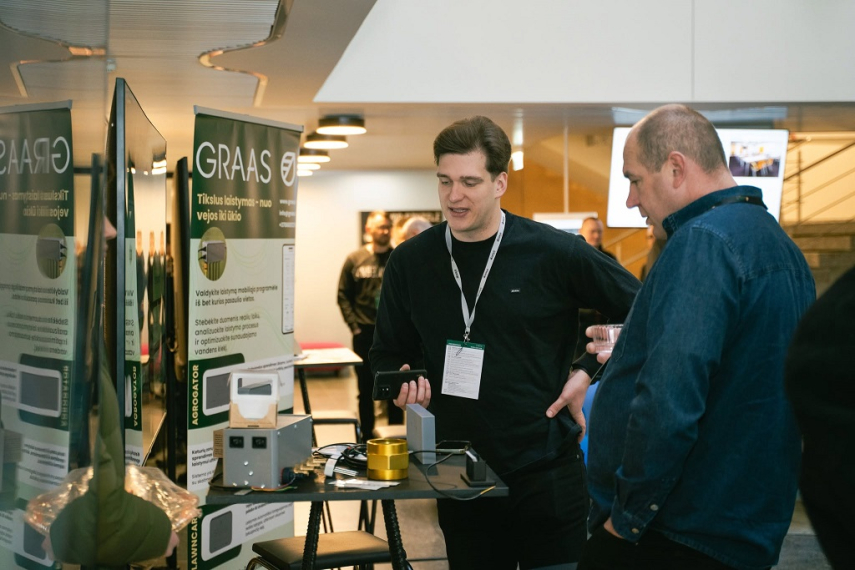
AgroGator represents the company's biggest move into professional agriculture. Its base configuration manages 20 irrigation zones but can be expanded to 100. The system supports GSM connectivity and LoRaWAN wireless sensors, while its architecture allows integration with other equipment used on farms. GRAAS markets the product as an all-in-one combination of irrigation automation, analytics and remote control.
“Our latest solution is GRAAS AgroGator, designed for professional farms. It represents our biggest leap from the consumer to the professional segment: up to 100 zones, up to 700 sensors, LoRaWAN wireless connectivity with a range of up to 10 km, RS485 ModBus integration with systems already used on the farm, and the possibility of ordering customised solutions,” Mantas Lukosaitis said.
The ability to customise could prove important as GRAAS moves further into the business-to-business market. Lukosaitis says the company has already developed additional functionality ranging from generator activation to farm-gate control.
“Depending on the individual project, we can add functions designed to automate irrigation and other farm operations. We have even developed solutions for starting generators and controlling farm gates,” he says.
Saving water – and potentially improving yields
Water efficiency is central to the company's business case. GRAAS says its systems seek to maintain optimal soil moisture rather than irrigating unnecessarily. Its website markets AgroGator as capable of reducing water consumption by as much as 40%, although actual savings will inevitably depend on conditions and the system against which it is compared.
“Our tests have shown water savings of around 35%. Comparisons by customers who use flow sensors and accurately measure their water consumption indicate that water use has fallen by 30–40%,” Mantas Lukosaitis said.
Lukosaitis argues that maintaining more consistent moisture can also reduce plant stress, potentially improving crop quality and yields.
The company's ambitions increasingly extend beyond watering itself. By accumulating data across growing seasons, GRAAS wants its technology eventually to anticipate what plants need rather than merely react when soil becomes too dry.
“I believe Lithuania will follow the same direction as Southern Europe, only with a delay: from timers to sensors, and from sensors to data. The most interesting stage begins when the system accumulates several seasons of data about a particular plot of land. At that point, we can start talking not simply about reacting to declining moisture levels, but about predicting them,” Mantas Lukosaitis said.
That evolution could turn irrigation controllers into broader farm-management platforms – particularly as more sensors, analytics and automation are added.
GRAAS is already experimenting with controlled plant-growing conditions to refine its algorithms. Different combinations of moisture, lighting, pH and EC will be tested, with the resulting data used to improve software subsequently deployed to customers.
“We are currently improving our existing solutions, including autonomous irrigation algorithms and the configuration of our app. We are also preparing an automated testing and calibration station for our devices.”
The company says it has sold more than several hundred controllers, although Lukosaitis declines to disclose the exact figure for competitive reasons. Most operate in Lithuania, but GRAAS equipment has also reached Latvia, Estonia, Belgium, Italy, Denmark and the Netherlands.
For a business that began with one gardener carrying watering cans around a greenhouse, the longer-term opportunity is much bigger: turning irrigation from a repetitive physical task into an automated, measurable and increasingly predictive process.
“Climate change has transformed this issue in Lithuania from one of convenience into an economic consideration,” Mantas Lukosaitis concluded.

Please enter your username and password.

2026 © The Baltic Times /Cookies Policy Privacy Policy