Photo: Aija Baronova
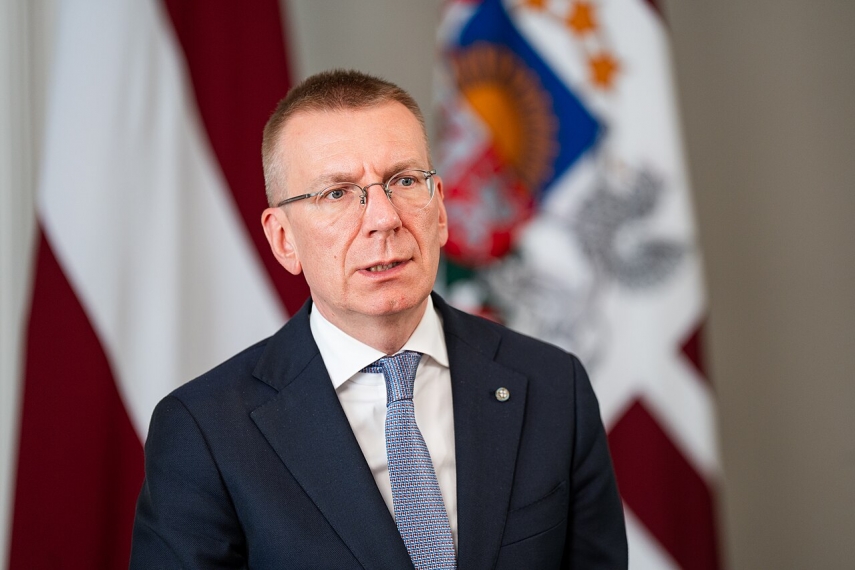
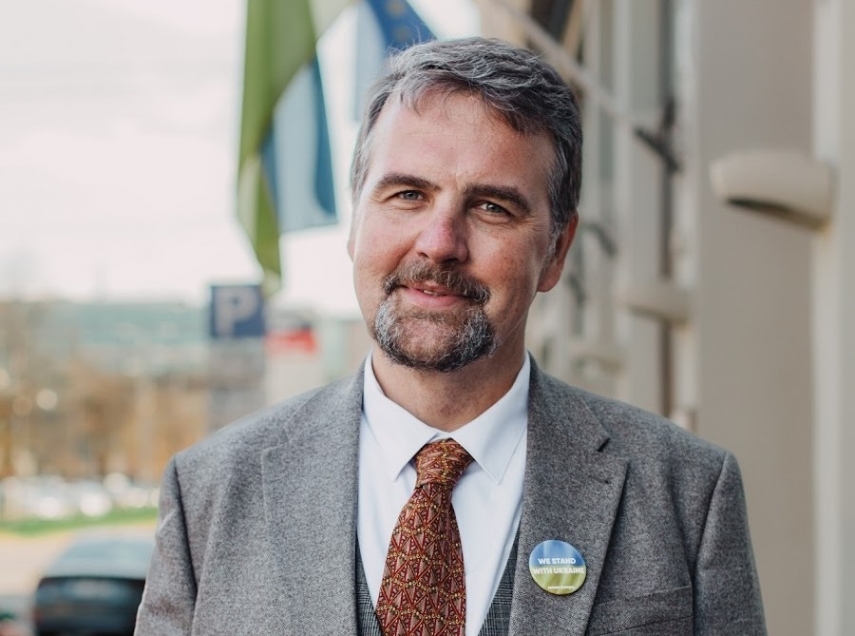
RIGA - The European Commission's (EC) proposal for the next multiannual budget clearly emphasizes security as a priority, MEP Ivars Ijabs (Latvia's Development) told LETA.
He pointed out that the initial proposal contained both good and not so good things in a 50/50 ratio.
Among the good points of the proposal, the politician added security as a priority, including the security of the Member States bordering Russia and Belarus. Support for Ukraine is also important. On the not-so-good side, Ijabs pointed out that it will be necessary to keep a close eye on what happens with subsidies to farmers and cohesion policy funding.
The MEP stressed that subsidies to farmers have always been a sensitive issue and that the bulk of the European Union (EU) budget is devoted to this purpose. At the same time, Ijabs stressed, it is sometimes questionable whether this money really achieves its objectives, which include keeping the next generation in the countryside and ensuring food security. In his view, direct payments between Member States should be equalized, as there is no longer any reason to pay, for example, Latvian farmers less than French farmers.
On cohesion policy, the MEP said that national and regional partnership plans were currently being thought about and would be discussed and adopted by the EC together with the Member States. The idea is that money would be better targeted this way. Ijabs noted that in many countries, not only in Latvia, cohesion money is sometimes spent rather pointlessly and does not contribute in any way to European competitiveness.
The politician, who is also Vice-Chair of the EP Working Group on the Future of Science and Technology, stressed that the Latvian science community will need to have a thorough discussion and understand what lies ahead for the common science policy, where major changes are planned. He explained that there will be much more money for science and innovation: whereas the previous multiannual budget had EUR 93 billion, EUR 175 billion is now earmarked for science and innovation.
"What is specific to us, Latvia, will be linked to the extent to which the country itself invests in research and science. For all these years we have been somewhere between Romania and Bulgaria at the bottom in terms of investment in research and innovation. If we continue like this, we should expect to receive proportionally less from Europe too," said the MEP.
He said that the new offer of the program is that Europe will give money based on a country's progress - if a country is making progress and is serious about science and research, it will be able to get more European support, but if a country stagnates in its investments, it will not get much from the European budget.
Ijabs believes that the Ministry of Education and Science, the Latvian Science Council and universities need to come together and understand how to proceed, because it is clear what the EC wants to do with the next multiannual budget, which is to redirect money towards competitiveness, to support those who develop and move forward on their own.
"Overall, there is relatively little EU money, despite the fact that the overall budget is being increased. The EC's idea is that money should be concentrated where it really makes sense and where it has a return. I think that for the next science and innovation program we should all look very seriously together at how Latvia looks compared to other European countries and what we can do here on the ground to get more of the European money for ourselves," the politician said.
As reported, the long-term EU budget proposed by the EC for the period from 2028 to 2034 foresees an increase in spending of up to two trillion euros. This is around EUR 700 billion more than the current long-term budget for the period 2021-2027.
The EC plans to focus more on defense and competitiveness spending, as well as finding new sources of revenue and changing the current allocation criteria.
Defense spending is set to increase fivefold to EUR 131 billion. The draft budget also foresees the creation of a EUR 451 billion competitiveness fund to support EU investment in clean technologies, the digital economy, defense, food safety and innovation. Up to EUR 100 billion is earmarked to support Ukraine.
EUR 300 billion is promised to support farmers. The current budget for the Common Agricultural Policy (CAP) is EUR 387 billion, of which EUR 270 billion is for direct payments to farmers.
Unlike previous budgets, the next long-term budget will also have to include debt payments, as the EUR 800 billion loan that Member States jointly took on to support the bloc's economic recovery after the Covid-19 pandemic has to be repaid from 2028. This will require between EUR 25 billion and EUR 30 billion annually.
The draft budget proposed by the EC will still be discussed and amended by the EP and agreed with Member States.

Please enter your username and password.

2026 © The Baltic Times /Cookies Policy Privacy Policy