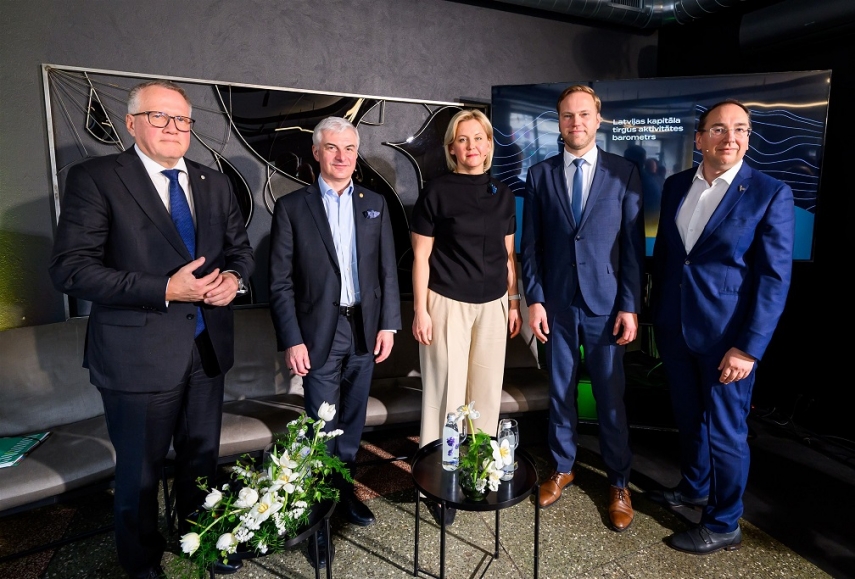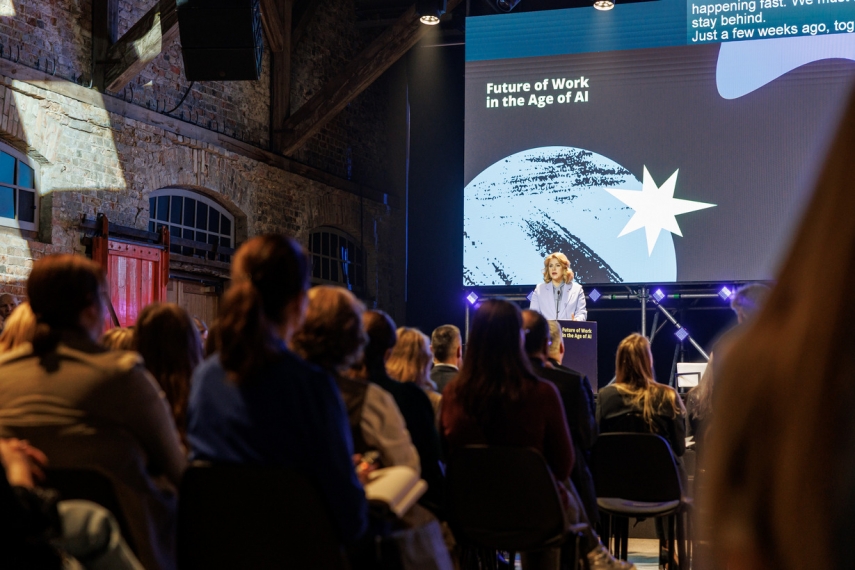
Yesterday, 16 March, the international forum “Future of Work in the Age of AI” opened in Riga, bringing together more than 800 leaders from 43 countries. The event features 60 international speakers from government, business, the technology sector, academia and civil society to discuss how artificial intelligence is transforming the labour market and how Europe can prepare people for the new economy.
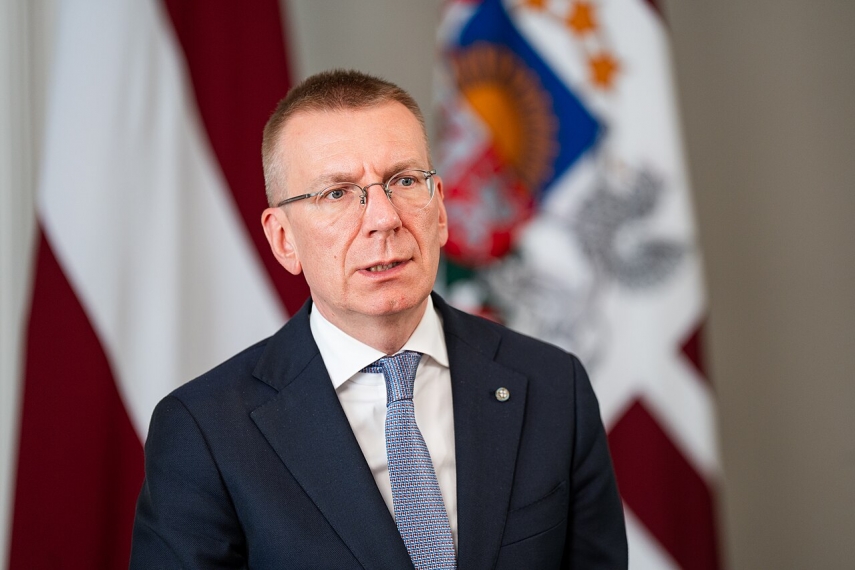
Opening the forum, Edgars Rinkēvičs noted that the report by Mario Draghi on the future of European competitiveness had already outlined ideas and proposals two years ago on how Europe could increase productivity and strengthen its competitiveness. However, he said that so far rhetoric has changed, while real action has yet to follow. He stressed that it is necessary to create a genuine sense of urgency. The President emphasized that the future of work will not be determined by technology alone - it will also be shaped by the choices made today in building a clear vision for the future. He also highlighted that Latvia has established a National Artificial Intelligence Centre to promote the development of AI, innovation and the practical application of new technologies. According to Rinkēvičs, many people will need to be prepared for more than one career in the future, while continuous learning will become a foundation rather than simply an option. He added that people with knowledge must learn to ask increasingly better questions rather than merely wait for ready-made answers.
The impact of artificial intelligence on the economy and labour markets was also addressed by Annette Kroeber-Riel, Vice President for Government Affairs and Public Policy Europe at Google, who noted that AI is not only a private-sector phenomenon but is increasingly becoming important in the public sector as well. She emphasised that artificial intelligence holds enormous potential in Europe, but the development of skills must keep pace with the speed of technological change. Kroeber-Riel explained that through the “AI Works for Europe” initiative the European AI Opportunity Fund is being expanded with 30 million US dollars from Google.org, while a new Google AI Professional Certificate will be introduced in ten European languages to help workers and small businesses acquire practical AI skills.
In her presentation, Saadia Zahidi, Managing Director at the World Economic Forum, highlighted that technological development, especially artificial intelligence, is already significantly reshaping the global labour market. According to World Economic Forum data, by 2030 around 170 million new jobs could be created worldwide, while 92 million jobs may disappear due to technology and automation, resulting in a net increase of around 78 million jobs. At the same time, it is projected that 39 percent of the skills required today will change significantly by the end of the decade, while 86 percent of companies expect artificial intelligence and data technologies to transform their operations.
Zahidi stressed that these changes represent not only a technological transformation but also a significant challenge for governments and businesses to accelerate skills development, foster innovation in education and strengthen the transition from education to the labour market.
Discussions at the forum place particular focus on the development of future skills, national AI and skills strategies, lifelong learning systems and the role of artificial intelligence in economic growth and innovation.
Valeriya Ionan, Advisor to the Minister of Defense of Ukraine and Advisor to the Ministry of Digital Transformation of Ukraine: “Ukraine is moving from a digital state to an agentic state, where technology, data, and AI help governments act faster and make better decisions. At the same time, Ukraine has become one of the most dynamic environments for defense tech and AI innovation. We are building the foundations of a new AI economy by investing in people and skills through initiatives such as Diia.Education and Mriya AI for the education system. We are also implementing AI solutions in the public sector, including Diia.AI - the world’s first national AI assistant providing government services. We often talk about AI, but the real challenge is implementation. Governments, businesses, and societies must move from discussion to action. I strongly believe that now is the time to act.”
Among the keynote speakers participating in the forum are Saadia Zahidi, Managing Director at the World Economic Forum; Valeriya Ionan, Advisor to the Vice Prime Minister of Ukraine on Innovation, Education, Science and Technology Development; Kristina Kallas, Minister of Education and Research of Estonia; Soon-Joo Gog, researcher at the Centre for Skills-First Practices at the Singapore University of Social Sciences; Ekkehard Ernst, Chief Macroeconomist at the International Labour Organization; Kathleen D. Kennedy, Executive Director of the MIT Center for Collective Intelligence; Christopher Patnoe, Head of Accessibility and Disability Innovation at Google; and Marta Florczak, Senior Vice President for Employee Lifecycle at Lidl.
The European forum can be followed online at:
www.futureofworkeurope.org/watchlive
The event programme includes discussions and presentations on AI, labour markets, education reform, economic growth and innovation.

Please enter your username and password.

2026 © The Baltic Times /Cookies Policy Privacy Policy