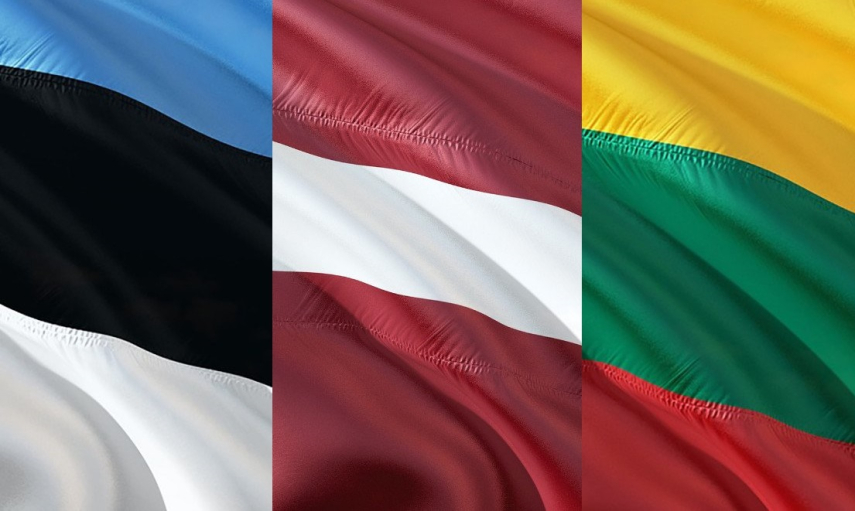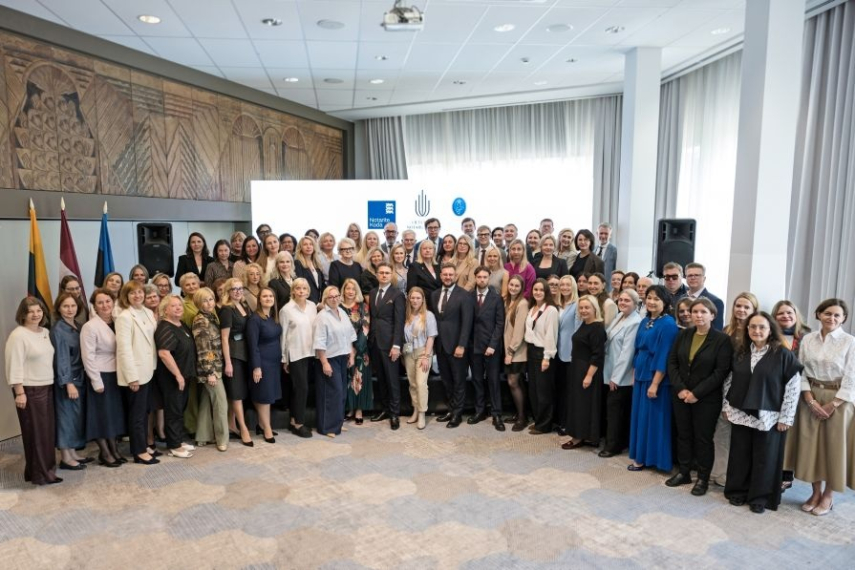
VILNIUS - The speakers of the Lithuanian, Estonian and Latvian parliaments reaffirmed their support for Ukraine and outlined shared regional priorities in a joint statement on Thursday.
During their meeting in Tallinn, the Baltic speakers also discussed regional security and cooperation within the European Union and NATO, according to the Lithuanian parliament.
"The strength of the Baltic states has always been our ability to act together. This helped us restore independence and achieve EU and NATO membership, and it remains vital today. Our security interests coincide, so we must defend our positions unitedly in Europe and the transatlantic space," Olekas said.
The joint statement places particular emphasis on Ukraine. The parliamentary leaders reaffirmed their support for Ukraine's sovereignty and territorial integrity, stressing that they will not recognize any de jure or de facto seizure of Ukrainian territories by Russia.
"The Ukrainian people are not only defending their state today. They are defending a principle that is vital to us as well - that no state can redraw another country's borders by force or deprive its people of the right to decide their own future. Therefore, our support for Ukraine must remain firm and long-term," Olekas said.
The speakers of the Estonian, Latvian and Lithuanian parliaments committed to continuing political, economic, financial and military aid to Ukraine, increasing sanctions pressure on Russia and seeking ways to use frozen Russian assets to support Kyiv. They also stressed the need to ensure accountability for the crime of Russian aggression, war crimes and violations of international law.
The Baltic leaders also support Ukraine's full membership in the European Union and its irreversible path towards NATO.
The statement further highlighted the need to strengthen the eastern borders of the European Union and NATO, combat disinformation and hybrid threats, and ensure a strong NATO presence in the Baltic region, including US forces.
Common Baltic interests in negotiations on the new European Union Multiannual Financial Framework were also discussed, focusing on defense, cohesion policy, connectivity and agriculture.
Additionally, the Estonian and Latvian speakers expressed support for Lithuania's upcoming presidency of the Council of the European Union, set to begin in January 2027.
Key priorities for the upcoming presidency include European Union and Euro-Atlantic security and defense, European Union enlargement, competitiveness, economic resilience, internal security, migration and external border management, social security and demographic challenges.

Please enter your username and password.

2026 © The Baltic Times /Cookies Policy Privacy Policy