Photo: AI generated
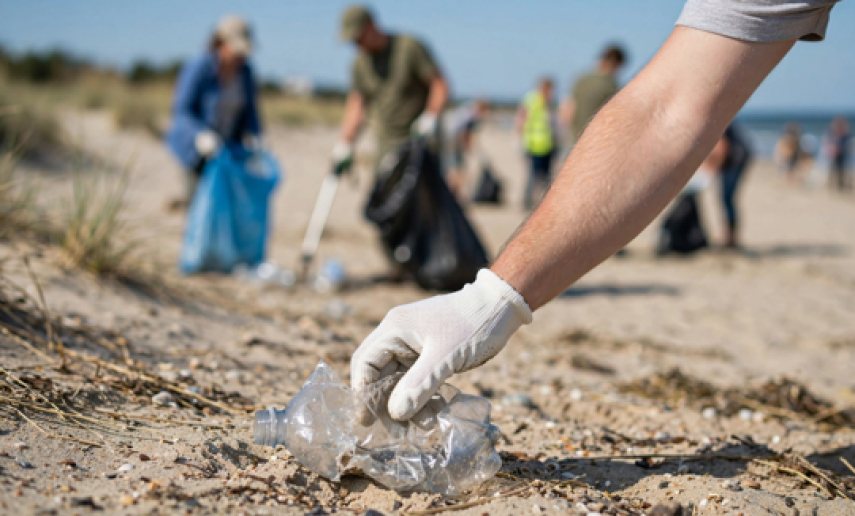
TALLINN - World Cleanup Day will be celebrated this Sunday, September 20th, with one of its key messages being "Strive for Five" - a call to involve at least 5 percent of the population in a common effort.
The organizers' idea is based on the concept of a social tipping point: if a large enough number of people start acting together, a small shift can evolve into a broader societal change.
In the case of waste, such a change is particularly important because the goal is not only to deal with existing waste but also to reduce waste generation and direct an increasing share of it into recycling.
"In the waste hierarchy, the most important thing is to prevent waste generation - waste that isn't created doesn't need to be collected or managed. At the same time, we must promote the recycling of waste to keep materials in circulation for as long as possible," explained Kaia Oras, a leading expert in environmental statistics at Statistics Estonia.
In 2024, Estonia generated 514,000 tonnes of municipal waste, which is about 7.2 kilograms per person per week. The generation of municipal waste per capita has not decreased in recent years: while 359 kilograms of municipal waste were generated per person in 2015, this figure rose to 375 kilograms in 2024.
"These numbers show that much still needs to be done to reduce waste generation. This requires changes in both consumption and daily choices," said Oras.
Another important goal is to increase recycling. In 2024, 36.4 percent of municipal waste was recycled in Estonia. The target for 2030 is to reach 60 percent, which means there is still a gap of 23.6 percentage points from the current level.
What would happen if 5 percent of the population reduced their waste generation by half?
At the beginning of this year, Estonia had a population of about 1.36 million people. Five percent of the population is approximately 68,000 people. If these individuals were to halve their municipal waste generation, about 12,800 tonnes of municipal waste would be prevented annually. This would account for about 2.5 percent of the total municipal waste generated in Estonia each year. For these 68,000 people, a fifty percent reduction in waste would mean about 3.6 kilograms less municipal waste per person per week - 3.6 kilograms instead of the current 7.2. In total, this would mean about 245 tonnes less municipal waste per week.
"12,800 tonnes is not a very large amount compared to Estonia's total municipal waste generation, but the issue is not just about how much less waste would be produced over a year. What's also important is what such a change could trigger if more and more people started following the same direction," Oras noted.
The idea behind one of World Cleanup Day's main mottos, "Strive for Five," is that change does not have to start with the whole of society at once. Instead, if enough people begin to act in the same direction, the new behavior can spread and become the norm.
"In statistics, we usually see changes when the individual choices of many people have formed a broader trend. Five percent won't solve the waste problem, but it can be enough to give momentum to the change and show that another way is possible," the leading expert explained.
World Cleanup Day is taking place for the ninth time this year, and since 2024, September 20th has been an official UN calendar day. The Estonian initiative "Let's Do It!" ("Teeme Ära"), which began in 2008, has grown into a global movement that has engaged over 139 million people from more than 190 countries and territories over the years.
In addition to traditional cleanup events, special attention is being paid in Estonia this year to the safe collection of small electronics, batteries, and accumulators to increase the recycling of valuable materials and reduce environmental risks. The more specific focus of this year's global World Cleanup Day is on reducing food waste and drawing attention to how more conscious consumption and waste prevention can help create a more resource-efficient and circular economy.

Please enter your username and password.


2026 © The Baltic Times /Cookies Policy Privacy Policy