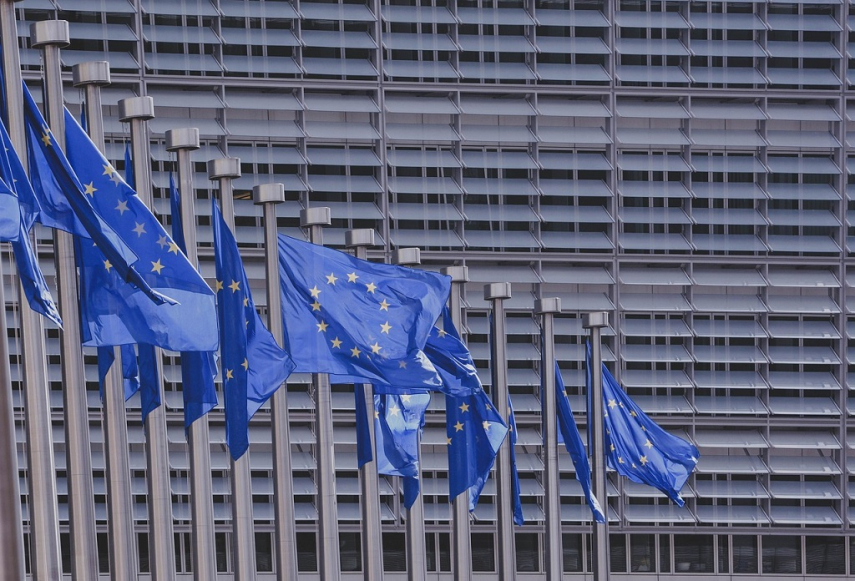
Photo: Pexels from Pixabay
TALLINN - The European Parliament has adopted a report drafted by the Special Committee on the Defence of European Democracy, offering specific recommendations on how to better protect the EU's democratic institutions. The report emphasizes the importance of combating fragmentation within the EU, as member states cannot counter such threats alone.
The special committee was established in December 2024 to assess the escalation and impact of hostile foreign activities that harm the EU, such as foreign information manipulation, interference, hybrid attacks, and coordinated disinformation campaigns.
The report highlights Russia's frequent hybrid attacks on critical infrastructure. These include cyberattacks, physical sabotage, arson, espionage, and signal jamming. Some of these activities also originate from Belarus, China, Iran, and North Korea. The Parliament recommends sanctioning both those who enable disinformation and those who assist in circumventing sanctions. Additionally, the report condemns Russia's political decision to create a blacklist of European officials, journalists, and Members of the European Parliament as part of its hybrid warfare.
As the attacks largely occur in the digital sphere, Parliament calls for the strict enforcement of existing digital regulations, such as the Digital Services Act and the AI Act, and for increased platform accountability. Platforms must be required to take greater action to protect democratic discourse and prevent election interference by bots. The report notes that freedom of speech and information should protect people, not machines.
The Parliament strongly urges the EU to reduce its dependence on foreign technology and hardware in critical sectors, particularly from the US and China, and to prioritize European products. Furthermore, critical raw materials should only be sourced from trusted partners.
To protect the integrity of elections and prevent funding and interference by proxies, the Parliament deems it necessary to classify election infrastructure as critical. For cryptocurrency-based political donations, a 'know your donor' principle must be followed. The report also calls for stronger action against malicious deepfakes and fraudulent advertising, as well as increased protection for female candidates.
Close cooperation and support for candidate and partner countries in enhancing their resilience are crucial. However, the exploitation of migration flows to exert political pressure on the European Union is entirely unacceptable.
A strong and independent civil society, whose members are media literate and understand the risks of artificial intelligence, is of central importance. In the long term, the EU should invest more in protecting media freedom, investigative journalism, and civic activism, and in combating the use of illegal spyware.
A strong democracy means that society can function effectively even in crisis situations. To achieve this, extensive regular drills should be conducted and an EU-wide crisis alert application should be created. The Parliament also proposes that February 24, the anniversary of Russia's full-scale invasion of Ukraine, be designated as an annual European Crisis Preparedness Day.
The Parliament supports the establishment of a European Centre for Democratic Resilience, which would serve as an independent center of excellence to combat foreign information manipulation, interference, and disinformation, and to coordinate member states' actions. The center should not duplicate existing efforts but instead consolidate EU-level measures already underway into a cohesive whole. It must have a clear vision, mandate, budget, and operational capacity. All member states should be required to participate in the new agency's work, with oversight provided by the Parliament.
In the plenary vote, the report was adopted with 420 votes in favor, 220 against, and 26 abstentions.
The report's author, Tomas Tobé (EPP, Sweden), said before the plenary that this report does not regulate political opinions but protects democracy from foreign influence. "Freedom of speech does not mean allowing propaganda from Russian chatbots or foreign interference. And freedom of speech most certainly does not mean that foreign countries can interfere in European elections."

Please enter your username and password.


2026 © The Baltic Times /Cookies Policy Privacy Policy