Photo: Pexels from Pixabay
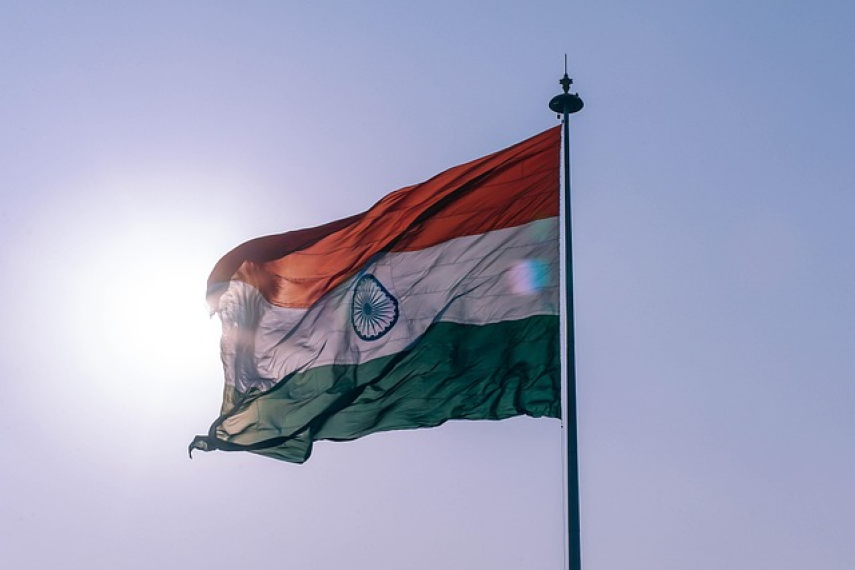
RIGA - The opportunities for cooperation between Latvia and India are vast, but the extent to which Latvia will be able to take advantage of them will depend on the country itself, emphasized Raimonds Bergmanis (United List), Chairman of the Saeima committee on defense, internal affairs, and corruption prevention, following a meeting on Wednesday with India's new ambassador to Latvia, Namrata Satdevi Kumar.
As Bergmanis told LETA, the meeting covered bilateral cooperation between Latvia and India, opportunities for expanding that cooperation, and economic issues. Bergmanis noted that this year marks the 35th anniversary of the establishment of diplomatic relations between Latvia and India.
The politician cited the economy, startups, information technology, and science as potential areas for cooperation, emphasizing that collaboration in these fields holds great future potential.
Bergmanis cited the European Union (EU)-India Free Trade Agreement, for which negotiations were concluded in January of this year, as a significant new factor in the development of cooperation. He noted that the EU and India together form a market of nearly two billion people.
Bergmanis emphasized that the diplomatic missions of both countries open up additional opportunities for fostering cooperation. The Indian Embassy in Riga opened in 2024, and the first resident Indian ambassador to Latvia took up her post in March 2025. The Latvian Embassy in New Delhi has been operating since 2014.
As reported, the European Union (EU) and India have concluded negotiations on a free trade agreement. Under the agreement, India will gradually reduce tariffs on imported automobiles from 110 percent to as low as 10 percent, while tariffs on automotive parts will be completely eliminated within five to ten years.
Tariffs on machinery, chemicals, and pharmaceutical products will also be almost completely eliminated. Meanwhile, tariffs on certain EU agricultural products will be significantly reduced. Tariffs on wine will be gradually reduced from 150 percent to as low as 20 percent, while the 40 percent tariff on olive oil imports will be eliminated. Similarly, the 50 percent tariff on processed food products, including pasta and chocolate, will be eliminated.
The European Commission explained that agricultural products such as beef, chicken, rice, and sugar are not covered by this agreement, and EU standards will continue to apply to all products imported from India. In turn, European companies will gain preferential access to India’s financial services and maritime transport markets.
For India, this free trade agreement will support sectors such as the production of textiles, precious stones and jewelry, and leather goods, as well as the services sector.
For this free trade agreement to enter into force, it must be formally approved by the EU member states as well as the European Parliament.
Negotiations on the EU-India free trade agreement initially began in 2007, but were suspended in 2013 due to disagreements on several issues. Negotiations on the free trade agreement resumed three years ago.

Please enter your username and password.

2026 © The Baltic Times /Cookies Policy Privacy Policy