
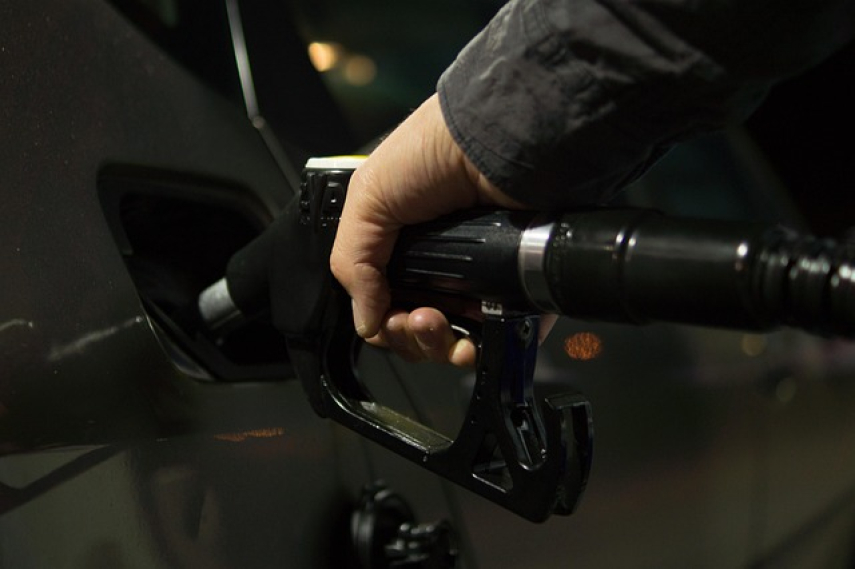
Photo: Rudy and Peter Skitterians from Pixabay
RIGA - A reduction in the value-added tax (VAT) rate on fuel from 21 percent to 12 percent would, at current price levels at gas stations, lower the price of diesel fuel by approximately 15.6 cents per liter and the price of gasoline by approximately 14.6 cents per liter, the Ministry of Economics (EM) told LETA.
EM notes that such a reduction in fuel prices would be possible if the full amount of the tax cut were reflected in retail prices.
VAT is a tax on final consumption. Businesses registered as VAT payers deduct input tax on fuel used in their economic activities, so a reduction in the tax rate does not change their costs. For freight transport, agricultural, logistics, and manufacturing companies, fuel costs excluding tax would remain unchanged, explains the Ministry of Economics.
In assessing the impact on the state budget, the Ministry of Economics notes that the reduction in state budget revenue stems solely from fuel sold for final consumption. The Ministry of Economics estimates this at approximately EUR 6.3 million per month, assuming that final consumption accounts for 39-42 percent of the total fuel volume. If the measure were applied for three months, the cost would be approximately EUR 18-20 million. In the event of incomplete pass-through, budget costs do not decrease in proportion to consumer benefits.
If only a portion of the rate reduction is reflected in the retail price, the pre-tax price increases, thereby reducing the budget loss per liter by approximately four percent, while the benefit to end consumers decreases in proportion to the pass-through rate. With a 61 percent pass-through, budget costs would be approximately EUR 6 million per month, of which approximately EUR 3.9 million would reach end consumers, while approximately EUR 2.2 million per month would remain within the supply and distribution chain, according to the Ministry.
For a household that purchases 100 liters of fuel per month, the savings in the event of a full pass-through would be approximately EUR 15.60 per month. On average, savings per end consumer in the country would be no more than approximately EUR 7.90 per month, but the actual figure per household is lower, as final consumption also includes refueling by non-residents and partially deductible light vehicle costs for VAT payers, the Ministry notes.
The Competition Council’s analysis of the excise tax reduction in April of this year shows that 58-64 percent of the planned reduction was actually reflected in diesel fuel prices. If the pass-through of the VAT reduction were similar, the savings for a household consuming 100 liters would be approximately EUR 9.50 per month, while the average savings per end consumer would be approximately EUR 4.80 per month.
According to EM calculations, the share of fuel in the household consumption basket will be 4.1 percent in 2026. A 7.4 percent reduction in fuel prices, if fully passed on, would lower the consumer price level by approximately 0.3 percentage points, while with the previously measured pass-through rate, it would lower it by approximately 0.19 percentage points.
The Ministry of Economics notes that the second-round impact on the prices of other goods and services would be limited, as businesses’ pre-tax costs would remain unchanged. The impact of higher fuel prices on the prices of transportation, food, and logistics services would thus persist.
At current prices, the Latvian economy is spending approximately EUR 64 million more per month on fuel than in January and February of this year - EUR 54 million for diesel and EUR 10 million for gasoline. On an annual basis, this amounts to approximately EUR 770 million, or 1.7 percent of gross domestic product, according to the Ministry.
The Ministry of Economics explains that the majority of this increase is due to rising fuel purchase prices - approximately EUR 53 million per month. The pre-tax component of diesel prices has risen by EUR 0.56 per liter since the beginning of the year, while that of gasoline has risen by EUR 0.38 per liter. This component is determined by global market prices, and tax measures do not affect it.
The Ministry emphasizes that the VAT rate reduction represents a domestic redistribution from the state budget to end consumers. This alleviates price pressure on households but does not change the amount of cash flow that is flowing out of Latvia due to rising fuel prices.
The Ministry of Economics continues to monitor fuel prices and reports to the Cabinet of Ministers twice a month on the situation in the fuel market.
As reported, the Greens/Farmers will propose reducing the value-added tax (VAT) rate on fuel from 21 percent to 12 percent until the end of this year, to mitigate the impact of rapidly rising fuel prices on residents and the national economy.
The Greens/Farmers notes that the situation on the global oil market remains tense, while rising fuel prices in Latvia are significantly affecting the expenses of both households and businesses. The party emphasized that rising fuel prices increase costs in transportation, manufacturing, agriculture, logistics, and services, thereby contributing to overall price increases and inflation.
According to the Greens/Farmers, data from the Central Statistical Bureau show that in August, compared to July, the average consumer price for fuel in Latvia rose by 8.8 percent. Diesel prices rose by 11.5 percent, while gasoline prices increased by 2.9 percent. Over the course of the year, fuel prices have risen by 22.1 percent overall.
The Greens/Farmers believes that the excise tax reduction on diesel fuel introduced this year is not enough on its own, so additional measures are needed to alleviate price pressures. The party notes that a VAT reduction would be a temporary measure, effective until the end of the year.
Minister of Economics Viktors Valainis (Greens/Farmers), commenting on the rise in fuel prices, told LETA that the Ministry of Economics’ proposed "excess profit" or "solidarity" levy on fuel retailers should be reinstated. According to the minister, such a measure would ensure that the benefits resulting from the state’s reduced excise tax reach consumers rather than remaining in the hands of fuel retailers.
On April 14, the government endorsed the Ministry of Economics’ proposal to impose a solidarity levy on fuel retailers in cases the actual retail price exceeds the indicative retail price by more than 3 percent. The regulation was planned to remain in effect until the end of 2026, with the funds raised to be allocated toward strengthening fuel supply security.
However, business organizations and several government agencies raised objections to the bill, while fuel retailers pointed to a potential conflict with free-market principles and legal risks. Later, the draft law on the solidarity contribution for fuel retailers, prepared by the Ministry of Economics, failed to gain support in the Saeima.

Please enter your username and password.


2026 © The Baltic Times /Cookies Policy Privacy Policy