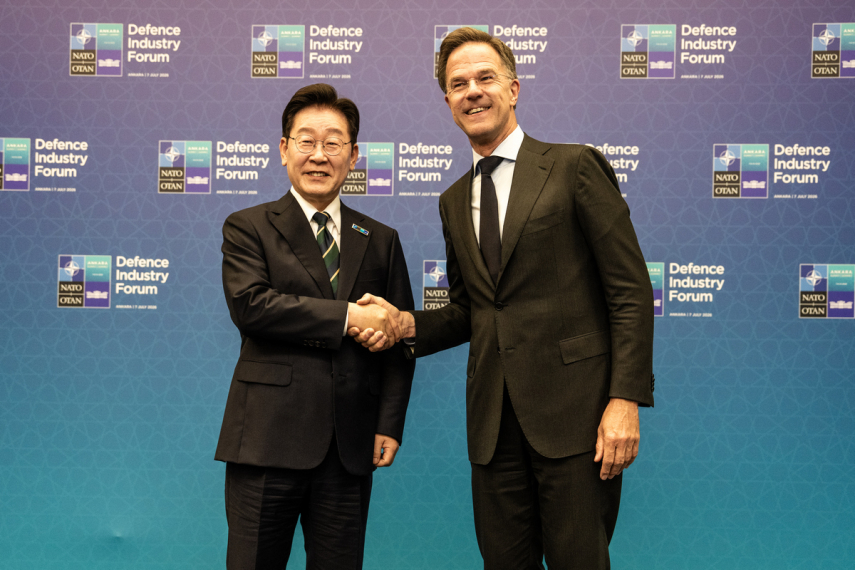
Photo: www.nato.int/en/multimedia
As NATO member states grapple with production bottlenecks, industrial exhaustion, and mounting structural pressures, a non-Western ally has quietly positioned itself as the foundational backbone of Euro-Atlantic rearmament. At the NATO summit in Ankara, South Korea’s strategic pivot toward Europe took center stage, signaling a fundamental transformation from a standard arms supplier into a deep, institutional defense partner.
Filling the Western Production Void
The structural backdrop to South Korea's rapid European integration was made explicitly clear by NATO Secretary-General Mark Rutte (https://en.sedaily.com/international/2026/07/01/nato-chief-says-european-rearmament-sustains-195000-us-jobs ). In an interview ahead of the summit, Rutte noted that while European and Canadian arms orders from the U.S. total a massive $300 billion—sustaining roughly 195,000 American jobs—the Western defense industrial base has effectively hit its maximum capacity. With U.S. stockpiles strained by global commitments and domestic European defense contractors struggling to rapidly scale up production volumes, European capitals are aggressively looking eastward.
"Korea has a fantastic defense industrial base," Rutte remarked, acknowledging that NATO members are turning to Seoul because their own domestic capacity simply cannot absorb the current demand.
Moving to "Defense Partnership 2.0"
Recognizing this geopolitical window, South Korean President Lee Jae-myung used his address at the NATO Defense Industry Forum to pitch an evolutionary leap in cross-continental cooperation. Dropping the traditional transactional model of simple weapons trading, Lee proposed "Defense Industry Partnership 2.0"—a framework centered on joint research, co-production, and co-operation of advanced defense hardware.
This strategy is already bearing material fruit on European soil:
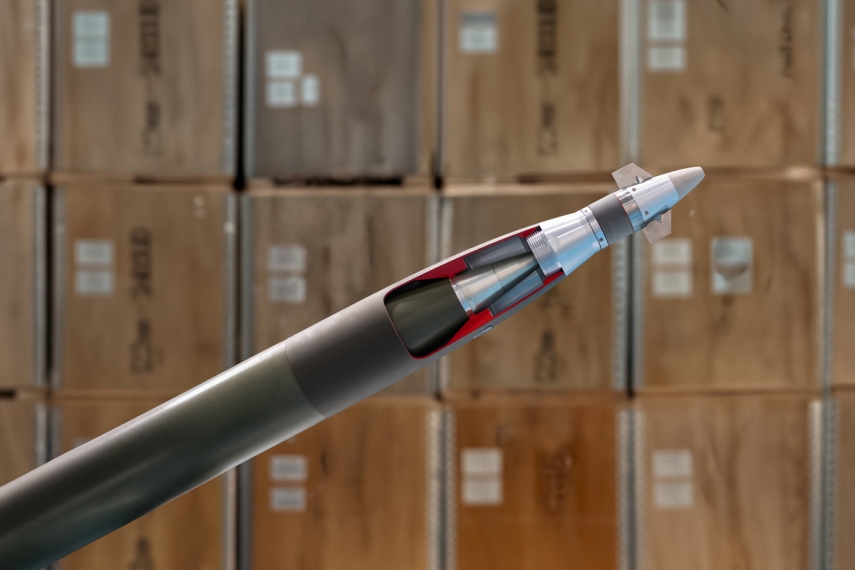
- Romania: President Lee highlighted Seoul’s expanding footprint during a bilateral meeting with Romanian President Nicusor Dan. Following a landmark 2024 export deal, construction has commenced on a domestic manufacturing plant in Romania to locally produce South Korea’s flagship K9 self-propelled howitzers.
- Norway: Talks with Norwegian Prime Minister Jonas Gahr Støre focused on deepening existing defense and shipbuilding ties. Oslo has already emerged as a key customer, integrating both the K9 howitzer and the Chunmoo multiple-launch rocket system (MLRS) into its armed forces.
- The Transatlantic Market: Most significantly, South Korea and NATO formally opened negotiations on a comprehensive defense procurement pact. Once signed, this legal framework will grant South Korean defense firms streamlined access to NATO’s internal procurement market, estimated to be worth roughly 15 trillion won ($9.9 billion) annually. Furthermore, Seoul is expanding its footprint by joining as an official "observer" in NATO’s specialized defense industry and raw materials programs.
Navigating the Ukraine Tightrope
South Korea’s expanding geopolitical weight was equally visible during President Lee’s first formal bilateral summit with Ukrainian President Volodymyr Zelensky. Lee pledged a $100 million comprehensive aid package aimed directly at Ukraine's post-war reconstruction (https://www.koreajoongangdaily.com/korea/lee-offers-100-million-for-ukraine-reconstruction-in-first-official-summit-with-zelensky-at-nato/12762285). The two leaders also tackled sensitive humanitarian and intelligence issues, including the legal status of North Korean soldiers captured in Ukraine's Kursk region who have expressed a desire to defect to the South.
However, even as Seoul deepens its security alignment with Europe, it continues to walk a careful diplomatic tightrope. Senior officials from the South Korean presidential office explicitly reaffirmed that Seoul's long-standing prohibition on providing lethal weapons directly to countries actively engaged in conflict "remains unchanged." South Korea is effectively acting as the Western alliance’s industrial engine room, allowing NATO members to backfill their own arsenals while maintaining a strict legal line on direct lethal exports to Kyiv.
The Transpacific Horizon
Seoul's defense industrial charm offensive is not limited to Europe. On the margins of the summit, President Lee held a brief follow-up with U.S. President Donald Trump regarding an ongoing request for South Korean conglomerates—namely giants like Hanwha Ocean and HD Hyundai Heavy Industries—to spearhead the construction and maintenance of U.S. military vessels. While South Korean defense firms recently faced a temporary setback after losing a major submarine project in Canada, the structural outlook remains overwhelmingly positive. By securing formal institutional footholds inside NATO’s procurement ecosystem and embedding its manufacturing pipelines directly within European borders, South Korea is no longer just a vital alternative supplier in times of crisis—it is swiftly becoming a structural cornerstone of global democratic security.
Strategic Outlook: The Baltic Imperative
This massive Asian-European defense pivot carries profound implications for the Baltic states. For Estonia, Latvia, and Lithuania, facing acute security pressures on NATO’s eastern flank, South Korea has evolved from a distant trade partner into a vital strategic lifeline. Amid severe production queues within domestic European industries, Seoul offers three unmatched advantages: rapid production delivery timelines, strict adherence to NATO interoperability standards, and an aggressive willingness to offer local technology transfers and industrial localization.
Estonia has already modeled this blueprint for the region. Moving aggressively beyond its initial procurement of K9 Thunder self-propelled howitzers (expanding its fleet to 36 units), Tallinn recently sealed a €290 million contract for the long-range K239 Chunmoo MLRS to bypass congested U.S. assembly lines. Critically, this partnership includes a direct €100 million industrial investment package from Hanwha Aerospace into the Estonian defense ecosystem, funding domestic ammunition factories and local maintenance hubs. For Latvia and Lithuania, currently engineering their own massive multi-domain modernization programs, the South Korean defense model represents an immediate, proven shortcut to plugging critical capability gaps while building sovereign industrial resilience.

Please enter your username and password.

2026 © The Baltic Times /Cookies Policy Privacy Policy