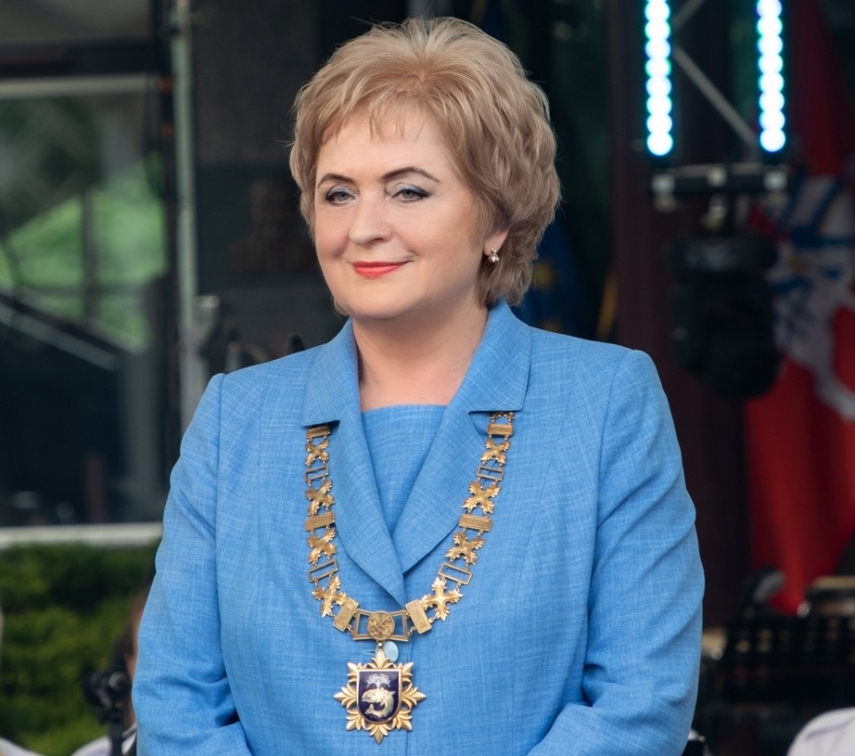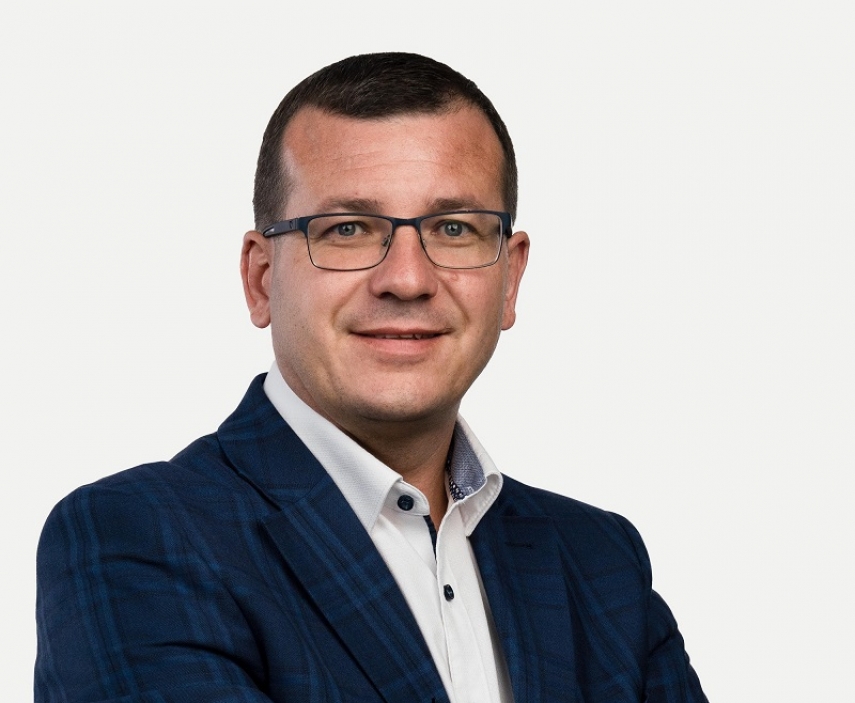
Photo: Laima Andrikiene, ECA Member
As war rages on Europe’s eastern flank, the illusion of guaranteed safety has been shattered for EU member states. The threat is no longer abstract – drones and cyberattacks can breach our borders at any moment, making physical security a pressing concern for all. How we perceive these dangers is shaped not only by our geography, but also by our histories. Drawing on her firsthand experience, Laima Andrikiene, ECA Member in the Audit Chamber for External Action, Security and Justice, offers a frank and layered perspective. Her reflections – both institutional and personal – speak to the challenges of protecting the Union in uncertain times and highlight the role the ECA plays in strengthening Europe’s collective defence.
A pivotal moment for European security: Europe on alert
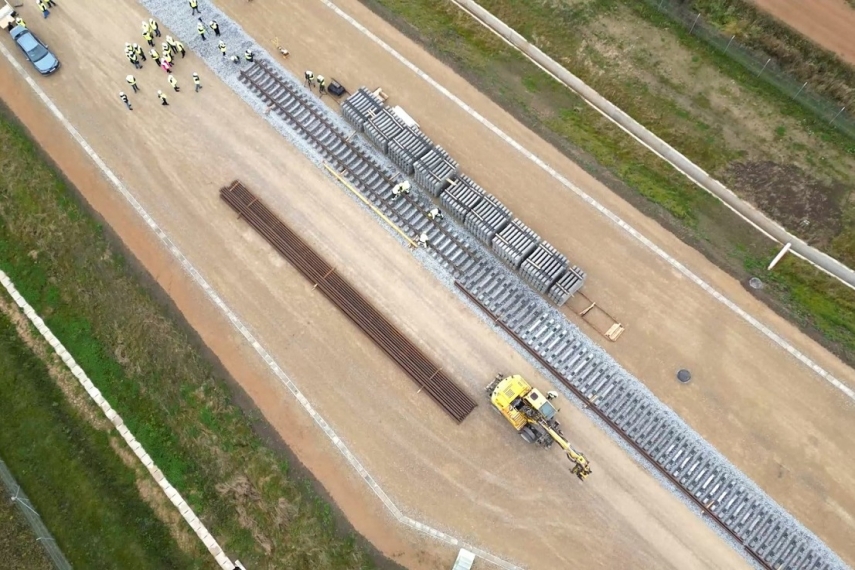
A shadow drone war is being waged against peaceful European NATO nations that support Ukraine, according to experts, who say dozens of incursions have occurred over the past months – many of which appear to have strong links to Russia. The latest wave of incidents began on September 10, when 19 suspected Russian drones entered Polish airspace during an attack on Ukraine, leading to an emergency military operation to shoot them down. In the 27 days between September 9 and October 6, 2025, at least 39 drone-related incidents were reported in countries as far away as Norway in the north-west and Belgium and the Netherlands in the west, according to research compiled by the Center for European Policy Analysis (CEPA). In November, Brussels airport was forced to close temporarily after drones were spotted nearby. They were also seen in other locations, including a military base, and Belgium rushed to secure its drone defences. And, on 15 November 2025, an unprecedented act of sabotage took place when the railway line in Poland used to transport aid to Ukraine was destroyed by an explosion, further escalating concerns about the vulnerability of European infrastructure.
Right now, Europe is at an extraordinary juncture in its approach to defence and security. The very ground beneath our feet feels altered by seismic geopolitical events – Russia’s ruthless invasion of Ukraine being the starkest. For all of us living in the EU, these changes have upended the long-held belief that peace on our continent is a given. We’re being called, collectively, to confront uncomfortable truths about the threats we face, the limits of our readiness, and our determination to stand together.
A changing security landscape: old shadows, new fears
The world many of us grew up in has shifted. Europe’s security environment is no longer stable or predictable. Russia’s full-on assault on Ukraine has violently shattered the illusion that war is something that happens elsewhere. As missiles and drones fall perilously close to home, millions across the EU are living with a renewed sense of vulnerability. The targeting of critical infrastructure – airports, power grids – makes the threats painfully real, even for countries once thought secure.
But the fear is not felt equally everywhere. In border nations like Lithuania and Poland, the sense of danger is palpable. The Suwałki Gap – the slender corridor between Poland and Lithuania, connecting hostile neighbours Belarus and the Russian exclave of Kaliningrad (see Box 1) – has long haunted military planners.
It is not just a spot on the map to us; it’s both a lifeline and a potential trigger point. I recall countless discussions with local friends and family about what might happen if it were cut off. Western experts, such as the former Commanding General of the United States Army in Europe, Ben Hodges, have warned of it, but for those of us whose lives are entwined with these borders, it’s a constant, lived anxiety. To help visualise this, take a look at the schematic map of the Suwałki corridor. It’s a stark reminder: this narrow strip of land, often described as NATO’s most vulnerable point, is central to Europe’s security planning.
Meanwhile, in Western EU member states, the immediate threat sometimes feels more distant – less visceral. Building a real sense of shared urgency across the Union is fundamental if we are to protect one another effectively. But for me, all this is also deeply personal.
Here is something from Politico.eu about my hometown, Druskininkai, located in the southern part of Lithuania (see Box 2).
Milestones and challenges in EU defence policy
Since 2016, the EU has made genuine progress in bringing member states together on defence. The European Defence Fund (EDF), the Permanent Structured Cooperation (PESCO) initiative, and new strategic frameworks have been launched with the aim of moving beyond rhetoric to real action. This shift is driven by the understanding that Europe must be able to defend itself, both independently and as a steadfast NATO ally.
Several hard challenges stand out:
• funding the future: even as NATO sets out bold targets—like 5 % of GDP for defence by 2035 – the true test will be channelling this money smartly, not just spending for the sake of it;
• readiness and NATO alignment: making sure that EU defence efforts support, not duplicate, NATO; building up industry: the Russian war of aggression against Ukraine has laid bare the fragility of EU defence manufacturing, and with all the will in the world, the EU couldn’t deliver 1 million artillery shells to Ukraine in 2024 – evidence of manufacturing bottlenecks and supply chain woes;
• innovation and supply chains: the pandemic revealed how easily supply lines can crumble – in a crisis, securing what we need for defence is even harder. The European Commission’s ‘defence roadmap’ is ambitious, calling for stronger eastern borders, the development of air and space defences, and rapid deployment of technologies like anti-drone systems by 2027. By 2030, the intention is to reach full readiness, so Europe can truly deter threats, prevent war, and keep the peace.
A watchful eye on policy and funds
Given all these sweeping changes, the ECA is as guardian, looking closely to ensure that defence money is spent wisely and transparently. As EU defence projects have grown in scope, the ECA’s scrutiny has become more important than ever, providing both comfort and challenge to policymakers. Recent ECA audit work has offered valuable insights.
Special report 10/2023: our audit of the Preparatory Action on Defence Research (PADR) identified important lessons on cooperation but found that short timelines and the lack of a long-term strategy limited its impact. Research tended to cluster in established defence nations, with too little thought given to how to use the results.
• Opinion 02/2024: reviewing the proposed European Defence Industry Programme (EDIP), we flagged concerns that the €1.5 billion budget and two-year rollout were insufficient to truly strengthen the defence industry – especially for supporting Ukraine.
• Special report 04/2025: in our assessment of military mobility, we highlighted persistent hurdles in moving troops and equipment across EU borders, despite the allocation of a €1.7 billion budget. Design flaws and implementation setbacks continue to block seamless movement in times of crisis.
Time and again, the ECA’s reports have called for stable funding, better coordination, and stronger systems of accountability. Our recommendations help shape how new defence frameworks are crafted and implemented.
The renewed focus on military mobility, also prompted by our findings, has led to a dramatic increase in funding proposals, recognising that moving forces rapidly across Europe is just as crucial as high-level strategic planning. There’s also a new appreciation for long-term innovation, with tools like the Security for Action for Europe (SAFE) loans and the European Defence Industry Programme being designed to plug gaps and foster resilience.
Looking ahead, the ECA’s planned audits for 2026+, covering ammunition production, the performance of performance of the EDF, and the common procurement framework – are
likely to have an impact on how the EU prepares for and the EDF, and the common procurement framework –are likely to have an impact on how the EU prepares for and responds to threats.
Looking ahead: challenges and hope
The journey towards truly credible and independent European defence is fraught with obstacles, but also full of hope. The EU’s next multiannual financial framework (2028–2034) envisions a major increase in security funding, with the European Competitiveness Fund possibly dedicating €131 billion to defence, security, and space – a fivefold jump from previous years. This bold move signals a willingness to do what it takes to build a resilient Defence Union.
For the coming years, EU defence actions and initiatives show clear priorities:
• boosting industrial capacity: more investment is needed to expand our ability to produce critical defence equipment, cut delivery times, and fortify supply chains;
• working with allies: staying closely linked to NATO is vital – especially to pinpoint and close capability gaps, and to ensure that EU systems and forces work seamlessly together;
• targeting funding: deploying tools like SAFE loans and the new MFF strategically, focusing on missile defence, drones, and cyber resilience;
• enhancing regional flexibility: empowering member states and regions to develop defence projects tailored to their unique threats and strengths, using both national and EU resources;
• strengthening oversight: continued vigilance from the ECA and member states’ supreme audit institutions will be crucial in turning increased funds into genuine improvements on the ground.
A time to act – and to remember
European defence stands at a historic crossroads. The scale of the challenges before us is sobering, but so too is the determination to drive meaningful change. Recent years have made it painfully clear that we must move beyond plans on paper, towards practical, effective, and credible action.
For me, as someone whose homeland, Lithuania, has lived the consequences of Soviet occupation and whose future depends on the choices we make now, these issues are not abstract. Personal stories – my family’s, my compatriots’ – are interwoven with the broader tapestry of European security.
These experiences, together with the steady oversight of institutions like the ECA, should guide our path forward. I hope that our independent assessments and pragmatic recommendations will be indispensable as the Union enters its next, critical phase. Only through rigorous oversight and heartfelt determination can we hope to truly safeguard our citizens and preserve the values and freedoms that define us.


Please enter your username and password.
2026 © The Baltic Times /Cookies Policy Privacy Policy