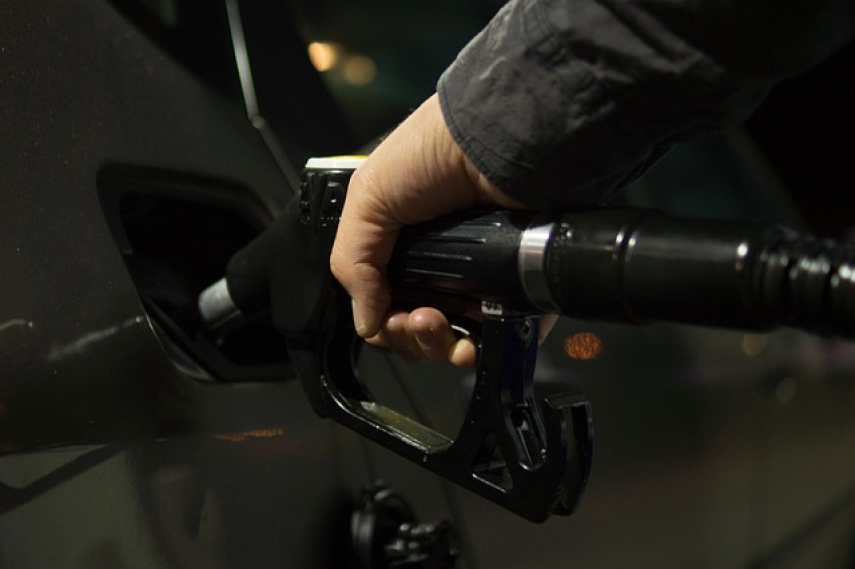
RIGA - On Thursday, Saeima adopted amendments to the Law on Limiting Price Increases for Petroleum Products, which provide for an even greater reduction in the excise tax rate on diesel fuel, as well as a reduction in the excise tax rate on gasoline.
The amendments will take effect on October 1, 2026.
The adopted changes provide for a 16.7 percent reduction in the excise tax rate applicable to diesel fuel used as transportation fuel, bringing it down to the minimum tax level set by the European Union.
Consequently, the excise tax on diesel fuel will be reduced from EUR 396 per 1,000 liters to EUR 330 per 1,000 liters.
Meanwhile, the excise tax rate on unleaded gasoline has been reduced by 11.7 percent, setting it at EUR 490 per 1,000 liters. Until now, the excise tax on gasoline had not been reduced.
Economics Minister Viktors Valainis (Greens/Farmers) noted that changes in the excise tax are reflected at gas stations with a time lag, and the impact on prices is only partially passed on.
Valainis emphasized that achieving an immediate impact on prices would require either an even steeper reduction in the excise tax or a cut in the value-added tax (VAT) rate.
The retail price of diesel is expected to drop by EUR 0.08 if fuel retailers fully pass on the tax reduction to the fuel price.
The changes also call for a reduction in the excise tax rate on unleaded gasoline, setting it at EUR 490 per 1,000 liters, to be in effect until December 31, 2026. The reduction in the excise tax rate will amount to EUR 0.065 per liter, or nearly EUR 0.08 per liter when VAT is included. Consequently, the retail price of gasoline is expected to decrease by approximately EUR 0.08, provided that fuel retailers pass on the full amount of the tax reduction to the fuel price.
The explanatory memorandum states that by reducing the excise tax rate on fuel for three months - from October 1, 2026, to December 31, 2026 - is projected to have a negative impact on state budget revenue amounting to EUR 14.4 million.
Taking into account the procedures for declaring and paying excise tax and VAT, as well as the related crediting of revenues to the state budget, the measure’s impact on the state budget’s cash flow is projected to be minus EUR 9.6 million in 2026 and minus EUR 4.8 million in 2027.
To offset the negative impact of the statutory provisions on state budget revenues in 2026, a one-time compensatory measure is planned to utilize the revenue surplus from the sale of confiscated criminally obtained assets, since the actual collection of these revenues in 2026 will exceed the amount originally planned for that year.

Please enter your username and password.


2026 © The Baltic Times /Cookies Policy Privacy Policy