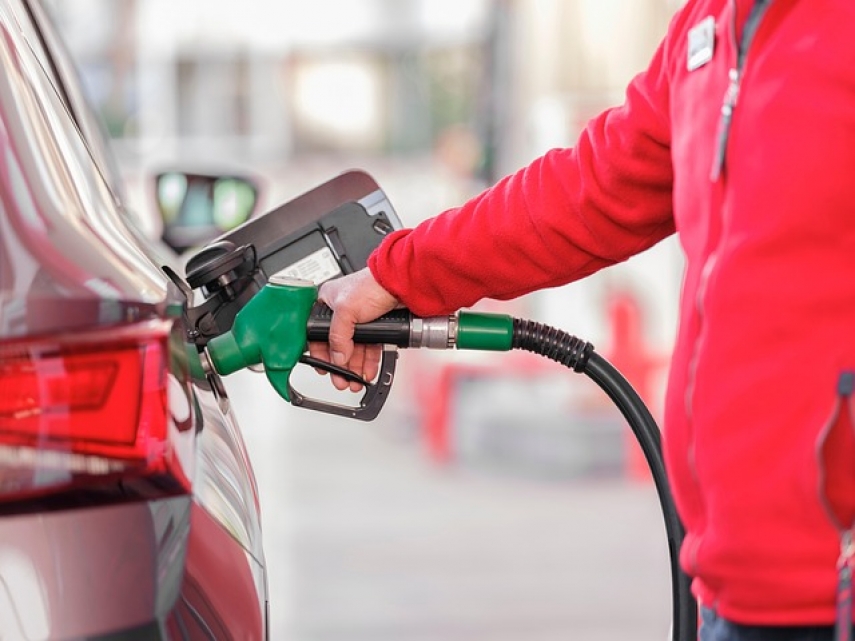
RIGA - The ongoing conflict in the Middle East will leave an impact on agriculture and food production, which could mean costlier food products, Economics Ministry Parliamentary Secretary Jurgis Miezainis told the Saeima Economic, Agricultural, Environmental and Regional Policy Committee on Wednesday.
The ministry's representative noted that the Middle East region produces significant amounts of ammonia and nitrogen, which are the main components of synthetic fertilizers.
Although cooperation with the Middle East region is less important for Latvia, changes in global demand will also have an impact on the situation in Latvia, Miezainis said.
As for Latvia's concerns about energy security, Liga Kurevska, State Secretary at the Climate and Energy Ministry, said that the Incukalns gas storage facility currently holds six terawatt-hours (TWh) of natural gas, including 1.8 TWh of state reserves, and the injection season is underway. The Climate and Energy Ministry cites changeable market signals as a risk, which may lead to caution in building up gas stocks in the summer and winter seasons.
On the other hand, electricity generation capacity in the Baltics is sufficient and functional, and high hydroelectric (HPP) and solar generation in March is helping to absorb price risks and save natural gas. In the winter season, high gas prices can lead to spikes in electricity prices, Kurevska said.
She added that woodchip and pellet production infrastructure is adequate for national needs, but rising fuel prices could lead to higher costs.
As regards thermal energy, the main risks are related to the cost of natural gas and woodchips, the Climate and Energy Ministry states.
Regarding the measures implemented by the Climate and Energy Ministry in the energy sector, Kurevska informed lawmakers that the ministry monitors the affordability of energy sources in the Latvian and Baltic context.
Kurevska said that it is currently challenging for many municipalities to find good offers for purchasing woodchips and natural gas, which is why the Climate and Energy Ministry is considering supporting municipalities with energy purchases and household support programs for the winter.
As a structural measure, the Climate and Energy Ministry mentions the strengthening of local energy production to reduce dependence on global supply chains and the strengthening of the resilience of energy systems in Latvia and regionally.
If the situation worsens, the Climate and Energy Ministry considers limiting energy consumption and launching the Energy Cost Compensation Information System.
MP Janis Patmalnieks (New Unity), pointing to the current situation in energy markets, said that the effect from the Middle East conflict will be felt in the long term.
The lawmaker projected gas prices to remain high at least until the first quarter of next year.
The Economics Ministry believes that the value added tax (VAT) rate should be cut to ease the price pressure on individuals, Miezainis said.
He noted that in the short term, higher prices can increase VAT revenue, so there is an opportunity to reduce the respective taxes.
Independent MP Skaidrite Abrama and MP Linda Matisone (United List) called for a VAT reduction on fuel, citing the example of neighboring countries.
MP Janis Vitenbergs (National Alliance) criticized the Economics Ministry and the government, saying that the pace of decision-making in the context of fuel does not keep up with the speed of price hikes.
As reported, the law on mitigating fuel price increases enters into force today, providing for temporary measures to mitigate the impact of rising fuel prices on the economy and the population.
From April 1 to June 30, 2026, Latvia applies a temporary reduction in excise duty on diesel fuel of around 15 percent, from the current EUR 467 to EUR 396 per 1,000 liters. The excise duty rate for marked agricultural diesel will be EUR 21 per 1,000 liters.

Please enter your username and password.

2026 © The Baltic Times /Cookies Policy Privacy Policy