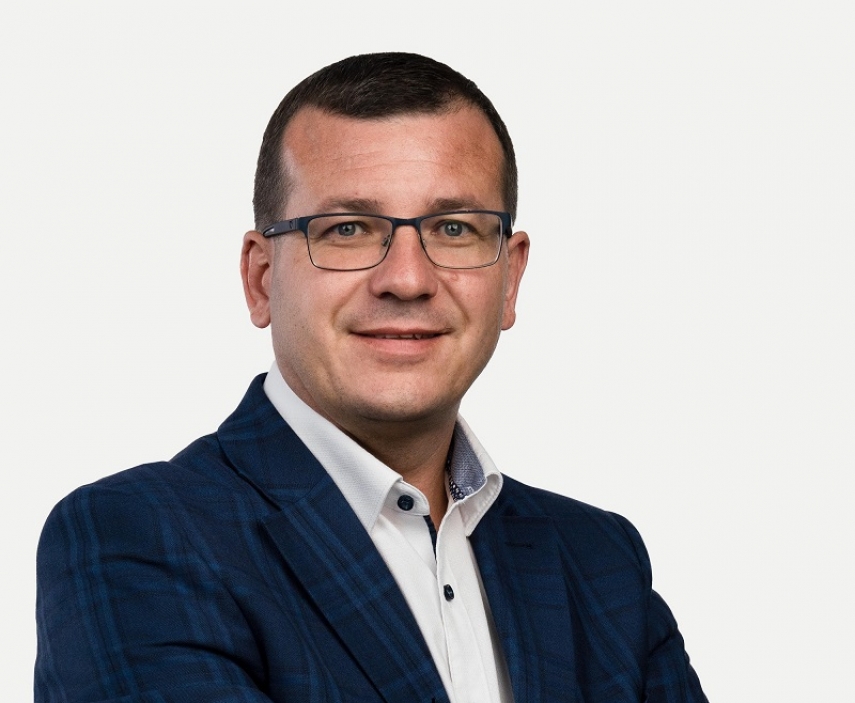
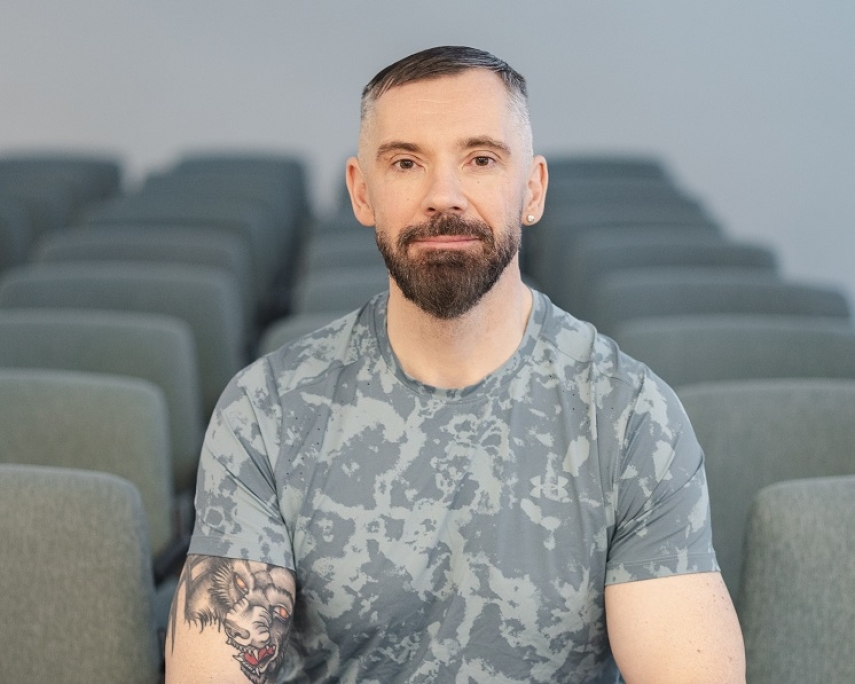
VILNIUS – Robertas Povilaitis, the son of a man killed during the Soviet crackdown in Lithuania in January 1991, said on Tuesday he regretted that prosecutors never opened a criminal case against Mikhail Gorbachev, the then Soviet leader.
"I regret that no pretrial investigation was launched into Mikhail Gorbachev, then president of the Soviet Union and commander-in-chief of the armed forces, for negligent performance of his duties," Povilaitis said at the parliament as Lithuania marked the 35th anniversary of the January 13 events.
His father, Apolinaras Juozas Povilaitis, was shot dead near the Vilnius TV Tower during the assault by Soviet forces.
Povilaitis said it was clear that military actions carried out by forces subordinate to the Soviet defense and interior ministries and the state security committee could not have taken place without political and military decisions at the top.
The man recalled receiving a letter from the Prosecutor General's Office after raising Gorbachev's responsibility, outlining prosecutors' independence and warning against interference.
"To me, as a victim, it was a clear signal: do not go further, do not interfere, do not raise questions," he said, describing the letter as an institutional warning rather than a legal dialogue.
He stressed that a victim's right to ask questions did not constitute pressure on prosecutors.
At the same time, Povilaitis thanked prosecutors for eventually completing the January 13 criminal case investigation and the Supreme Court of Lithuania for ruling that victims may seek damages even after Gorbachev's death.
In October, the court said individuals recognized as victims in the January 13 case can seek compensation even after the perpetrator's death.
Relatives of the victims are seeking non-pecuniary damages from Gorbachev's heirs in a civil case, arguing that he failed to prevent war crimes against unarmed civilians. Gorbachev died while the legal proceedings were still ongoing.
Lithuanian courts have convicted 67 former Soviet soldiers and officers of crimes against humanity and war crimes related to the January 13 events, most of them in absentia after Russia and Belarus refused extradition. The convicts include former Soviet Defense Minister Dmitry Yazov, who died in 2020.
Povilaitis said Lithuania still faced unfinished battles over historical memory, questioning why streets named after Soviet air force colonel Yuri Gagarin remained in some municipalities.
He also warned of new threats to democracy, including online disinformation and political rhetoric that fuels division.
"When enemies are sought instead of solutions and hatred and social division are normalized, it becomes a danger to democracy," he said. "When the spreaders and instigators of hatred come to power, the state begins to be dismantled from within."
He criticized attempts to weaken LRT, warning that a public broadcaster that becomes "convenient for politicians" ceases to serve the public.
The ruling coalition wants to change the LRT law to make it easier to dismiss the public broadcaster's director general.
Soviet troops stormed the Vilnius TV Tower and the Lithuanian Radio and Television Committee building in the early hours of January 13, 1991, as Moscow sought to suppress Lithuania's independence declared on March 11, 1990.
Fourteen civilians were killed and more than 1,000 injured during the assault. One later died of wounds.
Soviet forces seized the broadcasting facilities but did not attack the parliament, which was defended by thousands of unarmed people.
Lithuania marks January 13 each year as the Day of Freedom Defenders in memory of the victims of the Soviet crackdown.

Please enter your username and password.

2026 © The Baltic Times /Cookies Policy Privacy Policy