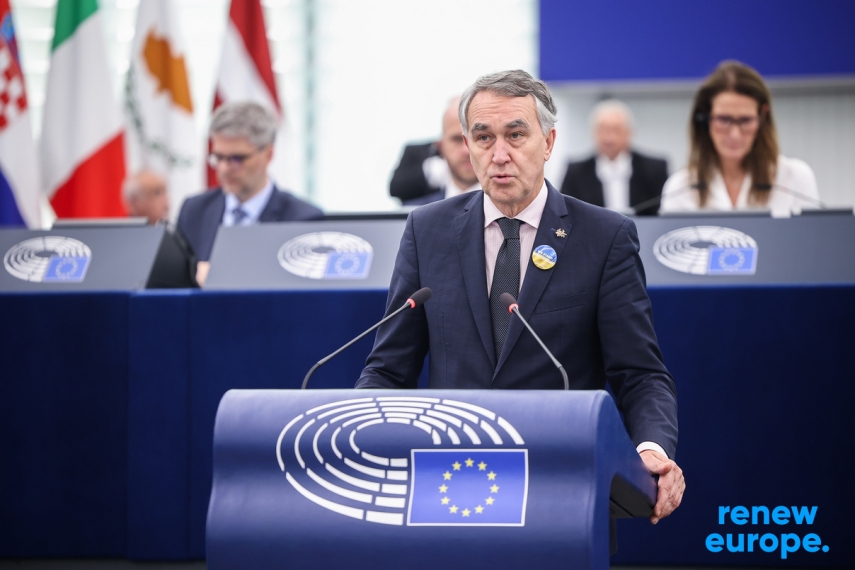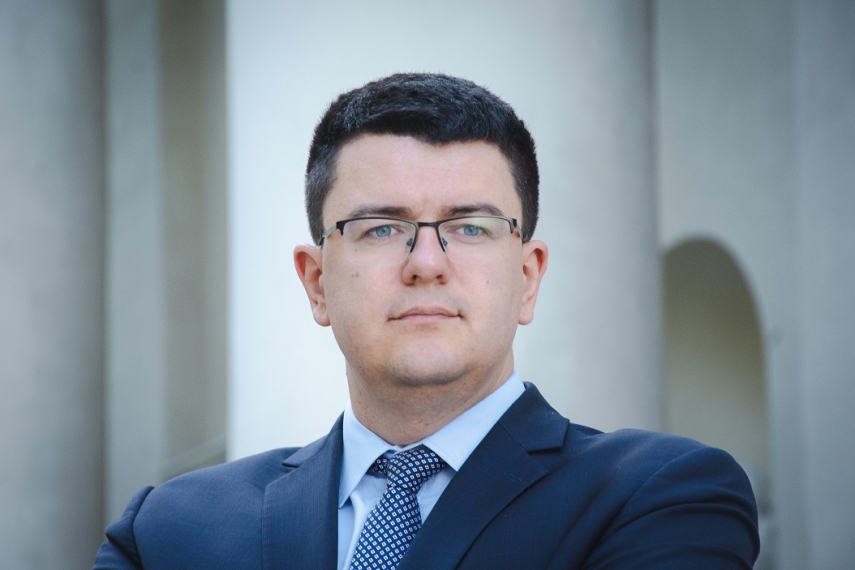
So far, Vytautas Sinica, chairman of the National Alliance (NA) – Lithuania’s national-conservative, socially conservative party focused on national identity, traditional values, and the protection of Lithuanian culture and sovereignty – is the only representative of the party in the national legislature, the Seimas. However, Sinica believes that NA, which has 11 branches nationwide, stands up equally well against the much more visible right-wing Nemuno Ausra (The Dawn of the River Neman). The Baltic Times Magazine spoke with Sinica.
How do you evaluate the work of this composition of the Lithuanian Parliament, Seimas? What concerns you?
The Seimas is mired in day-to-day quarrels between parties and secondary scandals. Perhaps this is characteristic of other parliamentary terms as well, but this one horrifies me. The opposition looks for opportunities to disrupt votes, while the ruling parties reject opposition proposals simply because they come from the opposition. This is the image of an immature democracy.
In terms of political identification, the National Alliance and The Dawn of the River Neman, a right-wing with conservative, nationalistic, and moderately Eurosceptic view, are rather similar and compete for the same voters. Why is it that only The Dawn of the River Neman seems to be visible?
I do not agree with your assessment. Nemuno Ausra dominates in the provinces, especially in Samogitia (Lithuania’s ethnic region – TBT), while we are most popular in cities, especially Vilnius, among voters who are more educated, have higher incomes, and are of middle age. The fact that the rhetoric of the parties overlaps in some areas is a secondary similarity. For people choosing politicians, style is much more important, and the way we present ourselves compared with Zemaitaitis (leader of The Dawn of the River Neman – TBT) is very different. I participate in politics aiming for it to be cultured, solid, based on reasoned discussion, and focused on questions of national survival above everyday economic issues. According to research, before entering the Seimas, both I and the party were very little known. New research shows that at least in terms of personal recognition, I have significantly improved the numbers. We just must link this recognition in people’s minds with the party’s name.
Can the leftist direction in the Western world that the rising right is targeting be stopped? Should it be? What gives you hope?
I believe it can be stopped, and this will happen over the next couple of decades. I would even say some aspects are already changing – for example, the LGBT movement and globalism are weakening, support for minority demands that divide societies is decreasing in various Western countries, and the popularity of the so-called “far right” is growing. These are simply national conservative parties, each in its own way expressing the natural desire for survival. Each of us wants to survive as an individual, but many of us also want to survive as a nation and a state – to have a community in which we are at home, feel needed, and live according to shared rules. Mass migration and multiculturalism destroy that need and take away the sense of security. Everywhere this happens, a delayed but strong reaction emerges. Europe and the West have no choice: either they turn toward strengthening their identity – including Christianity as a civilizational foundation and nationalism as the basis of the state – or they will simply disappear, lacking solid foundations worth defending, and pressured externally by Russian military aggression and forms of invasion from the Islamic world. So either we change, or we disappear.
What are the three biggest challenges for Western Europe? And for Lithuania?
For both the West and Lithuania, the challenges are the same, although not everyone understands them equally. These are Russian military aggression, Islamic invasion, and the demographic crisis. The most tangible threat in Lithuania is Russia, while the West does not fully understand it. With immigration, the situation is reversed – the West already understands the danger, while we do not yet. Meanwhile, the birthrate crisis is obvious everywhere, yet ignored as if nothing can be done.

Please enter your username and password.
2026 © The Baltic Times /Cookies Policy Privacy Policy