In its first year at the International Olympiad in Artificial Intelligence, Latvia’s team earned three distinctions — the result of a national selection and training programme built in less than a year.
Four students travelled to Astana to represent Latvia at the International Olympiad in Artificial Intelligence (IOAI). They returned with three distinctions: Andris Jānis Rozenbergs won a silver medal, Andrejs Zikovs earned bronze, and Arseni Ivanou received an honourable mention.
IOAI’s third, Latvia’s first
IOAI is still very young: its third edition took place in Kazakhstan from 2 to 8 August 2026. Yet it is already a major international competition. This year, it brought together almost half a thousand contestants from 108 delegations and, according to IOAI, became the world’s second-largest International Science Olympiad by participation. It was also held under UNESCO patronage.
Against that field, three distinctions for a four-student debut team are a striking result. Their achievement becomes even more meaningful when one considers what the competition asked of them.
The Olympiad
IOAI is not a test of memorised facts. Over two competition days, contestants tackle six complex tasks. They must understand unfamiliar problems, work with data, design and run experiments, evaluate the results and refine their solutions under time pressure.
The process is rarely straightforward. In AI, an elegant idea may fail in practice, while a simpler approach may perform better. Success depends on recognising what works, understanding why and adapting accordingly. Contestants therefore need more than technical knowledge: they also need sound judgement, creativity and the persistence to keep improving a solution until it delivers strong results.
Latvia’s three distinctions show that its students could do exactly that. They approached AI not simply as a finished tool, but as an engineering discipline grounded in experimentation, evaluation and improvement.
Building Latvia’s AI path
The non-profit organisation Lemon AI led every stage of Latvia’s path to IOAI. In less than a year, it organised the first Latvian Open AI Olympiad and prepared the team for the international competition.
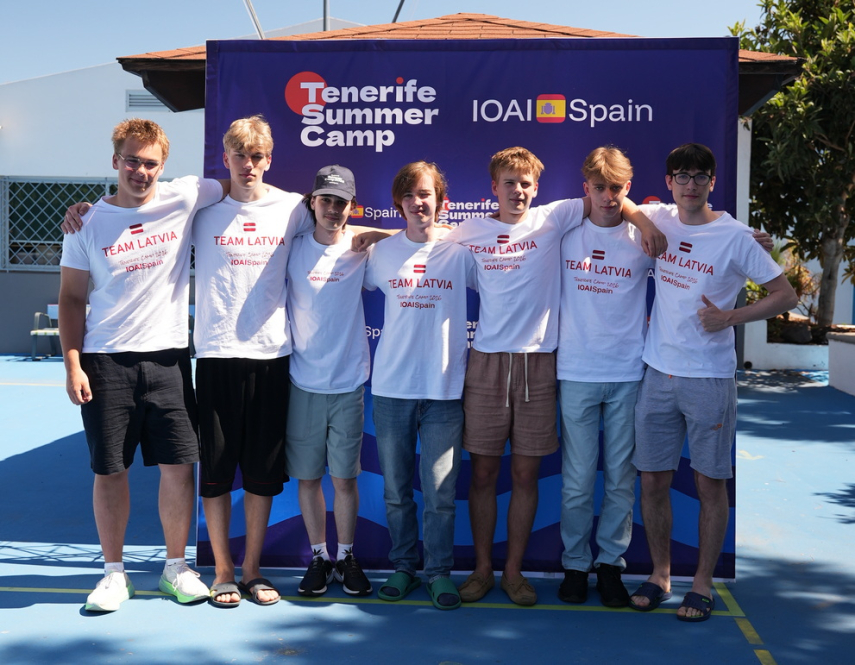
The team’s preparation continued in collaboration with the Spanish institute Harbour.Space, which welcomed Latvia’s delegation to a two-week summer camp in Tenerife. There, the students took part in an intensive training programme led by international coaches, including IOAI gold medallists.
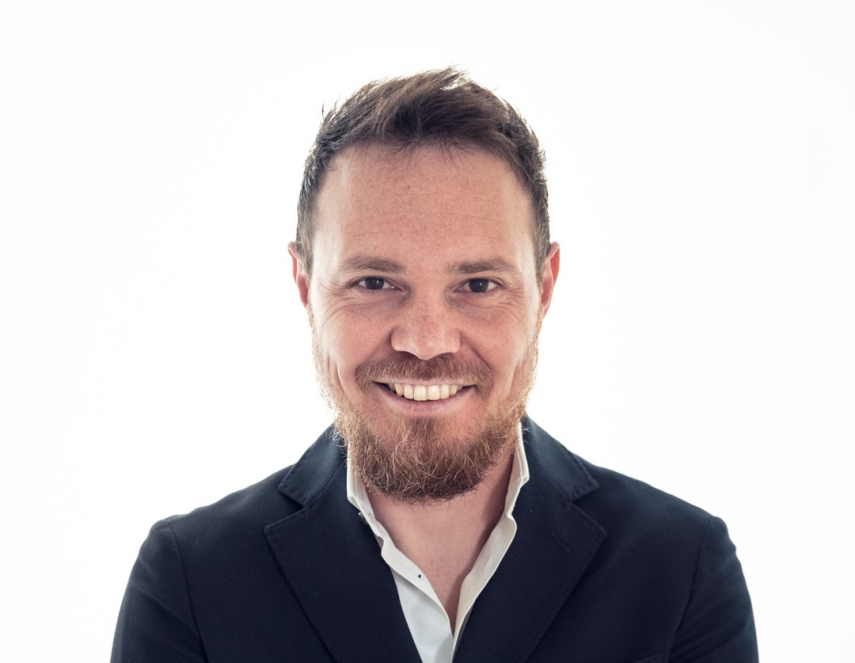
Vladimirs Kirils Bickovs, Lemon AI founder and organiser of the Latvian Open AI Olympiad, says:
“It was our first year, everything was new — organising the Latvian Olympiad, preparing the students and taking part in IOAI. There were plenty of challenges along the way, but the experience showed us that even very ambitious goals are achievable when we are willing to take initiative and put in the work.”
This is only the beginning
Latvia does not want to stop with this year’s achievements. A new Olympiad cycle is already being planned, with an ambition for closer international collaboration in both Olympiad organisation and AI education for children.
Vladimirs adds:
“AI is not far in the future — it is already becoming part of our present. That is why it is so important to give the next generation not only the skills to use AI, but also the curiosity, creativity and technical understanding to build the technologies that come next.”
Latvia’s first IOAI team has shown what is possible. The next challenge is to turn that successful debut into a lasting tradition — and create even better opportunities for those students who come after.

Please enter your username and password.
2026 © The Baltic Times /Cookies Policy Privacy Policy