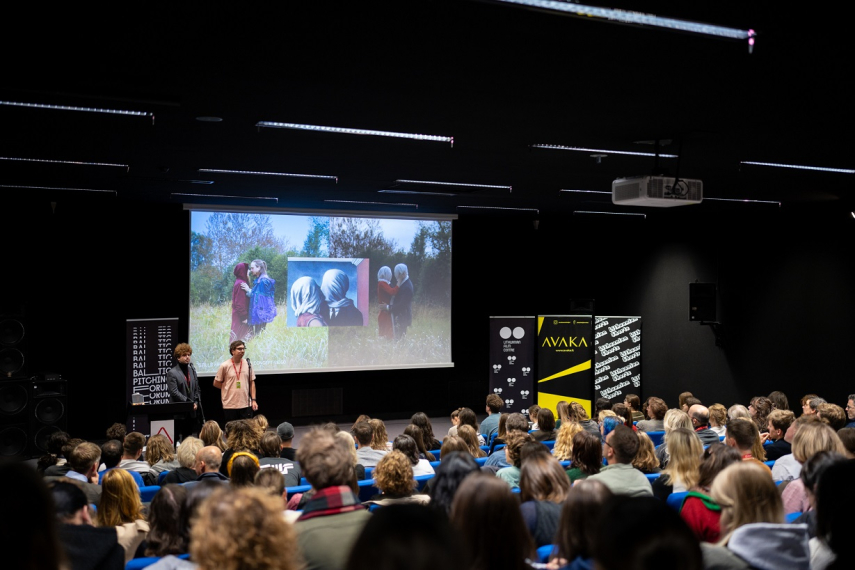
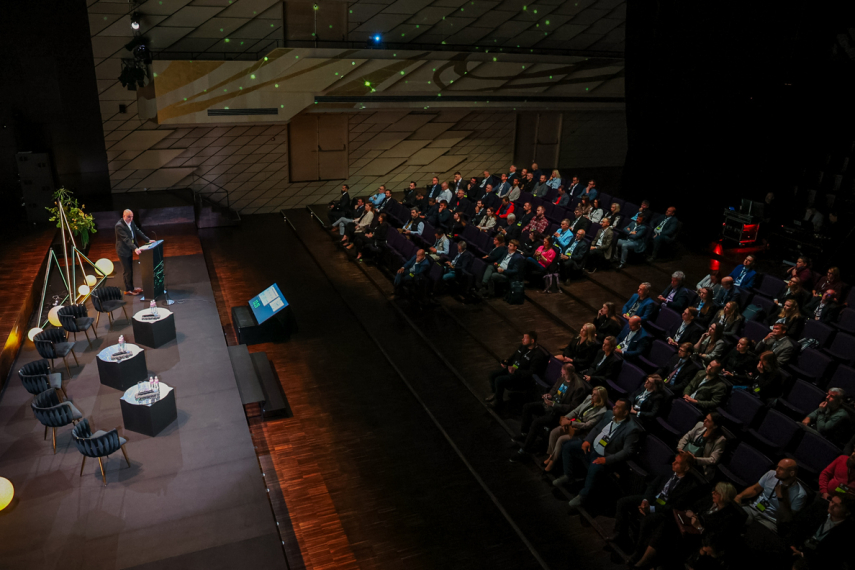
Europe’s efforts to expand defence production will increasingly depend on companies that may not consider themselves part of the defence industry at all, industry experts and executives argued at the Latvian Dual-Use Export Forum, which brought together around 200 participants from more than 15 countries on 6–7 September.
The message emerging from the forum in Rēzekne, eastern Latvia, was straightforward: European defence capacity cannot be expanded by defence primes and specialist manufacturers alone. It also requires companies in electronics, engineering, communications, precision manufacturing, energy, software, sensors and other civilian industries to enter defence supply chains. More than 200 pre-arranged business meetings took place alongside technology demonstrations, company visits and discussions involving representatives of BAE Systems, Dedrone by Axon, SAF Tehnika, Origin Robotics, Redwire, Silmor, Pērkons Energy and other European and international companies.
“For companies looking at the defence market, the first question should not be ‘What defence product should we build?’ but ‘What capability do we already have, and who needs it?’” said defence and strategy adviser Thibault Normand. He argued that becoming part of the defence industrial base does not necessarily mean developing a complete weapons system. Modern defence platforms rely on extensive networks of specialised suppliers. Dassault Aviation, for example, identifies around 400 companies in the industrial ecosystem supporting the Rafale fighter programme.
The challenge, Normand said, is therefore not only technological capability but industrial credibility. “An excellent prototype from an unreliable supplier is not a defence capability.” Defence customers need confidence that suppliers can deliver consistently over decades and scale production rapidly during a crisis, he added. For companies seeking to enter the sector, the immediate objective should therefore not necessarily be winning a major procurement but becoming credible enough to secure the next conversation with a customer or prime contractor.
Latvia seeks a larger role for domestic industry
Latvia is simultaneously seeking to increase the participation of its domestic industry in defence procurement.
Uģis Norītis, Deputy State Secretary for Planning at Latvia’s Ministry of Defence, said Latvia aims to increase the share of domestic industry in defence procurement to 20% by 2028 and 30% by 2036, while progressively increasing funding for defence innovation. Support is being developed across the industrial lifecycle, from early-stage ideas and prototypes to scaling manufacturing capacity.
Norītis also stressed that many components required by defence systems are not inherently military products. Materials, electronics, engineering components and other widely used industrial products can all form defence supply chains, creating opportunities for companies that have traditionally operated entirely in civilian markets. For Europe, this represents a potentially much larger industrial base than the companies currently labelled as “defence”.
From Latvian start-ups to international defence customers
Latvia already provides examples of how quickly companies can enter international defence markets. Origin Robotics, founded in 2022, now employs 103 people, according to the company’s Head of Government Relations Māris Ķuda. Its unmanned systems are already used by the armed forces of eight countries, including Latvia, Ukraine, France and Denmark. Latvian telecommunications equipment manufacturer SAF Tehnika, meanwhile, has built an international business in wireless communications and radio-frequency monitoring. CEO Normunds Bergs presented the company’s experience of taking Latvian-developed technology into defence and security markets worldwide. The examples point to a broader opportunity for smaller European economies: they may not compete with Europe’s largest defence manufacturers in scale but can occupy highly specialised positions in international supply chains.
The next bottleneck may be integration
Technology itself, however, is only part of the challenge. Christian Emaus, Regional Director for the Nordics, Baltics and NATO at Dedrone by Axon, argued that one of the most pressing problems in airspace security is increasingly the ability to connect technologies, institutions and operators.
Defence forces, police, critical infrastructure operators and private companies can each have sophisticated systems and their own understanding of what is happening in the airspace yet still lack a common operational picture. “You cannot control the airspace if you cannot share the picture of it,” Emaus said. He argued that Latvia could position itself not only as a home for dual-use technology companies, but also as an environment where technologies, users and institutions can be connected and tested together.
More than 200 business meetings
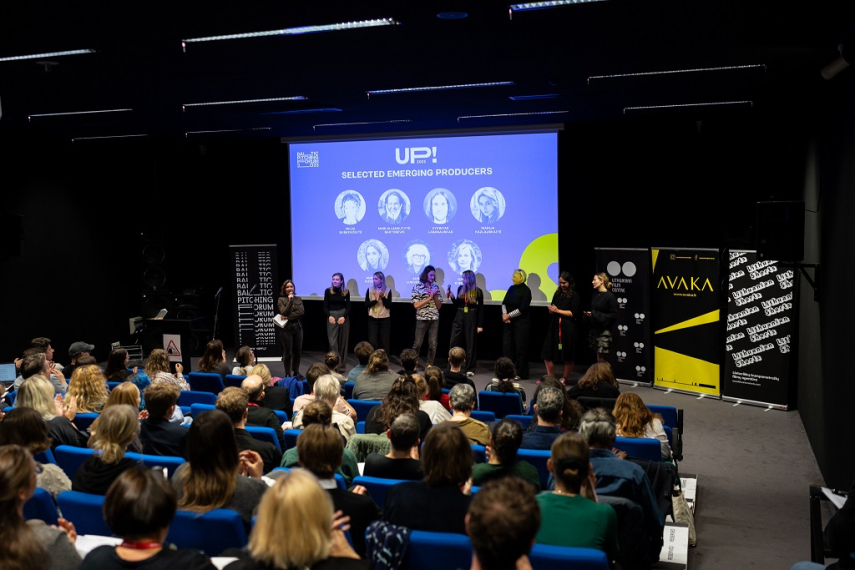
The second Latvian Dual-Use Export Forum brought together around 200 participants from Latvia and abroad, representing more than 15 countries.International participants included TensorOne, AJB Subsea, HISDESAT, NEST AI, Fischer Panda and Sine Engineering, while speakers and programme participants represented companies including BAE Systems, Dedrone by Axon, Wolfram Europa, SAF Tehnika, Silmor, Pērkons Energy, Redwire, RAW and Origin Robotics.
The programme began on 6 September with an Industry Day organised together with Latvia’s Ministry of Defence, including live demonstrations of Latvian defence and dual-use technologies and visits to manufacturing companies. On 7 September, discussions shifted from technology to commercialisation: how companies can turn engineering capabilities and innovation into international partnerships, supply-chain positions and exports.
“Interest in Latvian dual-use technologies and industrial capabilities is clearly growing, but the value of the forum is not measured by participant numbers,” said Līva Stūrmane, Chair of the Board of the Latvian Exporters Association ‘The Red Jackets’. “What matters is creating the conditions for new partnerships. For a smaller country such as Latvia, integration into international supply chains is one of the most realistic ways of turning technological and manufacturing capabilities into defence exports.”

Please enter your username and password.

2026 © The Baltic Times /Cookies Policy Privacy Policy