Photo: Goran Horvat from Pixabay
RIGA - The implementation of the Rail Baltica high-speed railway project by 2030 still depends on sufficient European Union (EU) funding, representatives of the Baltic joint venture RB Rail told LETA.
Commenting on the European Court of Auditors' statement that large-scale Trans-European Transport Network (TEN-T) projects require a clearly defined implementation deadline and stable, predictable funding to ensure that the objectives set are achieved, the joint venture emphasizes that, in this context, the successful implementation of the first phase of Rail Baltica by 2030 still depends directly on the availability of sufficient EU funding in the next multiannual financial framework from 2028 to 2034.
In RB Rail's view, the conclusions contained in the European Court of Auditors' updated report on EU transport megaprojects, including Rail Baltica, reflect the previously identified project risks.
At the same time, RB Rail has reviewed the conclusions and agrees with them, as they are consistent with the risks that the project implementers have previously identified, analyzed, and publicly explained. Among other things, the Court of Auditors has indicated that the total estimated cost of Rail Baltica for the entire project has increased to EUR 23.8 billion (in 2023 prices), compared to the initial estimate of EUR 5.8 billion (in 2017 prices).
The Court also explained that, overall, the increase in costs is mainly due to the limited detail of the early estimates and their gradual refinement during the course of the project, including the improvement of design solutions and scope. The joint venture explains that these conclusions are also in line with the results of the joint audit carried out in 2024 by the supreme audit institutions of Estonia, Latvia and Lithuania.
The initial cost estimates were based on preliminary value engineering assumptions, which were replaced by significantly more accurate calculations when the project reached the main technical design stage. The cost increase was further influenced by the expansion of the project scope, updated technical, safety and military mobility requirements, as well as significant external factors, including approximately 40 percent cumulative inflation in the Baltic States between 2017 and 2023, increases in construction and energy prices, supply chain disruptions, and the impact of Russia's war against Ukraine, the joint venture emphasizes.
At the same time, the European Court of Auditors has pointed out that major European infrastructure projects are, on average, more than ten years behind schedule. In this context, Rail Baltica's current delay of approximately four years is still within the normal range for projects of this scale and complexity, the joint venture notes.
RB Rail also notes that Rail Baltica is a large-scale and complex project, which is being implemented simultaneously in three countries as a completely new European standard railway infrastructure, rather than a modernization of existing infrastructure. The project involves the introduction of uniform technical, safety and compatibility standards, as well as an unusually large number of cross-border connections and involved parties. Similarly, the geographical and geopolitical context - its location close to the EU's eastern border and an active war zone has exacerbated the impact of inflation, rising energy prices, supply chain volatility and security requirements compared to many other TEN-T projects.
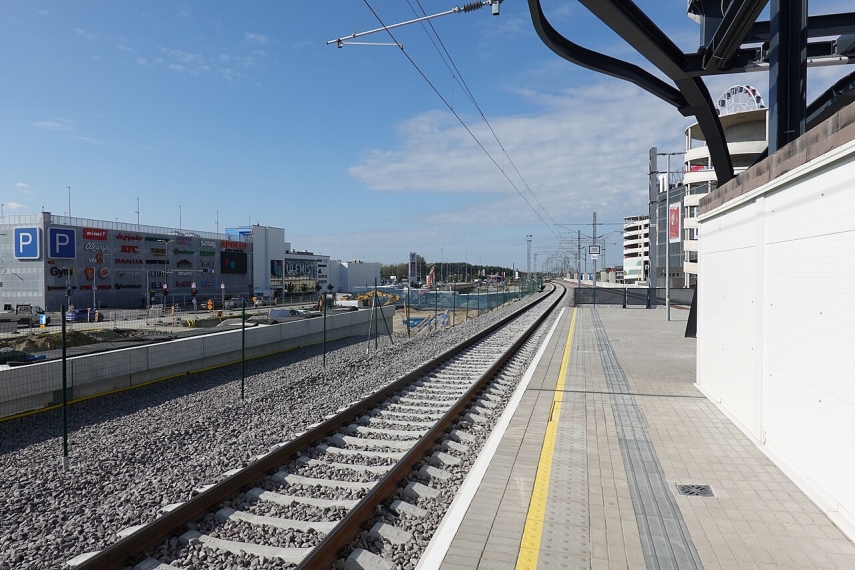
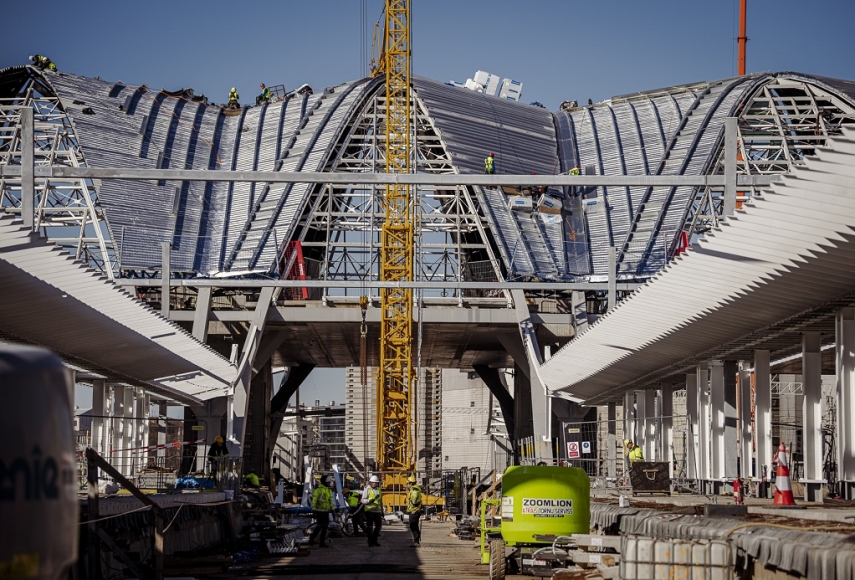
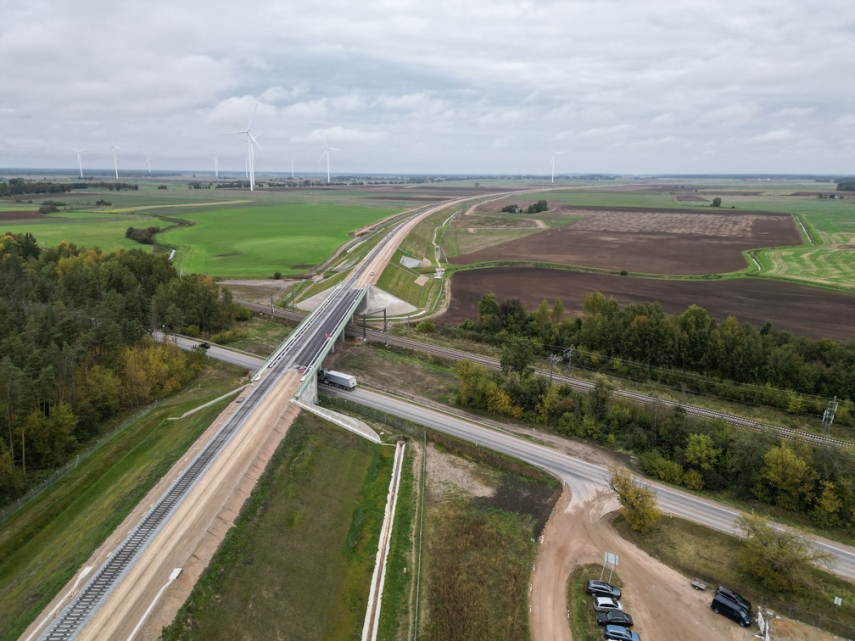
The joint venture notes that large-scale construction work is currently underway in all three Baltic countries. In Estonia, construction contracts have been signed for approximately 202 of the 213 kilometers of the main route, and more than 100 kilometers are under active construction. In Latvia, full-scale work is underway on the priority southern section, where approximately 30-35 kilometers have been handed over to the contractor, while construction work continues at Riga Central Station and Riga Airport. In Lithuania, track laying has begun, and 114 kilometers of the main line are currently under construction.
Commenting on the risks of cost increases, RB Rail emphasizes that the availability of sufficient and timely financing is one of the main prerequisites for the implementation of the project within the set deadlines. Currently, the first phase of Rail Baltica is being implemented in accordance with the available funding, without assuming financial commitments that would not be fully covered by the funding.
RB Rail adds that long-term EU-level financial support is crucial in order to maintain the pace of project implementation, ensure coordinated cross-border implementation, and fully realize the strategic importance of Rail Baltica in the current geopolitical context as a significant contribution to European security, stability, and long-term integration.
As LETA reported, the costs of the Rail Baltica railway project are likely to exceed EUR 23.8 billion after the completion of phase two, the European Court of Auditors says in its report on the European Union (EU) transport infrastructure.
The report contains the European Court of Auditors's updated considerations and findings, obtained in an audit similar to one conducted in 2020. The report focuses on the costs and timelines of eight megaprojects of the trans-European transport network (TEN-T), including Rail Baltica.
The European Court of Auditors concludes that the 2030 deadline for the completion the EU's core network will not be met and that the costs of two projects have increased significantly, including Rail Baltica, which has more than doubled in cost since 2020.
It was also reported that, according to RB Rail, the cost of the first phase of the Rail Baltica project in the Baltics could reach EUR 14.3 billion, including EUR 5.5 billion in Latvia, but there is potential to save up to EUR 500 million by optimizing technical solutions, as well as cutting other costs.
The total cost of the project could reach EUR 23.8 billion in the Baltics according to the cost-benefit analysis. A previous cost-benefit analysis in 2017 estimated the total cost of the project at EUR 5.8 billion.
The Rail Baltica project will build a European standard gauge railway line from Tallinn to the Lithuanian-Polish border to connect the Baltic States with other European countries by rail. A new 870-kilometer European-standard (1,435 mm) railway line with a maximum train speed of 240 kilometers per hour will be built in the Baltic States.
Rail Baltica is a double-track, European standard 1,435 mm gauge electrified railway for passenger and freight transport to be built from Tallinn to the Lithuanian-Polish border. The overall length of the railway will be 870 kilometers.

Please enter your username and password.

2026 © The Baltic Times /Cookies Policy Privacy Policy