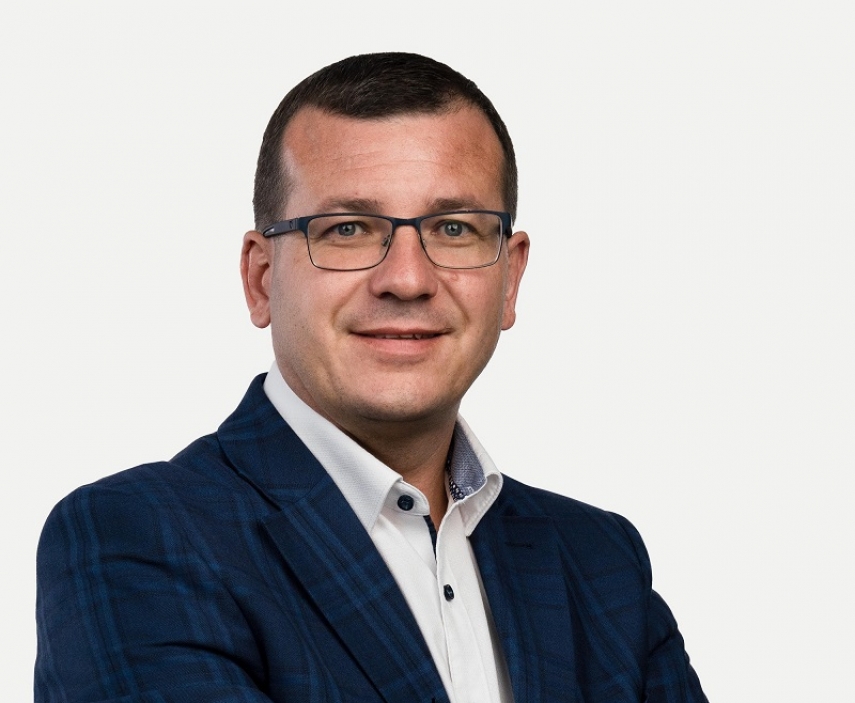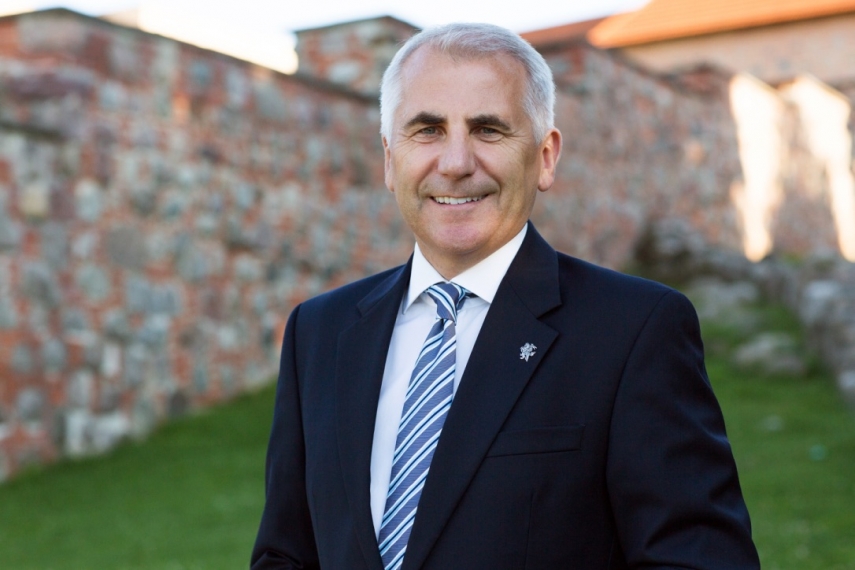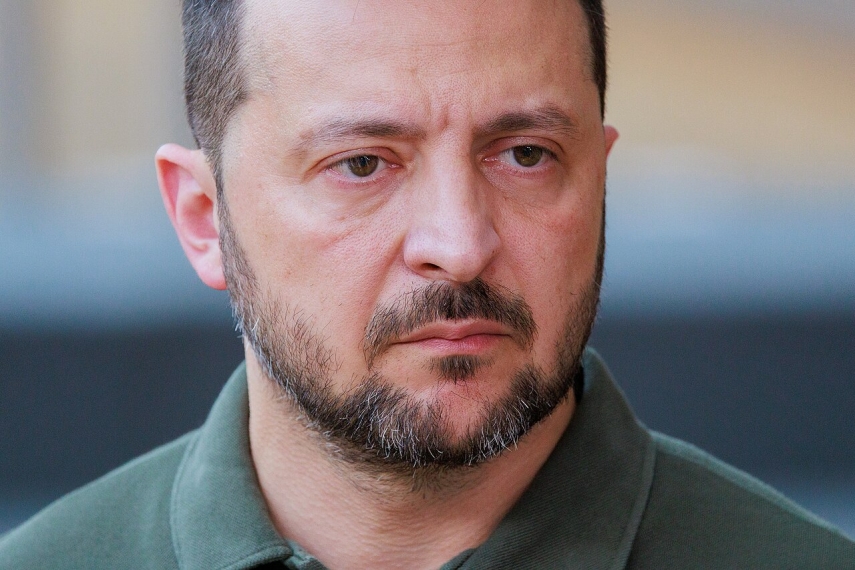
VILNIUS - Lithuanian President Gitanas Nauseda said on Monday that the 20th package of sanctions on Russia was delayed due to Hungary’s election period, but expressed confidence it will be adopted in the future.
"The sanctions package could have been adopted on February 24, marking the fourth anniversary of the war in Ukraine. Unfortunately, the process was prolonged due to the resistance of practically two European Union states," Nauseda told reporters.
"I don’t think this is some kind of principled resistance, but given that we are living in a pre-election period, so to speak, in Hungary, (...) (this - BNS) complicates decision-making at the EU level," he added.
According to him, Lithuania’s position on sanctions remains strong. "We want the twentieth sanctions package not only to be adopted, but also to be adopted as broadly as possible," he said.
"It is also planned to additionally include financial institutions, shadow fleet vessels, and expand the list of both sanctioned companies and individuals," the head of state noted.
Nauseda emphasized that he has no doubt the package will be adopted, but efforts will be needed to make it stricter.
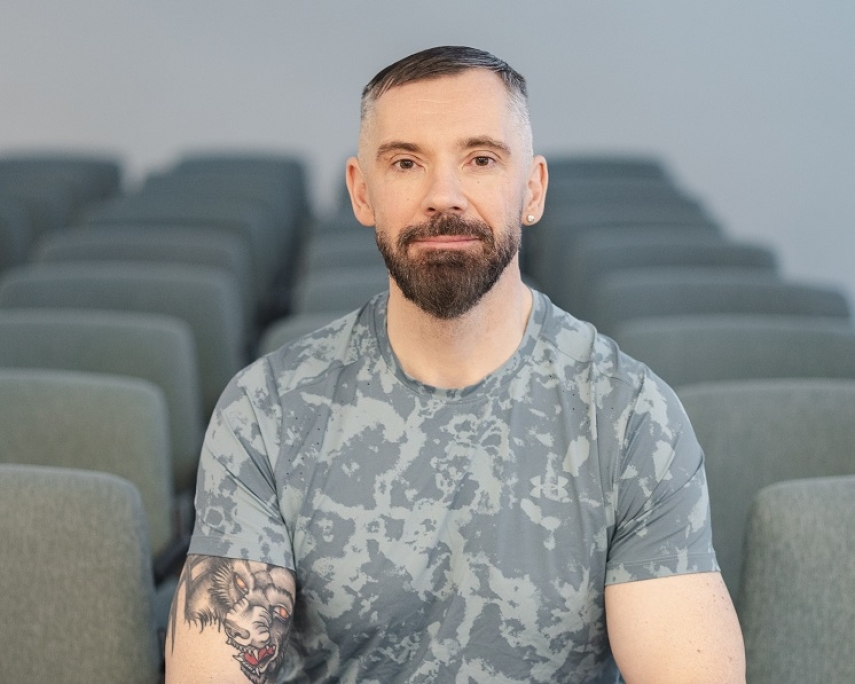
Lifting sanctions on Russia would be detrimental to both Lithuania and the wider Western community, Asta Skaisgiryte, the president’s top foreign policy aide, said earlier on Monday.
"If the war ended and sanctions against Russia were lifted, it would enable Russia to continue arming itself, to continue preparing new provocations, and perhaps to plan further aggressive actions. So, lifting sanctions would unequivocally be a bad thing for us and, I believe, for the entire Western community," Skaisgiryte told public broadcaster LRT.
The adviser emphasized that Lithuania’s annual national security threat assessment, prepared by intelligence services, identified Russia as an existential threat to the country.
"Also, its enabler Belarus is a country that plays a very special role. Its territory was provided for the attack on Ukraine. Hybrid attacks on Lithuania, as well as Latvia and Poland, originate from it. Plus, Russian weaponry, including very serious weaponry, is being deployed in Belarus," she stated.
"These are alarming facts, but it must be acknowledged that for at least four years since the beginning of the war, we in Europe have been living under conditions of constant hybrid actions. (...) This is a question that politicians must answer first: is everything being done, have we done everything to maximally prevent these threats?" the adviser said.
The security assessment, prepared by the State Security Department and the Second Investigation Department, noted that if Russia and Ukraine signed a peace treaty and the West lifted sanctions, Russia could be ready for a limited conflict in the Baltic Sea region within one to two years, and for a large-scale military conflict with NATO within six to ten years.

Please enter your username and password.

2026 © The Baltic Times /Cookies Policy Privacy Policy