TALLINN - A pan-Baltic survey commissioned by BTA Insurance reveals that for the residents of the Baltic states, protecting their health is the most important aspect of preparing for unexpected events. Estonians and Lithuanians place family well-being in second place, while Latvians prioritize personal financial security.
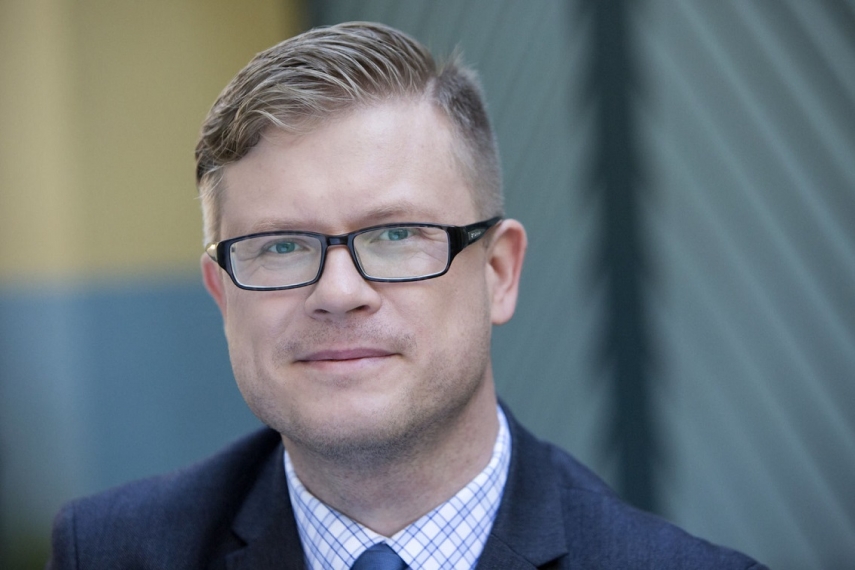
Although a sense of security in all three countries is primarily based on health, financial readiness, and the well-being of loved ones, the factors people associate with preparedness, confidence, and risk-taking differ somewhat by country. "The results confirm that people in the Baltic states think about security very practically. They first want to protect what would most directly impact their daily lives if lost," said Ivika Torpel, head of the Estonian branch of BTA Insurance.
Health risks are the most immediate and personal security issue across the Baltics. Protecting one's health against unexpected events is considered most important by 55 percent of Lithuanians, 50 percent of Estonians, and 47 percent of Latvians.
Clearer differences emerge in the second preference. Estonians and Lithuanians rank family well-being as their second priority, cited by 19 percent and 18 percent of respondents, respectively. In Latvia, personal financial security emerges as the second most important factor, considered crucial by 16 percent of respondents. In Estonia and Lithuania, securing one's financial situation is somewhat less important, at 11 percent and 9 percent, respectively.
The home was considered most important by 11 percent of Estonian and Lithuanian respondents; in Latvia, the proportion for home protection is lower, at 6 percent. Protection related to cars and travel clearly takes a backseat in all three countries.
General preparedness in the Baltics is primarily associated with money, health, and work, but the emphasis varies by country.
In Estonia, the focus is on balance and a support network. Preparedness is primarily associated with three factors: sufficient savings, a stable job, and good health, all mentioned by 34 percent of respondents. Estonia also stands out for its strong emphasis on social support: 23 percent of Estonian respondents consider the support of family and friends a sign of preparedness. In Lithuania, the same figure is 17 percent, and in Latvia, it is 10 percent.
In Lithuania, a savings buffer is the most prominent factor. A sufficient financial buffer is considered the main sign of preparedness by 38 percent of Lithuanians, indicating a stronger need for material security.
In Latvia, preparedness is most associated with health, a plan of action, and self-confidence. Good health and energy are considered most important, mentioned by 31 percent of respondents, followed by a clear plan of action, cited by 30 percent. Additionally, 25 percent of Latvians value belief in their own abilities.
"Three countries and three approaches to preparedness: Estonia relies more on its support network, Latvia on a plan, and Lithuania on money," summarized Ivika Torpel, head of BTA's Estonian branch.
The question of risk appetite showed that in all three countries, the most common attitude is to seek a balance between excitement and security in daily decisions. In Latvia, 48 percent of respondents describe themselves this way, compared to 40 percent in Lithuania and 36 percent in Estonia.
Estonians stand out for their greater caution: as many as a fifth of Estonian respondents prefer to avoid risks whenever possible. In Latvia and Lithuania, this figure is nearly half that, at 12 percent in both countries.
Nearly a fifth of Baltic residents are willing to take small risks to enjoy life: 21 percent in Latvia and Lithuania, and 19 percent in Estonia. True risk-takers are few in all three countries: 7 percent in Lithuania, 5 percent in Latvia, and 4 percent in Estonia.
As expected, younger respondents are more open to risks. The most daring risk-takers in the Baltics are young Lithuanians, 14 percent of whom often choose the boldest option.
In Estonia, the age difference in risk-taking behavior is the steepest. While only 10 percent of 18-29-year-olds avoid risks, among 60-74-year-olds, 38 percent are risk-averse. A similar pattern exists in Latvia and Lithuania, but it is not as pronounced.
"A willingness to take risks does not necessarily mean recklessness. For many people, it is important to find a balance: to live actively but maintain control over potential consequences," emphasized Ivika Torpel, commenting on the survey results. "This is precisely where insurance can help: a person does not have to give up their plans and can act more boldly when the main risks have been considered and mitigated."
The survey, commissioned by BTA, mapped the attitudes and preparedness of residents aged 18-74 in all three Baltic countries for dealing with unexpected events. The study focused on which areas of life people currently consider most important to protect, how they define preparedness, and their appetite for risk in daily decision-making. The survey sample included 3,000 people, with 1,000 respondents in each Baltic country.

Please enter your username and password.


2026 © The Baltic Times /Cookies Policy Privacy Policy