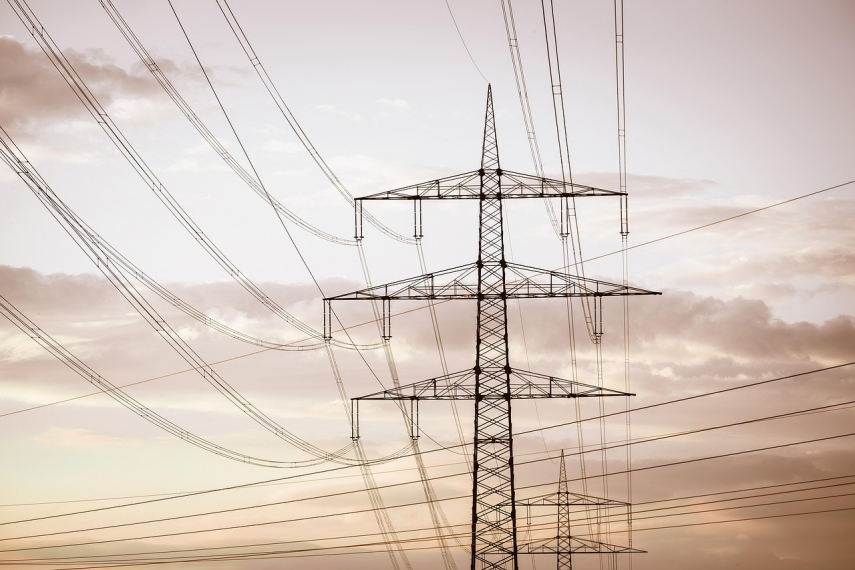
Photo: www.pixabay.com
TALLINN - State-owned electricity distribution network operator Elektrilevi announced on Tuesday that, pursuant to amendments to the Electricity Market Act, a fee for unused production capacity will apply to electricity producers in Estonia from 2026.
The aim of the amendment is to optimize the use of the electricity network and to free up unused network capacity for new electricity producers.
The amendments to the Electricity Market Act, adopted by the Riigikogu in 2023 and specified in 2025, stipulate that electricity producers must use at least 95 percent of the production capacity agreed in the contract to be supplied to the network. The requirement is deemed to be fulfilled if, on at least one day per year, the electricity producer's generation capacity reaches at least 95 percent of the contractually agreed capacity during a single 15-minute measurement period.
If the electricity producer fails to meet the generation level required by law, a fee of 38 euros per year will apply for each unused kilowatt, plus VAT. The bills will be issued regularly once a year.
"Reserved but unused capacities hinder the efficient use of the network and limit the opportunities and conditions for new connections. The aim of the amendment is to ensure that electricity producers do not reserve electricity network capacity they do not actually use. This enables a more optimal allocation of network resources and creates opportunities for new connections," explained Ardi Ratassepp, head of infrastructure solutions and customer experience at Elektrilevi.
He added that the efficient use of network resources is particularly important in the current situation, where interest in renewable energy production has grown significantly and there are many new applicants wishing to connect to the grid.
Since connections to the electricity network in the distribution network are cost-based, holding on to unused network capacity increases the connection cost for other new producers in the area. In addition, making the most efficient use of the network helps to keep the network tariff lower for customers in the long term and to avoid unnecessary network investments. Elektrilevi will use the funds received from the underuse fee to cover investments related to increasing the capacity of its network.
"We will notify all customers affected by the fee by letter and provide a detailed overview of the topic along with the necessary instructions," said Ratassepp.
The fee applies to all electricity producers, but the calculation period varies depending on when the generating installation was completed. For producers completed before March 2023, the monitoring period covers 2024 and 2025. If the required production capacity is not reached during this period, the fee will be issued at the beginning of 2026 for both years at once.
For producers completed after March 2023, there is an initial period of one year for commissioning the solar park, followed by a two-year monitoring period. The fee will be issued after the end of the monitoring period.
If the contractually agreed capacity to be supplied to the network is 10 kilowatts (kW), then to meet the 95 percent requirement, the output to the network must reach at least 9.5 kW during a 15-minute measurement period on at least one day per year.
If the actual maximum capacity supplied to the network is, for example, 7 kW, the unused production capacity is calculated as 3 kW (10 kW - 7 kW), and the fee is 3 kW × 38 euros = 114 euros per year, exclusive of VAT.
In order to choose a network contract with the correct capacity, the generating party must generate electricity in accordance with the capacity specified in the contract, and monitor the production data in Elektrilevi's self-service portal and ensure that, on at least one day per year, the output reaches 95 percent of the contractual capacity during a 15-minute measurement period.
If the full capacity agreed in the contract is not planned to be used, it can be reduced. The application to reduce the agreed capacity must be submitted no later than Jan. 31, 2026.
"From next year, certain relief is planned regarding the application of this fee for micro-producers with a capacity below 15 kilowatts. We are currently developing a more detailed approach at the Ministry of Climate, and the expectation is that it could be implemented at the beginning of 2026," said Karin Maria Lehtmets, head of energy markets at the energy department of the Estonian Ministry of Climate.

Please enter your username and password.

2026 © The Baltic Times /Cookies Policy Privacy Policy