As the gentle breeze from the Baltic Sea caresses the city of Tallinn and the spring sunshine bathes the beaches of Parnu, we can feel the breath of Earth resonate with the pulse of every living being. When facing climate change, green development has evolved from an “optional choice” into “what must be done” for every country. China has composed a “green symphony” of harmony between humanity and nature during the last five years of the 14th Five-Year Plan period (FYP). I would like to share with Estonian friends the story of China’s ecological civilization and explore the promising prospects for bilateral cooperation in the green sector.
A Profound Conceptional Transformation: Lucid Waters and Lush Mountains Are Invaluable Assets
In advancing ecological civilization, guiding philosophy comes first. Twenty years ago, Xi Jinping, then Secretary of the CPC Zhejiang Provincial Committee, put forward in Yucun Village (余村) of Anji County the idea that lucid waters and lush mountains are invaluable assets. Today, as a hallmark of Xi Jinping Thought on Ecological Civilization, it has developed into a core principle guiding China’s green transformation.
This concept has achieved such wide resonance as it profoundly resolves the dilemma that has long troubled China over economic development versus environmental protection, leading to a real transformative development paradigm beyond philosophical speculation.
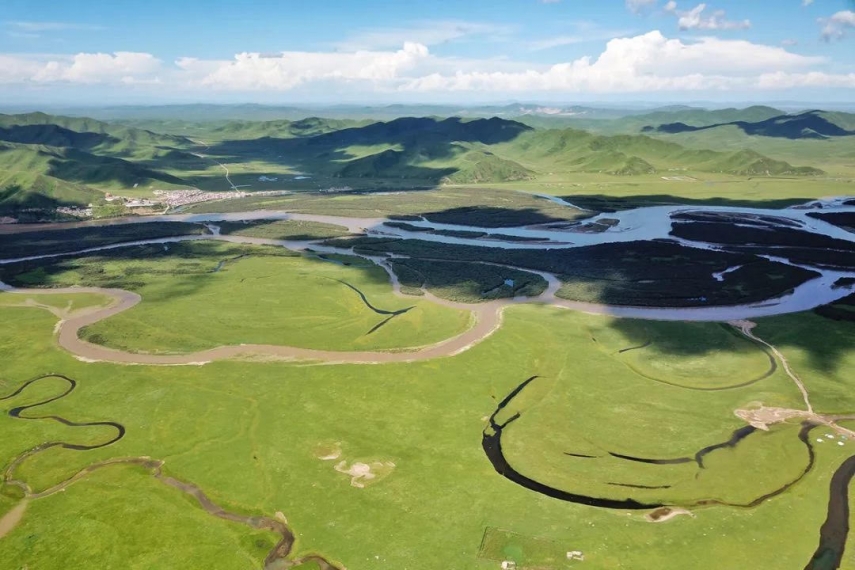
The Awancang Wetland (阿万仓湿地), which is located in Maqu County of Gannan Tibetan Autonomous Prefecture of Gansu Province and is a key area of water conservation in the upper reaches of the Yellow River, once degraded due to overgrazing. During the 14th FYP, through ecological compensation and restoration efforts, the scenic landscape was restored. Meanwhile, local herders found their incomes increased instead of declining by engaging in carbon trading and eco-tourism. The beautiful nature brings them tangible economic benefits.
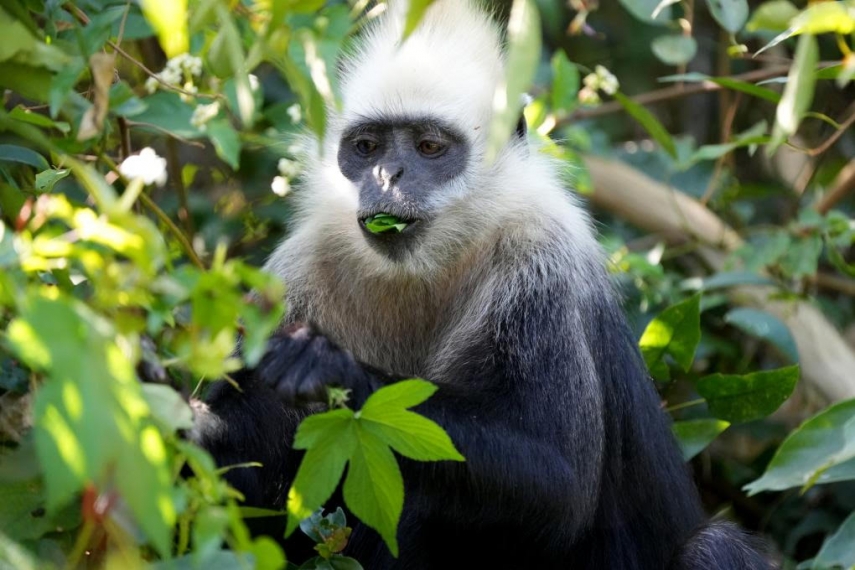
The same story happened in Chongzuo (崇左) of Guangxi. With the population of the white-headed langur native to the region, also known as the Karst rock spirit, hitting over 1,400, this flagship species has drawn nature enthusiasts from around the world. Both examples demonstrate that protecting ecosystems means safeguarding and enhancing natural capital, as well as preserving the potential and sustainability of economic and social development.
A Remarkable Achievement: Ecological Progress During the 14th FYP
The 14th FYP marks a milestone in advancing China’s ecological civilization, in particular by pursuing integrated conservation and systematic governance of various terrestrial ecosystems such as mountains, rivers, forests, farmlands, lakes, grasslands and deserts.
Bluer skies and clearer waters have been restored. With the average concentration of PM2.5 in cities at and above the prefectural level dropping to 29.3 micrograms per cubic meter by 2025, China has achieved the world’s fastest improvement in air quality. Meanwhile, the proportion of surface water sections with good or excellent quality has exceeded 90%, and the main stream of the Yellow River along its entire length has reached Grade II water quality, meaning clear enough to serve as a main source of drinking water.
Green landscapes continue to expand. China has contributed about one-quarter of the world’s newly added green areas, becoming the country with the largest and fastest growth in forest resources. Furthermore, the integrated ecosystem conservation and restoration project has restored 8 million hectares of land.
The “dual carbon” goals have been steadily implemented. As a responsible major country, China has pledged its strategic goals of striving to achieve carbon peaking by 2030 and carbon neutrality by 2060. This climate commitment echoes the intrinsic requirement for China’s development transformation. During the 14th FYP, the share of non-fossil energy consumption increased from 16% in 2020 to over 20% in 2025. China has built the world’s largest and fastest-growing renewable energy system, with installed capacities of solar and wind power ranking first globally for ten consecutive years. By the end of 2025, China’s installed capacity of non-fossil energy reached 2.337 billion kilowatts, accounting for 60% of the nation’s total installed power capacity.
A Shared Responsibility: Contributing to Global Ecological Governance
Recognizing that no country is immune in the face of the climate crisis, China actively participates in and contributes to global environmental governance.
Data provide the most compelling evidence. The Global-Scale Sustainable Development Scientific Monitoring Report 2025 shows that China ranks first among “positive contributors” in the world, with an average contribution rate of 5.84% across 15 key sustainable development indicators. Over the past decade, China has helped drive down the costs of global wind and photovoltaic power by more than 60% and 80% respectively, making clean energy affordable for all.
China also contributes to global rule-making. One example worth highlighting is that China successfully hosted the 15th meeting of the Conference of the Parties to the Convention on Biological Diversity (COP15) and, as the presiding country, played a leading role in the adoption of the historic Kunming-Montreal Global Biodiversity Framework, charting a new blueprint for global biodiversity governance.
Last but not least, guided by the vision of building a community with a shared future for mankind, China supports developing countries in enhancing their climate resilience through cooperation in green infrastructure, green energy and green finance within the framework of South-South cooperation.
A Bridge of Cooperation: China and Estonia Could Work Hand in Hand
Estonia, a land blessed with forests and lakes, has made remarkable achievements in ecological protection. China’s green transformation aligns closely with Estonia’s national endowment, offering broad prospects for cooperation. Estonia’s strengths in smart cities, digital governance and clean technologies can complement China’s vast market and application scenarios. Estonian companies are also welcome to participate in China’s wind, solar and biomass energy projects, as well as carbon footprint management and green financial innovation. Just as Tuule Grupp, which finds vast market opportunities from green construction to technological R&D as well as green agriculture with their Chinese partners.
China has now embarked on a new journey under the 15th FYP. In 2026, our target is to reduce carbon dioxide emissions per unit of GDP by around 3.8%, demonstrating again China’s firm commitment to advancing green and low-carbon transformation. Let us join hands to protect our blue planet and compose a brighter future of harmonious coexistence between humanity and nature together.

Please enter your username and password.


2026 © The Baltic Times /Cookies Policy Privacy Policy