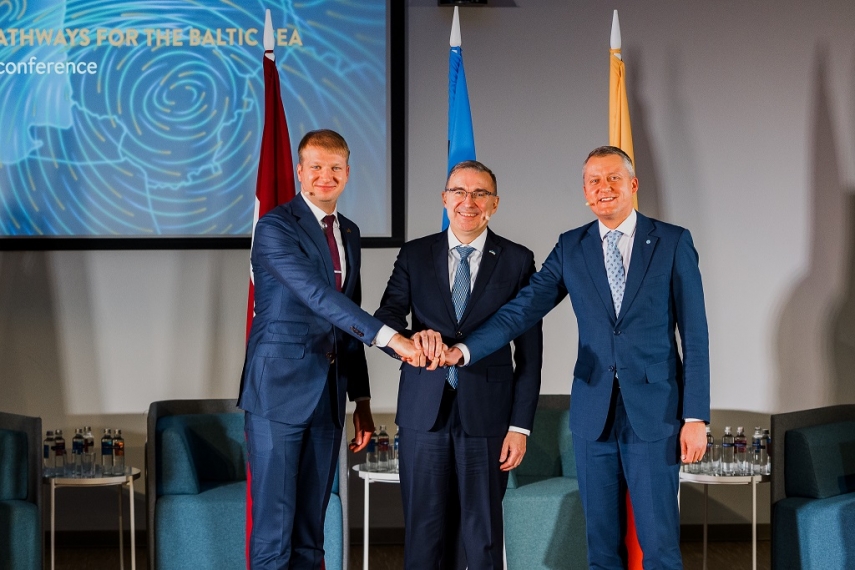
RIGA - On February 11, the University of Latvia’s House of Science hosted the "Energy Development Pathways in the Baltic Sea Region" conference, the largest energy summit of its kind in the Baltics. The event brought together high-level policymakers and industry experts from over 20 nations, including Latvia, Lithuania, Estonia, the United States, France, Denmark, the Netherlands, Germany, the United Kingdom, Poland, Spain, and Saudi Arabia. The conference culminated in the energy ministers of Latvia, Lithuania, and Estonia signing a joint Memorandum of Understanding (MoU), pledging deeper cooperation to bolster regional security and sustainability.
The conference was opened by Kaspars Melnis, Latvia’s Minister of Climate and Energyof the Republic of Latvia; Assoc. Prof. Olga Bogdanova, President of World Energy Council (WEC) Latvia; and Prof. Gundars Bērziņš, Rector of the University of Latvia. A featured keynote dialogue included Catherine Jereza, U.S. Assistant Secretary of Energy, and Dr. Michael W. Howard, Chair Emeritus of the World Energy Council.
The program addressed the entire energy lifecycle – from global policy shifts to local community engagement. Central to the discussions was the future roadmap for the Baltic region following the historic synchronization of its power systems with the Continental European Network on February 9, 2025.
Latvian minister Kaspars Melnis emphasized: “Energy affordability, sustainability, and competitiveness are prerequisites for national economic growth. However, energy security remains our most critical issue. Following our decoupling from the BRELL network, the Baltic States managed such a balanced grid operation that users noticed neither the moment of disconnection nor the transition to the European grid. It is vital to continue this regional cooperation so that the Baltic States can collectively build an energy supply and production system that is resilient to external factors, providing a foundation for low energy prices and attracting investment to the economy.”
The opening dialogue on global energy provided insights into enhancing security and affordability across Europe, the United States, and beyond. Subsequent sessions explored efficient production and consumption solutions amid rising demand, alongside in-depth evaluations of investment attraction and the economic impact of energy strategies. Significant focus was also placed on the "social license to operate," seeking ways to mitigate local community resistance and strengthen municipal capacity.
“Today's global energy landscape is more complex than ever, presenting us with the dual challenge of ensuring energy security and affordability while accelerating the transition to a sustainable future ,” highlighted Assoc. Prof. Olga Bogdanova during her opening remarks. “No single country or sector can overcome these challenges alone; therefore, mutual communication and support have become a priority. Celebrating the first year since the Baltic energy system's synchronization with Europe, we see a prime example of how collective action yields real results despite technological and political hurdles.”
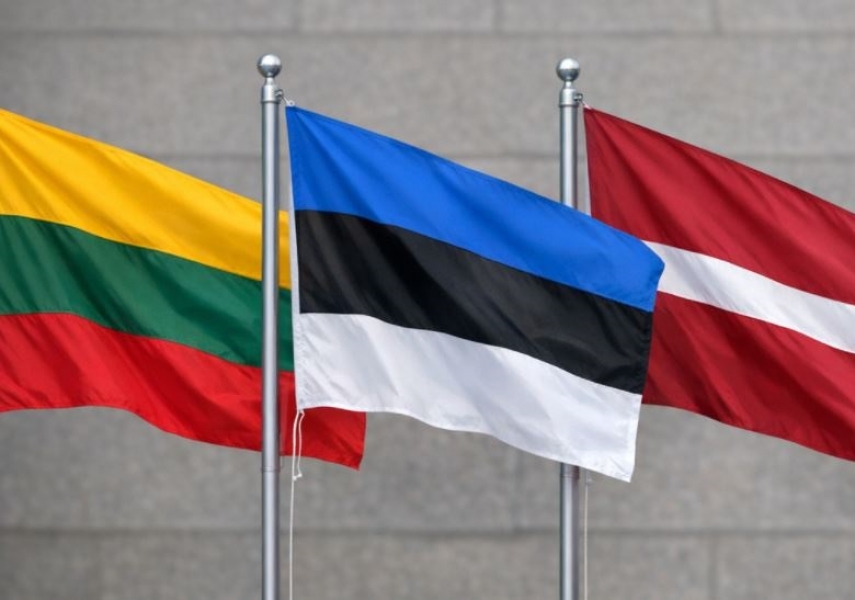
In the closing session, the Baltic ministers discussed future regional steps and the necessity for closer policy alignment. The signing of the MoU by Minister Kaspars Melnis (Latvia), Minister Andres Sutt (Estonia), and Minister Žygimantas Vaičiūnas (Lithuania) solidified their commitment to greater transparency and the synchronization of long-term national strategies.
The Memorandum outlines four key areas of cooperation:
- Alignment of Energy Strategies: Ensuring national plans complement regional security.
- Renewable Energy and System Integration: Promoting a joint approach to capacity integration and grid flexibility.
- System Planning and Market Development: Developing a unified understanding of market trends and essential infrastructure investments.
- Analytical Cooperation: Committing to active data exchange and joint situational analysis.
Prof. Gundars Bērziņš, Rector of the University of Latvia, noted: "Energy resilience becomes truly visible when we face extreme conditions – only then do we truly realize its essential role in society's existence. This is not just a technological shift; it is a systemic change that must be managed with extreme care and foresight. Universities have a responsibility to contribute to long-term energy solutions that will serve future generations."
Agustin Delgado Martin, Chair of the WEC Europe, added: "Energy is no longer merely an economic or technical issue – it is increasingly a strategic, political, and societal priority. In an uncertain world, progress depends on actionable foresight, flexible policies, and sustained collaboration. Resource diversity is not our weakness; it is our greatest strength in shaping the future of energy."
The event was organized by the World Energy Council Latvia in collaboration with the Ministry of Climate and Energy and the University of Latvia.

Please enter your username and password.

2026 © The Baltic Times /Cookies Policy Privacy Policy