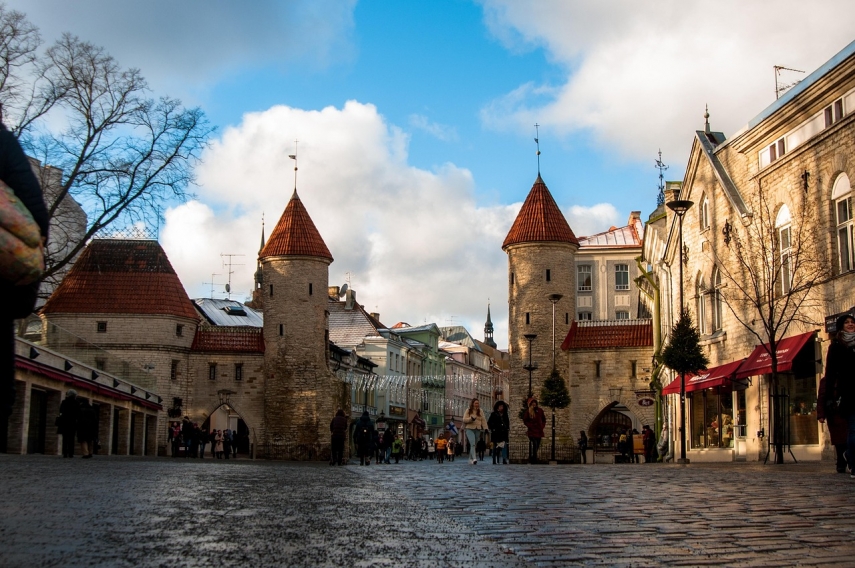

Photo: Allexxandar from https://www.freepik.com/
The Baltic region has quietly become one of Europe's most digitally advanced corridors. Estonia, Latvia, and Lithuania have each invested heavily in building robust digital frameworks, creating a technology ecosystem that rivals much larger economies. From e-governance platforms that allow citizens to vote, file taxes, and manage healthcare online, to startup hubs producing billion-dollar companies, the Baltic states represent a blueprint for digital modernization that other nations are eager to replicate.
Meanwhile, Finland, the Nordic neighbor to the north, has taken its own path toward digital excellence. With a strong foundation in telecommunications, world-class education systems, and forward-thinking regulatory bodies, Finland is positioning itself as a leader in fintech, artificial intelligence, and digital commerce. Together, the Baltic and Nordic nations form a northern European powerhouse that is shaping how the continent approaches technology adoption, digital regulation, and economic competitiveness.
Estonia's Global Leadership in E-Governance
Estonia remains the gold standard for digital governance worldwide. With over 99 percent of government services available online, the country has created an ecosystem where bureaucratic friction is nearly nonexistent. The X-Road data exchange platform, which connects government databases and allows secure information sharing, has saved the nation an estimated two percent of GDP annually in administrative costs. Citizens can complete almost any government interaction, from registering a business to accessing medical records, through a unified digital identity system.
The e-Residency program has further cemented Estonia's global digital reputation. As of early 2026, over 126,000 e-residents from 185 countries have used the program to establish Estonian companies, contributing to a thriving remote business culture. This initiative has attracted entrepreneurs, freelancers, and small business owners who want access to the EU market without physically relocating. The program generates significant economic value and positions Estonia as a gateway for international commerce.
The European Union has recognized the importance of digital competitiveness, with reports highlighting the existential challenge facing the bloc if it fails to modernize. According to analysis covered by a major EU competitiveness report, the EU must accelerate its digital investments to remain globally competitive, a message that resonates strongly in the Baltic states where digital infrastructure is already well advanced.
Latvia and Lithuania Closing the Digital Gap
While Estonia often receives the most attention, Latvia and Lithuania have made remarkable progress in their own digital transformations. Latvia leads the Baltic region in connectivity infrastructure, boasting some of the highest broadband penetration rates in Europe. The country's eParaksts digital signature system is widely used across government and business sectors, streamlining contract execution and administrative processes.
Lithuania, for its part, has become a fintech powerhouse. Vilnius hosts more than 250 fintech companies, making it one of the largest fintech hubs in the European Union. The Bank of Lithuania introduced a regulatory sandbox that allows startups to test innovative financial products under supervised conditions, reducing barriers to entry while maintaining consumer protection standards. This approach has attracted companies from across Europe and Asia, eager to use Lithuania as their EU base of operations.
Both countries have invested in digital skills training, recognizing that infrastructure alone is insufficient. National programs aimed at improving digital literacy among older populations and rural communities ensure that the benefits of digital transformation reach every segment of society. These efforts align with the EU's Digital Decade targets, which call for at least 80 percent of adults to possess basic digital skills by 2030.
Finland's Fintech Revolution and Cross-Industry Impact
Finland's fintech sector has experienced extraordinary growth over the past several years. Helsinki has emerged as a vibrant hub for payment technology, blockchain innovation, and digital banking solutions. Companies like Enfuce, a cloud-based payment platform, and Holvi, which offers banking services for entrepreneurs, demonstrate the country's ability to produce globally competitive fintech solutions.
The Finnish government has supported this growth through clear regulatory frameworks and investment incentives. Business Finland, the government agency for innovation funding, has directed substantial resources toward fintech startups, recognizing the sector's potential to drive economic growth and create high-skilled employment opportunities.
The ripple effects of Finland's fintech innovation extend beyond traditional banking. Payment processing technologies and digital wallet solutions developed in Finland are now used across e-commerce, travel booking, subscription services, and entertainment platforms. In the online entertainment space, Finnish platforms such as Trumo kasinot demonstrate how advanced payment systems and user-friendly digital interfaces can enhance consumer experiences across diverse industries.
This cross-industry adoption of fintech solutions highlights a broader trend: digital payment innovation is no longer confined to banking. It has become a foundational technology that enables new business models, improves customer engagement, and drives revenue growth across sectors ranging from healthcare to hospitality.
The Role of EU Digital Regulation in Shaping the Region
The European Union's evolving regulatory landscape plays a significant role in the Baltic and Nordic digital economies. The Digital Markets Act and the Digital Services Act have established new rules for large technology platforms, aiming to create fairer competition and greater transparency. For smaller nations like the Baltic states, these regulations level the playing field, ensuring that domestic companies can compete with global tech giants on more equitable terms.
The upcoming Digital Fairness Act, expected to be introduced in mid-2026, will address consumer protection in the digital age, tackling issues like manipulative design practices, transparent pricing, and influencer marketing standards. For the Baltic and Nordic markets, where consumer trust in digital services is already high, these regulations reinforce existing best practices and provide additional safeguards.
Cloud infrastructure and data sovereignty remain critical concerns. The EU plans to propose a Cloud and AI Development Act in 2026, aiming to triple data center capacity across the bloc. Estonia, with its advanced digital infrastructure and expertise in cybersecurity, is well positioned to benefit from these investments. The country's experience in building secure, interoperable systems offers a model that other member states can follow.
Digital Sovereignty and Cybersecurity Priorities
Geopolitical tensions have accelerated the push for digital sovereignty across the Baltic region. Estonia has been particularly vocal about the need for independent digital infrastructure, citing heightened security concerns on Europe's eastern flank. The country has adopted an open-source-first policy for government technology procurement, reducing dependence on foreign software vendors and increasing resilience against cyber threats.
Latvia and Lithuania have followed similar paths, investing in national cybersecurity centers and participating in NATO cooperative cyber defense initiatives. The NATO Cooperative Cyber Defence Centre of Excellence, based in Tallinn, serves as a hub for research, training, and exercises that strengthen the alliance's collective ability to respond to digital threats.
These security investments complement broader economic goals. As the Baltic states continue to attract foreign investment and technology companies, robust cybersecurity frameworks provide the confidence that businesses need to operate in the region. Historical analysis of Baltic economic development, as documented by The Baltic Times, shows how the region has consistently leveraged strategic investments to punch above its weight on the global stage.
Looking Ahead: 2026 and Beyond
The trajectory for digital transformation in the Baltic region and Finland points toward continued acceleration. Several factors will shape the next phase of growth. First, artificial intelligence adoption is expected to increase significantly, with both public and private sectors integrating AI tools into decision-making, service delivery, and product development.
Second, cross-border digital collaboration within the EU is becoming more seamless. Initiatives like the European Digital Identity Wallet, planned for rollout across member states, will simplify how citizens and businesses interact across borders. For the Baltic states and Finland, which already share close economic ties, these developments will further reduce friction in trade, employment, and service delivery.
Third, sustainability will play a growing role in technology investment decisions. Nordic and Baltic nations have set ambitious climate targets, and digital technologies offer powerful tools for monitoring emissions, optimizing energy use, and enabling circular economy models. Green technology startups in the region are attracting increasing venture capital, signaling strong investor confidence in the intersection of sustainability and digital innovation.
The Baltic region and Finland have demonstrated that small nations can lead in the digital economy through strategic investment, progressive regulation, and a culture of innovation. As Europe grapples with competitiveness challenges and geopolitical uncertainty, the northern corridor offers a compelling model for how digital transformation can drive economic resilience and societal progress.
References
https://www.theguardian.com/world/2024/oct/15/eu-competitiveness-report-existential-challenge-mario-draghi
https://www.baltictimes.com/news/articles/12438/
https://digital-strategy.ec.europa.eu/en/factpages/estonia-2025-digital-decade-country-report

Please enter your username and password.

2026 © The Baltic Times /Cookies Policy Privacy Policy