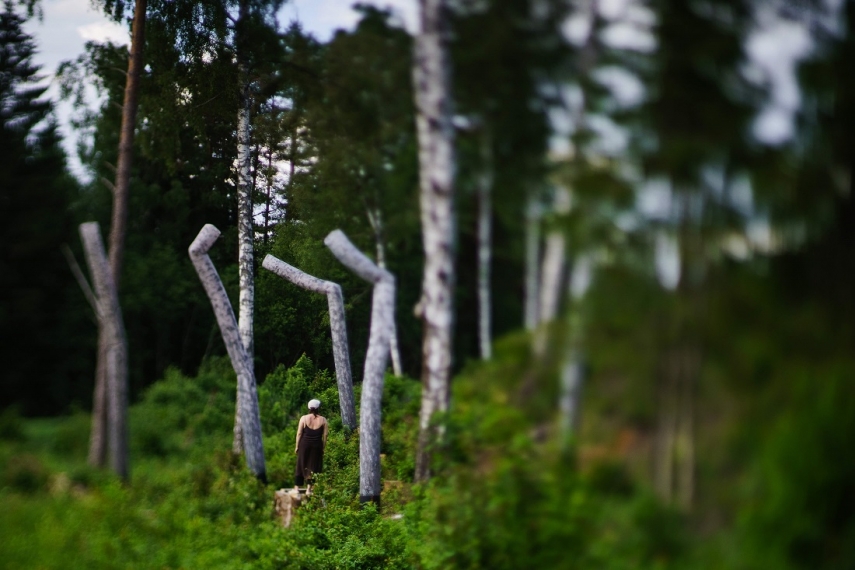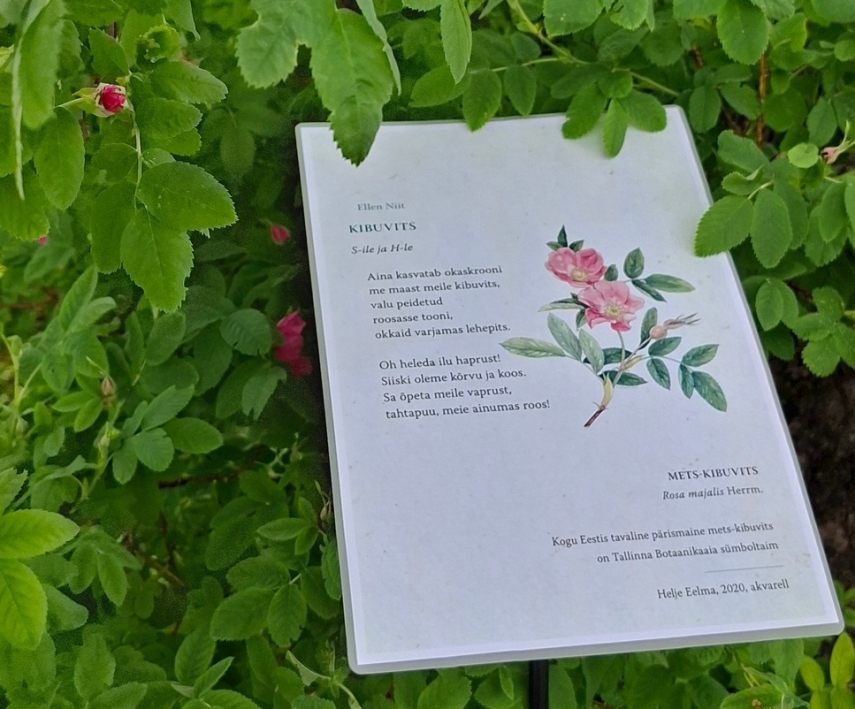
This summer, visitors to both of Estonia’s botanic gardens will find not only plants but also poems written about them. The poetry exhibition is linked to the book Hortus poeticus, published earlier this year, which contains a selection of Estonian plant poetry through the ages. The book was created in collaboration with the botanic gardens to mark the Year of the Estonian Book and is based on their activities. As a result, the book also features academic botanic illustrations and herbarium specimens.
“Plants have inspired poets throughout history, both as symbols and in their own right,” said Urve Sinijärv, director of the Tallinn Botanic Garden and one of the book’s editors. “Estonian poetry features a number of poems about plants that have taken root in the hearts and memories of the nation, such as Juhan Liiv’s Oh kanarbik, oh lilleke or Ernst Enno’s Kojuigatsus, which is immediately associated with white clover. Botanic gardens are places where one can discover plants from different parts of the world, and poetry and art are one way to make them more visible.”
The poems in the book have been placed in each garden next to the corresponding plants in both gardens for the summer. The display will change as the plants bloom and grow. “The spring flowers are just finishing up, but over the summer we’ll change the poems in the order that the plants bloom," explained Urve Sinijärv. "It’s easier with trees, shrubs and greenhouse plants – the poems stay next to them for the whole season.” Not all the poems from the book are on display, each garden has its own selection.
The book was published by Varrak and is available at major bookstores as well as botanic gardens.
Tallinn Botanic Garden, established in 1961, is a scientific, educational, and cultural institution dedicated to the conservation and promotion of plant diversity. It is situated on a 40-hectare area next to the Pirita River Valley. In total, around 8500 plant species grow here in open air and in greenhouses. Tallinn Botanic Garden’s mission is to preserve, develop and introduce rich plant collections and herbaria, and carry out research and nature education work to preserve and increase biodiversity. Tallinn Botanic Garden aims to be an advocate for a modern, environmentally conscious mindset and the promotion of garden and landscape design.

Please enter your username and password.


2026 © The Baltic Times /Cookies Policy Privacy Policy