RIGA - Mavriks Vulfsons, a titan of Baltic independence who died last week at age 86, cherished to his end an insult hurled at him in 1988 by Boris Pugo, then chief of the Latvian Communist Party.
"Do you know what you have done?" Pugo snarled. "You have killed Soviet Latvia!"
Pugo was no prophet, but in this case the loyal KGB man had guessed right.
Vulfsons, a mild-mannered intellectual and television personality, had just told an audience of senior communists and intelligentsia what many Soviet citizens already knew but none had dared declare so openly before: that Stalin's Soviet Union had occupied Estonia, Latvia and Lithuania after striking a secret deal with Hitler.
Vulfsons' speech was a rhetorical bombshell with a nuclear impact. "We must learn to look truth squarely in the eye, no matter how difficult and even unbearable that truth might be," he said. Pugo squirmed, and after an uncomfortable pause the audience roared with ecstatic approval.
For Vulfsons this was a bittersweet confession. In 1940, as a militant Stalinist he had cheered the Baltics' conquest. But he never could agree honestly with the way Moscow rewrote history thereafter, rebranding a bloody occupation a popular revolution. "I know it wasn't," Vulfsons said. "I was there."
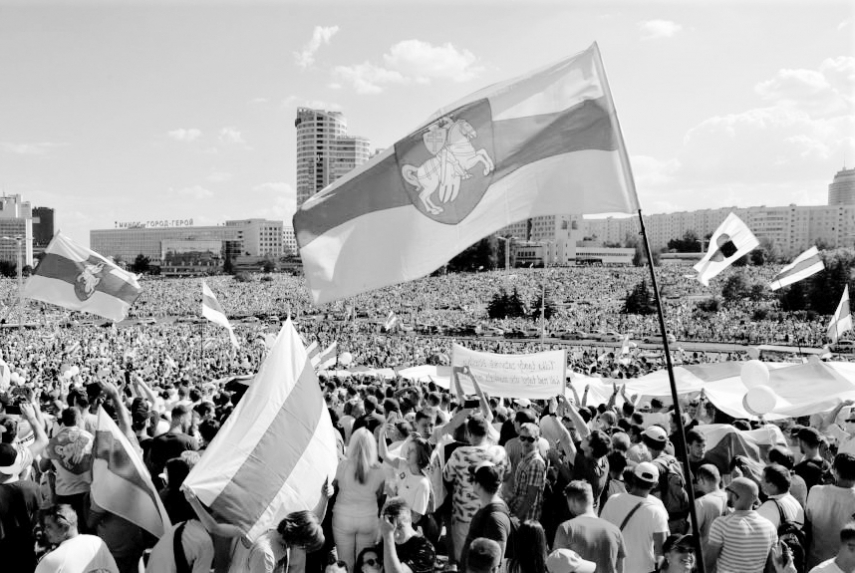
Three years after his shocking speech, the Baltics were free. Pugo was dead, having killed himself as Soviet power crumbled all around.
The Baltic states have come a long way since then. So far, in fact, that these countries' Soviet histories sometimes seem more unreal than real - strewn as they were with red banners and pathetic atheist iconography. Old fears fade away. New false gods rise above the rubble of the old ones. Pivotal figures of the discarded era go all but forgotten. The content of Vulfsons' declaration, once a call for revolution, is now taken for granted.
In recent years, walking through Riga's streets with his wife Emma on his arm, Vulfsons still received thanks and praise from occasional passers-by. But the limelight had turned away long ago.
After his tumultuous stint as a non-party deputy in the last Soviet Congress of People's Deputies, which featured gentlemanly clashes with Mikhail Gorbachev - the secretary general once bet him a case of cognac East Germany would survive Erich Honecker's removal - Vulfsons tried his hand at Latvian Foreign Ministry work. But he found himself sidelined, partly because his Jewish heritage was no asset in the uproarious early days of renewed independence. Vulfsons drifted away from politics, opting instead to spend time with his family, writing books and lecturing at Latvia's Academy of Art.
"Those of us who have been through a few revolutions know that every revolution is followed by a second, quieter revolution," he liked to say. Vulfsons had fared brilliantly in the "singing revolution" that crushed Soviet rule. But in Latvia's second revolution - a mute movement of tuneless technocrats, not poet revolutionaries - he was nowhere to be found.
His life, for those who cherish, holds important lessons for the new century. As a Red Army soldier Vulfsons survived World War II. As a Jew he survived the Holocaust, though most of his family perished. As a Latvian, he preached a critical love of nation, opposing romantic nationalism and embracing minorities.
He rejected, toward the end of his life, the fakery of mass social justice imposed from above. Happily humbled and declaring himself "in love," the former party man and his wife set up a tiny charity, Drauga Roka (Hand of a Friend), dispensing tiny cash amounts to people in emergency need. It was a short-lived affair and strictly private, but Vulfsons beamed whenever he and his colleagues received thanks.
Vulfsons once blamed communism for causing "a rot in our souls." By the time his body gave out, the Baltics were liberated and his soul, it seems, was renewed.
Eric Jansson is a former opinion page editor of The Baltic Times, now Belgrade correspondent for the Financial Times