Photo: lmaresz from Pixabay
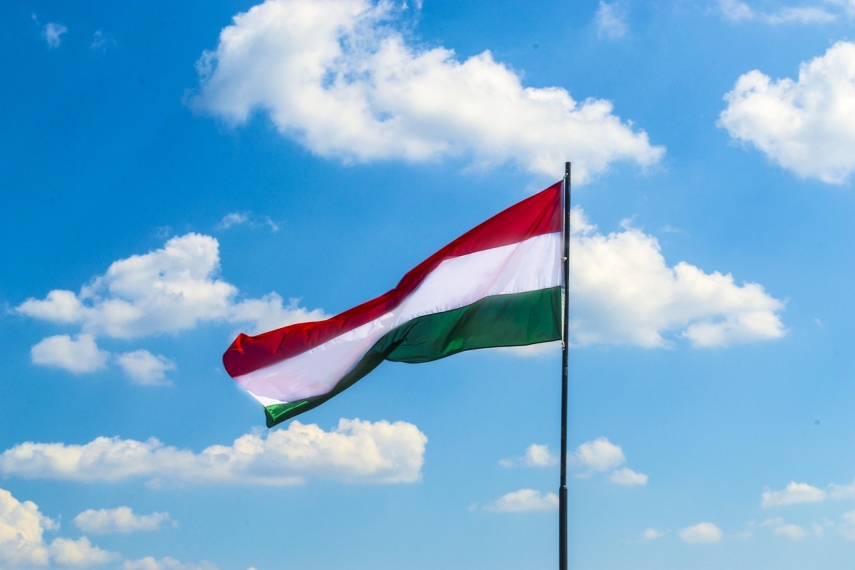
RIGA - Hungary's parliamentary election can be seen as a turning point, providing the opportunity to change the trajectory of the country's politics, but opposition Tisza party leader Peter Magyar's efforts to reform the political environment may be hampered by loyalists who have been installed in key positions during outgoing Prime Minister Viktor Orban's 16 years of rule, believes Maris Cepuritis, Director of the Center for Eastern European Policy Studies, told LETA.
The expert reasoned that Orban is probably hoping that the Tisza victory will be transitory - namely, that in the face of opposition, the Fidesz party he leads will regain its position in the next elections. In Cepuritis' view, the coming years will be a period of tensions and confrontation between the political elite, which will try to shape Hungarian politics differently, and the state apparatus, which will still be composed of people loyal to Orban.
As for Hungary's future relations with the European Union (EU), the director of the Centre for East European Policy Studies said that dialogue could become more constructive in order to unfreeze EU funds for Hungary and improve Hungary's image among other EU countries. In informal talks with the leaders of EU institutions and member states, Magyar is likely to ask for some leeway and time to change positions, calling for reciprocity from other countries.
Commenting on Hungary's stance on Ukraine, the expert said that radical changes are unlikely. Cepuritis believes that Hungary will not become the biggest supporter of Ukraine, either militarily or by lobbying for Ukraine's EU membership, but there may be a change in approach, and Hungary will no longer be a strong blocker of financial assistance to Ukraine, nor will it use it for blackmail purposes. On migration policy, Magyar will maintain a similar position to Orban, but the style of argumentation could differ, Cepuritis said.
Asked what the Hungarian election results tell about Russia's ability to influence the domestic politics of other countries, the expert said that this case demonstrates Russia's limited capabilities. Despite the fact that Sergei Kiriyenko, First Deputy Chief of Staff of the Russian Presidential Administration, had sent teams to Hungary to help Orban, this too failed to tip the balance in favor of the incumbent prime minister and his party. The expert noted that Russia is learning and drawing lessons and is likely to continue interfering in the elections of countries important to it.
Relations between Hungary and Russia in the field of energy are another issue, Cepuritis said, as Russia has so far been Hungary's largest energy supplier, both in terms of oil and natural gas, as well as supplying nuclear fuel for the Paks nuclear power plant. Cepuritis predicted that Magyar would reduce these commitments, but this would take a longer period of time and may involve an increase in costs, as Russia has been supplying Hungary with energy at favorable prices. The expert noted that the extent to which Magyar would be prepared to impose these costs on society would depend on his political will.
Asked about Hungary's relations with the US, the expert said that Hungary's position in the eyes of the US could be weakened with Orban's electoral defeat. He predicted that Magyar would try to use the political capital accumulated in his relations with the US to maintain these ties.
As reported, the opposition conservative Dignity and Freedom Party (Tisza) has won last Sunday's Hungarian parliamentary elections, according to results obtained after almost all the votes were counted.
Tisza, led by Magyar, won 138 out of 199 parliamentary seats, according to the results obtained after counting 98.15 percent of votes.

Please enter your username and password.

2026 © The Baltic Times /Cookies Policy Privacy Policy