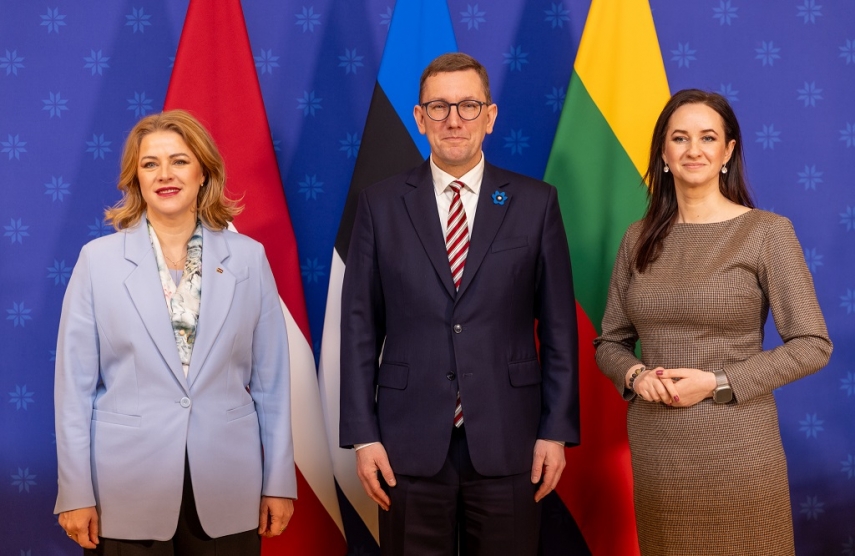
TALLINN - Foreign Minister Margus Tsahkna announced in Luxembourg on Tuesday, during a meeting with his Lithuanian counterpart Kęstutis Budrys, that Estonia is supporting the completion of a memorial to victims of totalitarianism, to be erected in the heart of Brussels, with 50,000 euros.
"The memorial in Brussels, created in memory of the victims of 20th-century totalitarian regimes, will help us remember the crimes of communism, fascism, and Nazism, and their victims, on one of Europe's main arteries," said Foreign Minister Tsahkna.
"For Estonia, the memorial provides an opportunity to more effectively explain and remember in Europe the history of our past century, the crimes of the occupying powers on our territory, and the suffering caused to our people," Tsahkna said.
The central element of the memorial will be letters sent by victims of totalitarian crimes to their loved ones, or received in reply, through which the tragic fate of these individuals is depicted.
"The memorial serves as a reminder of the suffering from which today's peaceful and democratic European Union was born, and it offers lessons to ensure that history never repeats itself," said the Foreign Minister.
"Speaking about the crimes committed by totalitarian regimes in the 20th century and commemorating their victims is not just our duty to history and to our parents and grandparents," said Minister of Justice and Digital Affairs Liisa Pakosta. "It is also a cautionary tale for the present day. If systematically executed mass crimes go without universal condemnation, without international justice for crimes of aggression, war crimes, and crimes against humanity, and without punishment, it is very likely they will be repeated by successive generations. One does not have to look far for an example. Russia's current military aggression in Ukraine and the war crimes committed there, as well as the roots of Moscow's current domestic and foreign policy, have sprung directly from the soil of the criminal communist regime of the Soviet Union."
The implementation of the memorial is led by the Platform of European Memory and Conscience (PEMC). As the holder of the Presidency of the Council of the European Union in the first half of next year, Lithuania will have a key role in implementing the project.
The sum allocated by Estonia to support the memorial will come from the budgets of the Ministry of Foreign Affairs and the Ministry of Justice and Digital Affairs.

Please enter your username and password.

2026 © The Baltic Times /Cookies Policy Privacy Policy