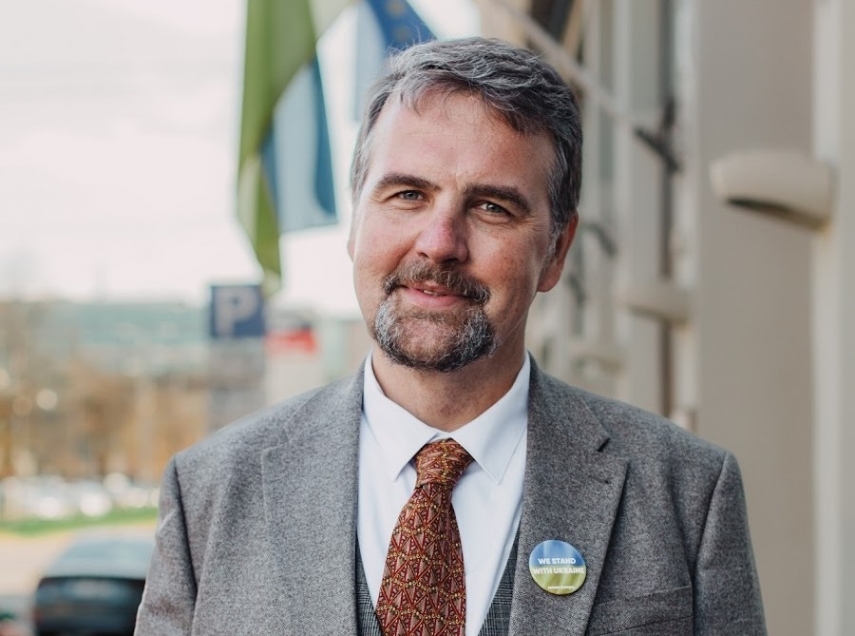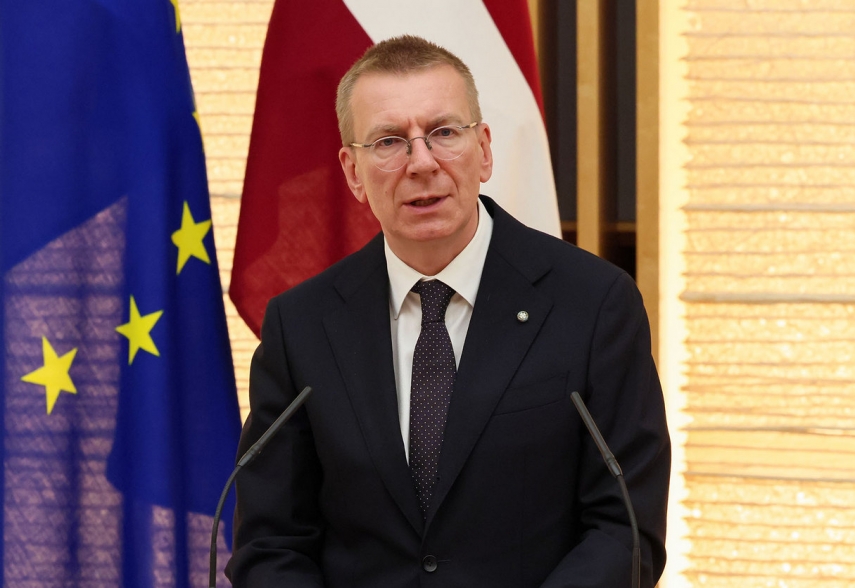
RIGA - Whatever the content of the US-Russia leaders' meeting, the most important thing in the future will be how firmly European leaders and Ukraine stand up for their interests, Janis Garisons, former State Secretary of the Latvian Ministry of Defense, told LETA.
Garisons noted that it is still very difficult to assess what was actually agreed at the Alaska meeting, as information from both sides is scarce, but the first positive and negative conclusions are already emerging.
On the positive side, Garisons pointed out that this time US President Donald Trump and his administration were in a slightly different position and that there was no blind obliging Russia. In this respect, the work that European leaders have done in advance of this meeting in talking to Trump can be commended.
Secondly, although the dictator Putin was greeted with a red carpet, diplomatically, many things were missing and it looked as if the US was demonstratively taking various measures, such as flying a bomber over the military base where the meeting took place. In this way the US demonstrated its superiority.
On the negative side, Garisons pointed out that Putin's statement that Europe and Ukraine should not put obstacles in the way of the conclusion of an agreements should be heeded. He noted that even before the meeting, Russian propaganda was chanting that negotiations on concessions on the Ukrainian side had taken place.
Secondly, it is negative that the war criminal Putin is being welcomed by the US President, because for Putin this meeting means his legitimization and a diplomatic victory.
"Whatever decisions are taken at this meeting, the most important thing in the future will be how firmly European leaders and Ukraine stand up for their interests. Europe will either position itself as a permanent player and outline its demands and its objectives, or simply give in to what the US has negotiated with Russia. It must be remembered that the war in Ukraine is a war in Europe. The outcome of this war will have a direct impact on Europe, including Latvia," Garisons stressed.
Meanwhile, former Latvian Defense Minister Artis Pabriks concluded that the meeting was a communication victory for Putin. Putin influenced Trump with flattery, for example, the usually non-English speaking Putin spoke in English for the next meeting in Moscow and praised Trump.
"The good thing about the talks is that no concrete decisions have apparently been taken. This is the best that could have come out of this meeting, because some people were already predicting a second Yalta," Pabriks stressed.
As for future scenarios, Pabriks predicted that Trump will continue to put pressure on Ukraine, which could lead to a cessation of hostilities. At the same time, it is clear that Trump is not interested in a lasting peace on terms acceptable to Ukraine.
"To sum up, we can conclude that the great betrayal has not been carried through to the end, although it is a betrayal in itself that such a meeting took place and a dictator was rewarded. Russia has gained from this meeting an open door for international cooperation and good PR results," Pabriks stressed.

Please enter your username and password.
2025 © The Baltic Times /Cookies Policy Privacy Policy