Thursday, 23 April, at 6 pm the Radvila Palace Museum of Art of the Lithuanian National Museum of Art (LNMA) opens an exhibition Ukrainian Dreamers: The Kharkiv School of Photography held in collaboration with the Museum of Kharkiv School of Photography (MOKSOP).
The display features artwork by 33 individual artists and groups, across four generations of the Kharkiv School of Photography community. Having opted for photography as the main means of their practice, these artists were to work during the oppressive years of Soviet censorship, during the times of the emerging Ukrainian independence and the revolutions, also now, in the thick of the ongoing russian military aggression. They consistently deployed the medium for the trenchant social and aesthetic criticism, kept pushing further the boundaries of photography. Over several hundred of exhibits – photographs, video and archival objects of the exhibition – map the six rebellious and progressive decades, tracing the evolution of methods and ideas, bringing to the foreground the foremost artists and their finest artwork.
“This exhibition is the most comprehensive presentation of the Kharkiv School of Photography to date, and I am deeply grateful for the opportunity to realize this project in such difficult times, when our country faces an existential threat. For me, it is also a very personal event: as a member and follower of this community, and now as the head of the museum, I am honored to work with the legacy of Kharkiv artists and to pay tribute to their intellectual and artistic heritage through projects like this,” Sergiy Lebedynskyy, head of the Museum of Kharkiv School of Photography and the co-curator of the event, shares his enthusiasm about the project.
“Photography fans in Lithuania will recognize the significance of the exhibition as a testimony to the long-term cultural exchange between Ukraine and Lithuania. From the outstart of the movement, in the 1970s and the 1980s, Kharkiv photographers enjoyed intense collaboration with Lithuanian colleagues, Vitas Luckus, Aleksandras Macijauskas, Vitalijus Butyrinas, Algirdas Šeškus among others, exchanging ideas and inspiring each other. Visitors to the museum will surely recognize these affinities in the aesthetics and the subject matter, as well as the artists’ efforts to resist the repressive system and capture the changes in the societies emerging to freedom,” Justina Augustytė, director of the Radvila Palace Museum of Art places the event into context.
The punch theory
The history of the Kharkiv School of Photography dates to the 1970s, when several like-minded individuals who met at a regional amateur photo club, created an informal group Vremia. Though state-funded photo clubs were meant to spread propaganda, they, in contrast, spawned rebellious communities. The Vremia group’s sole exhibit of 1983 at the Kharkiv Scientists House attracted vast audience – and was closed within several hours. However, it was of great significance to Kharkiv photographers who aired their manifesto and presented their punch theory asserting that a photograph should shock the viewer, upsetting the commonplace perception.
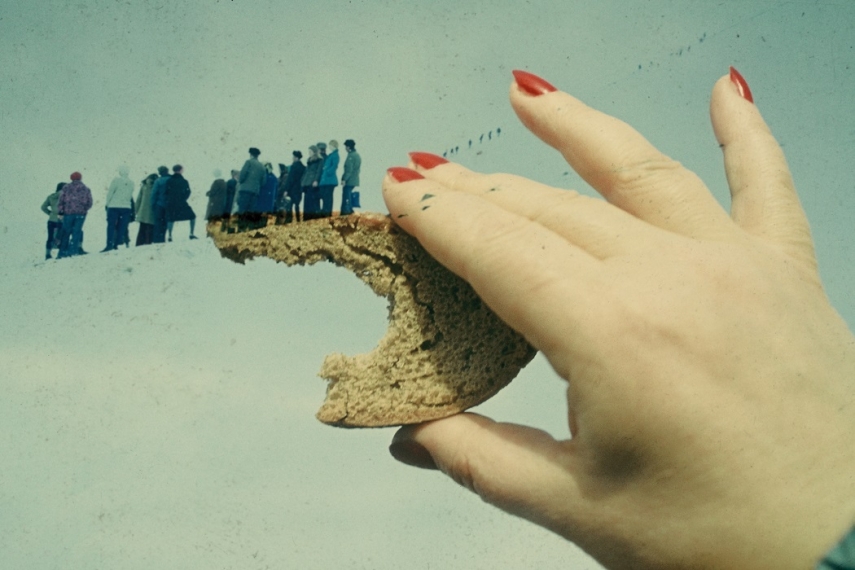
The first generation of the Kharkiv School sought to move beyond socialist-realist clichés to depict an unbeautified socialist reality, deploying for that experiments in diverse techniques of hand cut collages and photomontages, innovative colour superimpositions and darkroom manipulations.
Reflections of Ukrainian history
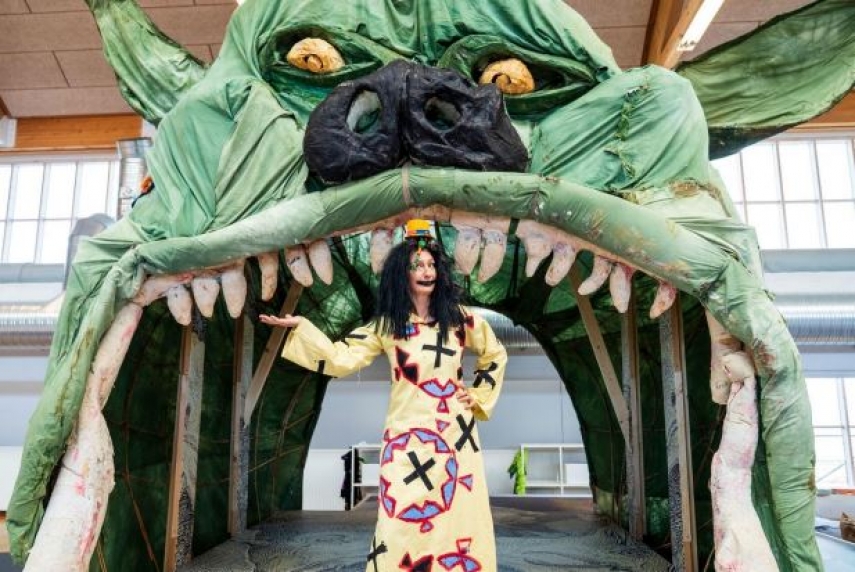
Subsequent generations of photographers carried on the innovations by the Vremia, introducing also their own art practices to reflect the spirit of the period. The collapse of the system of the Soviet Union brought about an intoxicating sense of freedom, encouraging candid explorations of contradictory themes and experiment in the form of provocative performances.
The younger generation of Kharkiv artists who emerged after the turn of the century recorded the changing social reality in Ukraine, promoting also a communal spirit by starting new associations and setting up spaces for experiment and dialogue.
The 2013 Revolution of Dignity and the immediately following russian war against Ukraine, which escalated into a total invasion in 2022, brought about tragic transformations pressing the Ukrainian society to mobilize for the battle of sovereignty. Photography has become a form of civil duty. The artists of all generations recorded the street protests, afterwards, the front line.
The museum as a keeper of legacy
Though referred to as a “school”, the movement has no institutional basis, the photographers associate as a community, jointly and individually pursuing freedom of expression. The kindred aesthetics in the works from the four generations, their close ties and collaborations cast the school of photography as an independent movement, one of the most important phenomena of the contemporary Ukrainian art.
The Museum of the Kharkiv School of Photography was founded in 2018 with a mission to accumulate and preserve the legacy of the movement. The 2022 russian invasion forced to postpone the planned opening of a permanent display and an educational space in Kharkiv. Instead, it consolidated the relocation efforts of the artists and their archives. The vast collection of the museum (of over 5,000 prints and approximately 70,000 negatives) has been evacuated to Germany, while the museum team continues interacting with the artists, carries on the research and promotion of the legacy of Kharkiv photography.
The experience of the exhibition will be broadened by an international symposium, education evolutions and other events
Thursday, 23 April at 4.30 pm the exhibiting artists and curators will meet the audience (the meeting will be held in English). The opening of the exhibition is accompanied by an international symposium “Amateur” Photo Clubs in the USSR and the Satellite Countries During the 1950s-1980s”. The symposium will examine the amateur photo clubs as sites of artistic experimentation and nonconformist practice within socialist cultural infrastructures. The programme features eighteen scholars from across Central and Eastern Europe, with a keynote lecture by Dr Jessica Werneke (University of Iowa, USA). The symposium will be held in English.
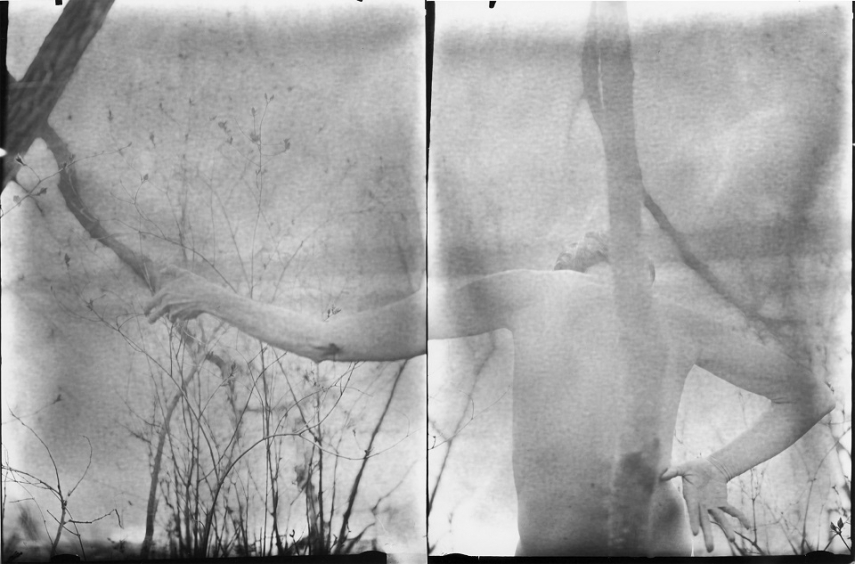
While the show is on, visitors will be invited to learn more of Kharkiv photography in tours, creative workshops and education events. The programme designed for different age school pupils will invite them to enter the (monochrome) artists’ dreams, create unorthodox photographic stories and discover experimental techniques. The exhibition will run until 20 September; detailed event programme will be posted on the museum website and social media.
Participating artists:
Boris Mikhailov (b. 1938), Gennadiy Tubalev (1944–2006), Oleg Maliovany (b. 1945), Oleksandr Suprun (b. 1945), Jury Rupin (1946–2008), Viktor Kochetov (1947–2021), Oleksandr Sitnichenko (1948–2018), Volodymyr Shaposhnykov (1949–2017), Evgeniy Pavlov (b. 1949), Anatoliy Makiyenko (b. 1949), Vita Mikhailov (b. 1955), Tetiana Pavlova (b. 1955), Roman Pyatkovka (b. 1955), Volodymyr Starko (b. 1956), Misha Pedan (1957–2025), Sergiy Solonsky (b. 1957), Grigoriy Okun (b. 1957), Boris Redko (b. 1959), Sergiy Bratkov (b. 1960), Igor Manko (b. 1962), Sergiy Kochetov (b. 1972), Bella Logachova (b. 1973), Vasylisa Nezabarom (b. 1975), Yulia Drozdek (b. 1978), Serhiy Popov (b. 1978), Vladyslav Krasnoshchok (b. 1980), Roman Minin (b. 1981), Sergiy Lebedynskyy (b. 1982), Mykola Ridnyi (b. 1985), Hanna Kryvenstova (b. 1985), Igor Chekachkov (b. 1989), Andrii Rachynskyi (b. 1990), Alina Kleytman (b. 1991)
Curatorial team: Olena Chervonik, Sergiy Lebedynskyy, Boris and Vita Mikhailov, Oleksandra Osadcha, Darius Vaičekauskas
Exhibition furniture designer: Gabrielė Černiavskaja
Graphic designer: Vytautas Volbekas
Coordinators: Justina Augustytė, Nojus Kiznis
Producing architect: Aleksandras Kavaliauskas
Translator: Paulius Balčytis
Copy editors: Erika Lastovskytė, Ieva Puluikienė
Organisers: Radvila Palace Museum of Art of the LNMA, Museum of Kharkiv School of Photography
Project financed by the Ministry of Culture of the Republic of Lithuania
Partners: Ukrainian Institute, „House of Europe“, Cultural Diplomacy Foundation
Sponsors: Lithuanian Culture Institute, Embassy of the Republic of Lithuania to Ukraine
Media Sponsors: Lithuanian National Radio and Television, „JCDecaux Lietuva“
Special thanks to: Exhibit Display Division, Pranas Gudynas Conservation Centre of the LNMA, Gintarė Krasuckaitė, Vadim Šamkov

Please enter your username and password.

2026 © The Baltic Times /Cookies Policy Privacy Policy