Russia’s war against Ukraine has fundamentally reshaped the geopolitical landscape of Europe, triggering far-reaching political, economic, and security consequences well beyond Ukraine’s borders. Russia poses a threat to the security of all of Europe and the entire Euro-Atlantic area. This is evident in a range of hybrid threats across Europe, from the Baltic States - Latvia, Estonia and Lithuania - to Germany, Poland, including sabotage, disinformation and manipulation campaigns, Russia’s military and technological alignment with Iran, cooperation with China and North Korea, destabilising activities in Africa as well as the attempts to weaken the US presence in Europe and beyond.
In this new reality, EU countries on the eastern flank – including the Baltic States, Poland and Finland - are facing growing regional tensions and increased security challenges linked to Russia’s actions. This raises a critical question: should Europe’s Eastern flank be seen merely as a strategic frontier, or recognised as its primary line of defence? As NATO members, we must maintain a delicate balance between deterrence, diplomacy, and defence in an increasingly unstable environment.
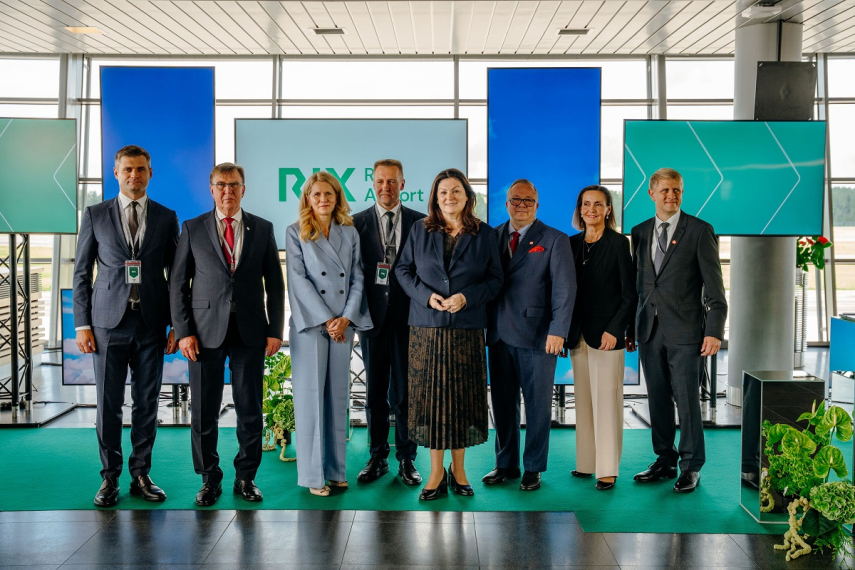
In this context, Members of the EPP Group on External Policies is addressing these challenges during their working visit to Latvia on 8 May. There is no doubt that the Europe’s Eastern flank is strategically important for Europe’s security. In response to the threats stemming from Russia’s war against Ukraine, the Baltic States have made a tremendous contribution to European defence. Together with neighbouring Finland and Poland, they have significantly strengthened border protection and the enforcement of EU sanctions, they are among the leading supporters of Ukraine, have achieved energy independence from Russia, rank among the top in defence spending, and are at the forefront of defence innovation, including the testing and deployment of drones and new technologies. All of this can serve as an example to others in Europe. These efforts must go hand in hand with increased European support and funding.
A secure Eastern Europe and Baltic States is not only vital for defence - it is essential for Europe’s economic stability and competitiveness. Security underpins investor confidence, protects trade flows, and ensures the smooth functioning of the single market. By reinforcing its eastern borders, the European Union is safeguarding critical infrastructure and supply chains that are key to the competitiveness of its economy.
The security of EU’s Eastern flank, more than ever before, requires cooperation in all political and international forums. We need to go beyond traditional approaches. We need to address challenges such as Russia’s hybrid threats and shadow fleets together, and to strengthen cooperation in crisis preparedness, energy, and other areas. The Eastern flank protects the entire external border of the EU and NATO.
The EPP believes that cooperation within European political families is an important complement to institutional contacts. Although security concerns us all, its perception may differ, especially when it comes to economic security and the economy. That is why it is important to convince our partners in Western Europe of the nature of the threats coming from the east. We understand very well that there is no return to business as usual with Putin. This must be a shared and uncompromising position across Europe.
Andrzej Halicki MEP (Poland), vice-chair of the EPP Group and chair of the EPP Group’s Working Group on External Policies
Sandra Kalniete MEP (Latvia), deputy chair of the EPP Group’s Working Group on External Policies

Please enter your username and password.

2026 © The Baltic Times /Cookies Policy Privacy Policy