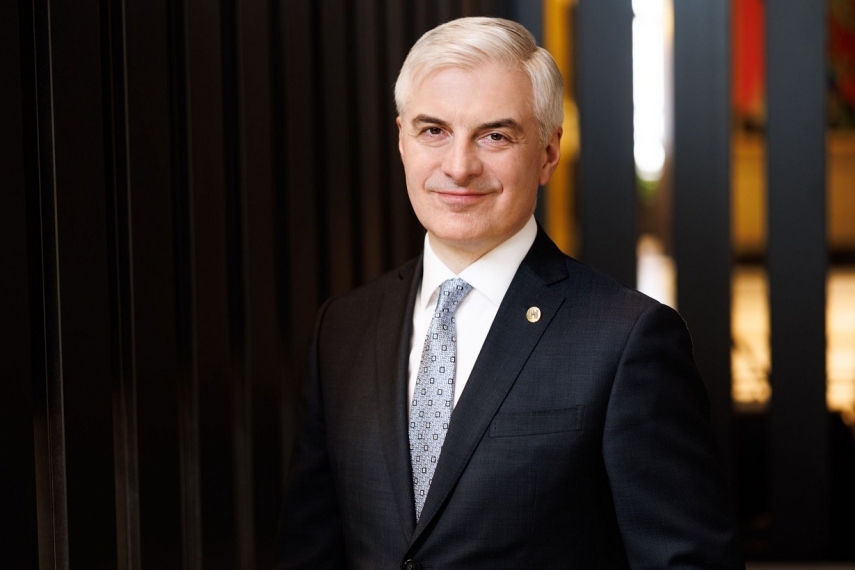
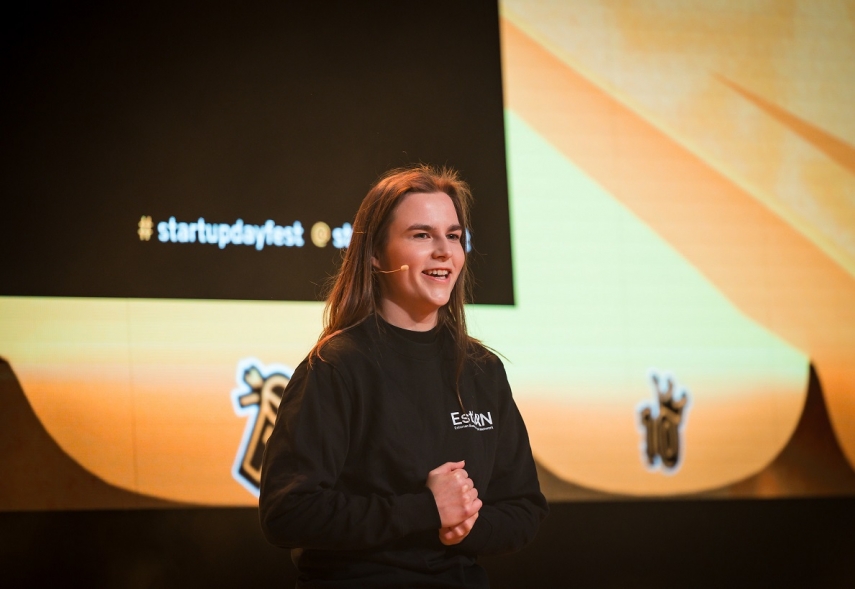
Photo: Jana Saastamoinen, Head Organizer of sTARTUp Day 2026 (by Merilyn Sepp)
For ten years, sTARTUp Day held in Tartu has grown from a regional gathering into one of the Baltics’ leading startup festivals, where founders meet investors and DeepTech ideas move from lab to market. Following its landmark 10th anniversary edition at the Estonian National Museum, The Baltic Times spoke with Jana Saastamoinen, Head Organizer of sTARTUp Day 2026, who has since finished her term and is stepping into a new role as Managing Director of EstBAN, Estonian Business Angels Network, Estonia’s largest network of business angels – private individuals who invest their own money into early-stage startups.
What makes sTARTUp Day stand out?
Tartu is right in the middle of the word sTARTUp, and we believe that’s not a coincidence but a sign that this is the perfect place for a thriving startup ecosystem.
sTARTUp Day is a community festival, and the atmosphere reflects that. The entire Tartu startup ecosystem co-organizes the event, coming together around one table every quarter to align on the festival’s plans. To maintain a true festival vibe, we strike a balance between fun and business, with dozens of activities happening simultaneously. There’s something for everyone – whether you’re a seasoned investor looking for the next unicorn or a budding entrepreneur seeking inspiration.
Was this year’s event different in any way?
This year’s event was special in several ways. It marked the festival’s 10th edition – a huge milestone that proves you can successfully host an impactful international event in Tartu, not only in a capital city.
For the jubilee edition, we returned to the Estonian National Museum, where the 1st and 5th editions also took place.
We also placed a stronger focus on DeepTech, positioning Tartu as a DeepTech hotspot. For the first time, we partnered with the Ministry of Economic Affairs and Communications to organize a Thinking in Billions side event, where we launched the DeepTech Startup Network program.
Additionally, Enterprise Estonia hosted a DeepTech Lounge program. We welcomed 100 researchers, more scientists than ever before shared their journeys into entrepreneurship on stage, and all TOP5 sTARTUp Pitching finalists were DeepTech companies.
How did you select the speakers for the 2026 edition?
All speakers were selected and vetted by our Program Manager, Hristo Neiland.
For us, it’s important that speakers have a valuable story to tell, can express themselves clearly on stage, and are truly knowledgeable in their field. We don’t typically invite professional keynote speakers whose main job is public speaking. Instead, we prefer authentic people with real stories – stories you won’t hear everywhere else.
How does the event support early-stage founders?
Our program is largely designed with early-stage founders in mind. We host numerous talks on fundraising, marketing, product development, and founder journeys.
We also use a matchmaking app to help participants schedule meetings, use Dealum to connect startups with investors, offer a dedicated Founders Room, provide a demo area filled with partner organizations that support early-stage founders.
What are some of the most inspiring sTARTUp Day participant success stories?
Some of the most prominent sTARTUp Pitching winners include Jeff App, Weyren, and Paul-Tech. These companies secured investments from our partner organizations and have gone on to achieve impressive growth.
We’ve also seen many other successful outcomes: deals initiated at sTARTUp Day, startups finding co-founders, and long-term partnerships forming during the festival.
What were your biggest challenges as Head Organizer?
Looking back a few weeks after the event, the challenges don’t seem as daunting as they did at the time. The team worked like a well-oiled machine, and every issue was resolved quickly.
Perhaps the biggest challenge was fitting all our functional areas and demo companies into the Estonian National Museum, which is approximately half the size of the Sports Hall where we usually host the festival.
Attracting the right participants and crafting a compelling value proposition for thousands of individuals – each with different goals – is always challenging. However, based on the feedback, we managed this successfully.
How did you grow within the organization to become Head Organizer?
I joined in August 2019 as a marketing intern for the 2020 edition. I immediately fell in love with the event and the experience.
The then Head Organizer, Marili Vihmann, saw potential in me and promoted me to Marketing Manager for the 2021 edition, which was the 5th jubilee.
After that, I left to gain experience as a Project Manager at Garage48 while continuing to support sTARTUp Day from the sidelines. At the end of 2024, I returned as Head Organizer for the 2025–2026 editions.
Having spent several years in the startup ecosystem, I already knew many of our partners, understood event management processes, and had a strong passion for the Tartu ecosystem. Moving back from Tallinn to lead sTARTUp Day felt like a natural next step.
The sTARTUp Day NGO believes in giving young professionals the opportunity to prove themselves – and I’m grateful for that trust.
Most nominees this year were heavily technology-driven – AI, advanced hardware, software platforms solving real problems. Is the observation correct?
Yes. Many of the TOP30 sTARTUp Pitching participants – and all of the TOP5 finalists – were DeepTech companies.
We don’t necessarily need another Excel or Pipedrive, but there is tremendous room for innovation that can have real global impact.
There will always be space for SaaS, FinTech, and similar models, but it’s exciting to see so many teams and ideas emerging directly from research.
What is sTARTUp Day’s added value in strengthening Estonia’s international reputation?
One of the biggest values we see is demonstrating that meaningful business doesn’t have to happen only in Tallinn.
Tartu is home to one of the world’s top universities, has a strong startup support system, and offers a calm, high-quality living environment. It’s already becoming a role model for other regions aiming to build startup ecosystems outside capital cities.
sTARTUp Day also brings together key ecosystem players from across Estonia under one roof. No matter your industry or focus, you’ll find talented people who showcase Estonia’s strengths in digital society, forward-thinking governance, and entrepreneurship.
What can we expect from sTARTUp Day in 2027? Or is it too early to say?
As I’ve stepped down from sTARTUp Day, I don’t know what the new CEO has planned. She’s joining from outside the ecosystem, bringing a fresh perspective, and I’m excited to see where she takes the festival.
It’s clear that some freshness will be valuable.
Where do you see yourself next?
I’m currently working as the Managing Director of EstBAN.
I’m passionate about the early-stage startup ecosystem and excited to continue contributing – this time from a different angle.
EstBAN is a community of 250 business angels in Estonia. Our role is to support them through deal flow, training, networking, study trips, and more.
As the ecosystem matures, it’s essential to ensure early-stage founders receive support before they’re ready for VC funding. On the investor side, we aim to help angels make informed investment decisions and highlight exciting opportunities, so they continue backing early-stage startups.
We also dedicate significant effort to supporting new angels at the beginning of their investment journey.
Who are the key stakeholders of sTARTUp Day?
sTARTUp Day is not built by a single organization – it is the result of a true city-wide collaboration.
The festival is co-organized by the City of Tartu, the University of Tartu, Tartu Science Park, Tartu Business Advisory Services, the Tartu Centre for Creative Industries, Tartu Biotechnology Park, and Swedbank.
Each of these partners represents a different pillar of the ecosystem. The City of Tartu brings strategic vision and civic leadership. The University of Tartu anchors the event in research, talent, and academic excellence. Tartu Science Park and Tartu Biotechnology Park connect innovation with commercialization, supporting science-driven entrepreneurship. Tartu Business Advisory Services provides practical guidance for growing companies, while the Tartu Centre for Creative Industries ensures that creativity and cultural innovation are part of the equation. Swedbank adds financial expertise and strong private-sector backing.
Together, these co-organizers form a balanced alliance of public institutions, academia, business support organizations, science hubs, and financial partner
Each year, more than 20 additional partners also join us.
Participants include startup founders, early-stage investors, corporate innovation leaders, ecosystem representatives, researchers exploring entrepreneurship, and other startup-minded individuals.

Please enter your username and password.

2026 © The Baltic Times /Cookies Policy Privacy Policy