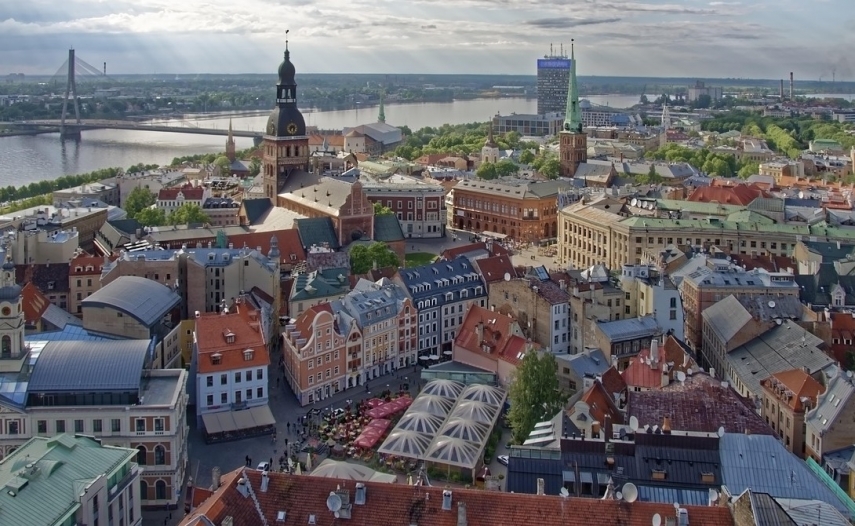
RIGA - Residents of Riga overpaid millions of euros for heating in 2024, while long-known problems in the capital city's district heating system have been persisting for years, the State Audit Office has found.
According to the state auditors, the Latvian capital has the potential to reduce the heat tariff, but this is only possible if the problems that have been known for years are finally addressed by fixing the market regulation, improving the tariff methodology, fostering institutional cooperation, and ensuring effective competition in the heat energy market.
In a situation where usable heat from the Latvenergo heat-and-power plant is released into the atmosphere, heat produced in biofuel boiler houses is being purchased without promoting the efficient use of energy resources, the auditors note.
For this reason, in the 2024-2025 heating season, Riga residents overpaid almost EUR 8 million for heating energy, while Latvenergo did not receive more than EUR 6 million in revenue. In addition, due to the lack of cooperation between the parties involved and different interpretations of regulations, Latvenergo energy company has had limited opportunities to provide Riga with less expensive heating, the State Audit Office concluded.
At the same time, without the participation of independent biofuel boiler houses in Riga's heating market, the capital city's residents would pay an additional EUR 25.2 million for heating energy in the 2024-2025 heating season, the auditors concluded.
According to the state auditors, this confirms that only an efficient heat market mechanism, involving all market participants and respecting the principle of economic gradualism, can ensure lower heat tariffs.
According to the state auditors, the heat procurement mechanism established by Rigas Siltums municipal heating utility does not always ensure the least expensive available heat in Riga.
Although the procurement formally follows the principle of economic gradualism, a significant part of heat energy is purchased outside the approved daily market, thereby preventing the full use of the cheapest available heat offers, the audit has found.
According to the State Audit Office, in order to reduce the amount of wasted heat energy, as well as to increase the overall flexibility of the Riga district heating system and the size of the daily market, Rigas Siltums should motivate market participants to increase heat storage capacity.
"Heat is a basic necessity in Latvia - people need it about 200 days a year. That is why it is important for society that heat supply is organized efficiently and at the lowest possible price," says Martins Abolins, a member of the Council of the State Audit Office.
As reported, the Saeima last November set up an ad hoc parliamentary committee to investigate the reasons for the steep increase of Rigas Siltums' heat tariffs and related energy security risks.
The group of Rigas Siltums municipal heating utility closed last financial year, which ran from October 1, 2024 to September 30, 2025, with EUR 239.625 million in turnover, down 3.6 percent from a year earlier, while the group's profit grew manifold to EUR 19.888 million, according to information released by the company.
Rigas Siltums is one of the main suppliers of heating energy in Riga. The company's capital is 49 percent owned by Riga City Council, 48.99 percent by the Latvian state, 2 percent by Energijas Risinajumi RIX, and Latvenergo holds 0.005 percent of the shares.

Please enter your username and password.


2026 © The Baltic Times /Cookies Policy Privacy Policy