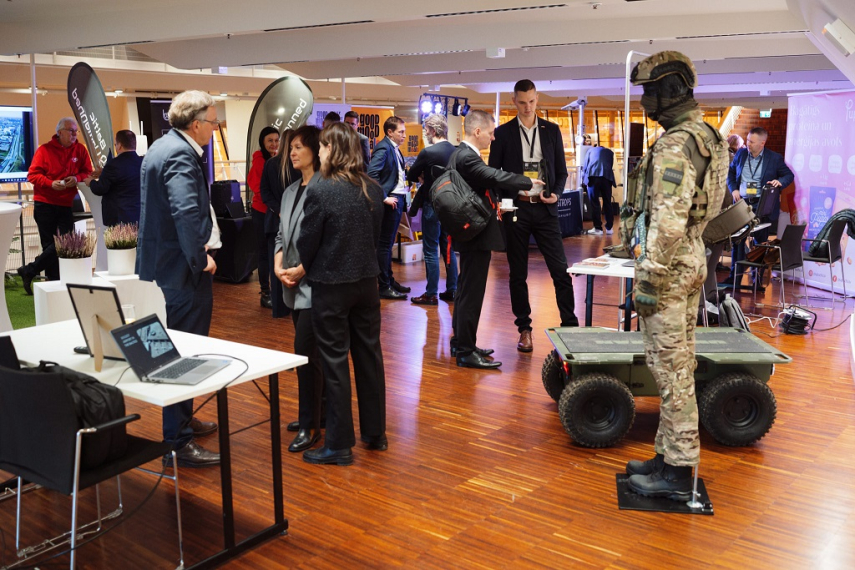
RIGA - People in the Nordic and Baltic countries continue to live with a false sense of security, Janis Vanags, a board member of the Civilian Resilience Nordic (CIREN), said at the Nordic Resilience Summit, which is taking place in Riga on Thursday.
This conclusion is based on a survey conducted by the research agency Norstat in all three Baltic states, as well as in Finland, Norway, Sweden, and Poland.
The survey found that a majority of residents in almost all of these countries, with the exception of Lithuania, have never participated in civil defense or crisis management training. In Lithuania, 60 percent of residents have participated in such training at some point, while in the other countries these figures are lower: 40 percent in Latvia, 38 percent in Poland, 33 percent in Estonia, 30 percent in Sweden, 26 percent in Norway, and 24 percent in Finland.
Furthermore, in Lithuania, 39 percent of respondents have participated in such training over the past five years.
The survey also found that if such free one-day training sessions were offered near respondents’ homes, Swedish residents would be the most likely to take this opportunity. Sixty-four percent of respondents in Sweden said they would definitely or most likely participate. In Latvia, this figure is the lowest, with 44 percent of respondents saying they would definitely or most likely participate in such training.
At the same time, Vanags noted that the survey was conducted before the storm that struck at the end of August, and such events typically change people’s attitudes.
The survey also shows that Latvians would be the least likely to survive for three days with no or with only insignificant problems if they were left without water, electricity, communications, or the internet. Fourteen percent of the surveyed Latvians said there would be no problems, while 43 percent of respondents in Latvia acknowledged that they would face some difficulties. By comparison, 34 percent of respondents in Norway said this would not cause any problems, while 43 percent of residents said they would face minor problems.
Asked whether they have a bag at home containing the necessary items to leave the house in a hurry, or the so-called 72-hour bag, a relatively small proportion of respondents in all surveyed countries said they had the bag already in place.
A 72-hour bag containing all necessary items has been packed by 4 percent of people in Poland, 3 percent in Lithuania and Finland, 2 percent in Latvia, and just 1 percent of respondents in Sweden, Norway, and Estonia. Between 15 percent of respondents in Poland and Sweden to 24 percent of respondents in Lithuania stated that they have not packed a bag, but have the necessary items at home.
At the same time, a significant number of people do not plan to pack such a bag at all. The highest proportion of people giving this answer was in Sweden, where 47 percent of respondents do not plan such preparation. In Lithuania, by comparison, 29 percent of the surveyed people do not plan to pack a 72-hour bag. In Latvia, the figure is 38 percent.
Asked how likely it is that, within the next two years, they will be affected by an emergency that will seriously disrupt their daily lives, residents of Lithuania (35 percent), Latvia (50 percent), and Estonia (42 percent) were proportionally the most likely to respond that it is very likely or somewhat likely that this will happen.
The survey also found that Sweden is the only country where more than half of respondents reported that their workplace has a plan for an emergency. In Latvia, this figure is the second lowest, at 41 percent. Workplace readiness in Poland proved to be even lower, at 35 percent.
The survey was conducted in all seven countries in August of this year, with at least 500 residents aged 18 to 74 surveyed in each country.

Please enter your username and password.

2026 © The Baltic Times /Cookies Policy Privacy Policy