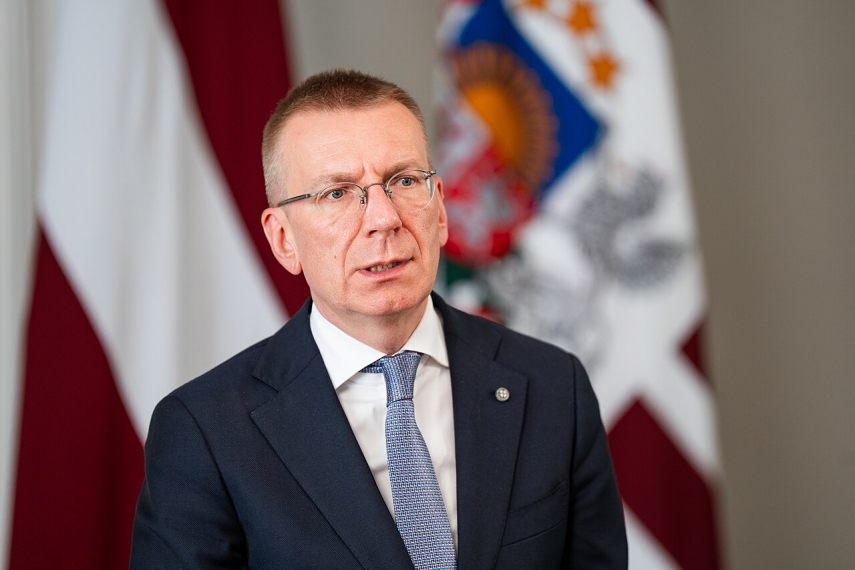
RIGA - No country will be able to do without nuclear power after 2040 if current trends prevail, Martins Cakste, CEO of Latvian energy group Latvenergo, said Wednesday in an interview on Latvian Radio.
Commenting on current trends in electricity consumption, Cakste noted the high level of electrification and highlighted the large amount of energy spent on powering artificial intelligence (AI) technologies. Renewable energy sources alone - wind and solar - will not be enough, the Latvenergo CEO said.
Meanwhile, Climate and Energy Minister Kaspars Melnis (Greens/Farmers) said on Latvian Radio that if there is such strong public resistance to the development of wind farms in Latvia, it is unlikely that anyone will agree to live next to a nuclear power plant. Obviously, a nuclear power plant would have to be built in a location with appropriate infrastructure, including power transmission lines, and this would not be deep in a forest where nobody could see it, the minister said.
Another challenge, according to Melnis, would be the cost of building small modular nuclear reactors, which is far from low. The minister said that the main benefit of nuclear power would be low costs, but that, as things stand, prices are quite high and difficult to predict.
As reported, the Climate and Energy Ministry is planning to commission an assessment of nuclear energy development prospects in Latvia for EUR 1.425 million, according to information from the Procurement Monitoring Bureau.
The Climate and Energy Ministry has published a notice of consultation of suppliers for the procurement "Assessment of Nuclear Energy Development Opportunities in Latvia", and the tender is expected to be launched in February.
The tender specification, available in Latvia's electronic procurement system, states that the main objective of the assessment is to provide a comprehensive, data-driven analysis that would serve as a basis for policy and decision-making on the development of small modular reactor (SMR) nuclear power in Latvia.
The winner of the tender will be required to carry out a comprehensive assessment of SMR power development opportunities in Latvia, covering technical, legal, environmental, social, financial, and economic aspects.
As LETA reported, in May 2025, the government instructed the Climate and Energy Ministry to start work on the preparation of the initial phase of the nuclear power program by September 1, as well as to assess the possibilities of cooperation with Estonia in the construction and operation of a nuclear power plant.
In November, the Climate and Energy Ministry reported that it had contacted the Estonian Climate Ministry on Estonia's planned activities related to nuclear energy development, including the preparation of regulation and supervision.

Please enter your username and password.

2026 © The Baltic Times /Cookies Policy Privacy Policy