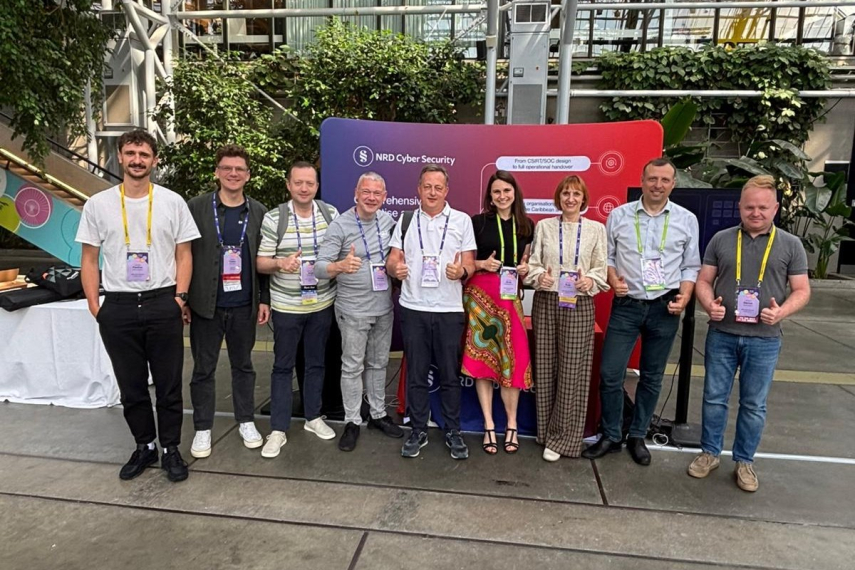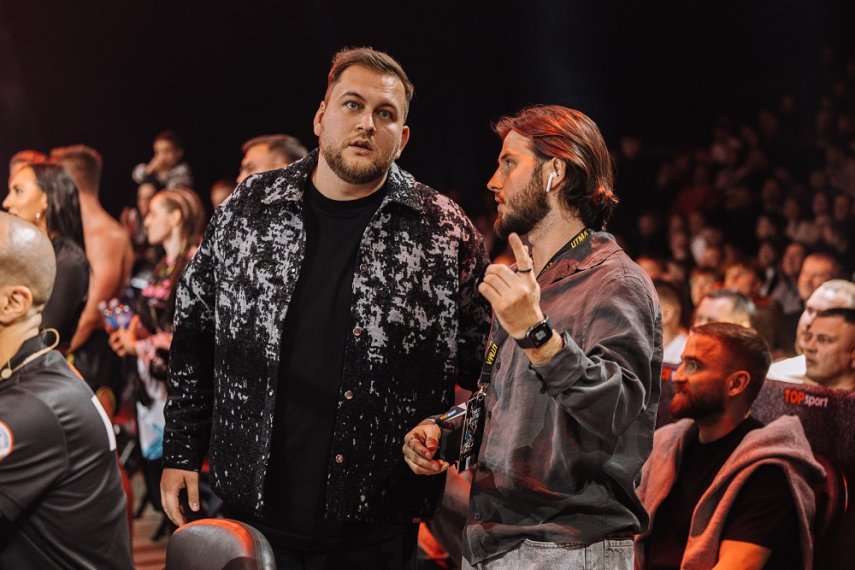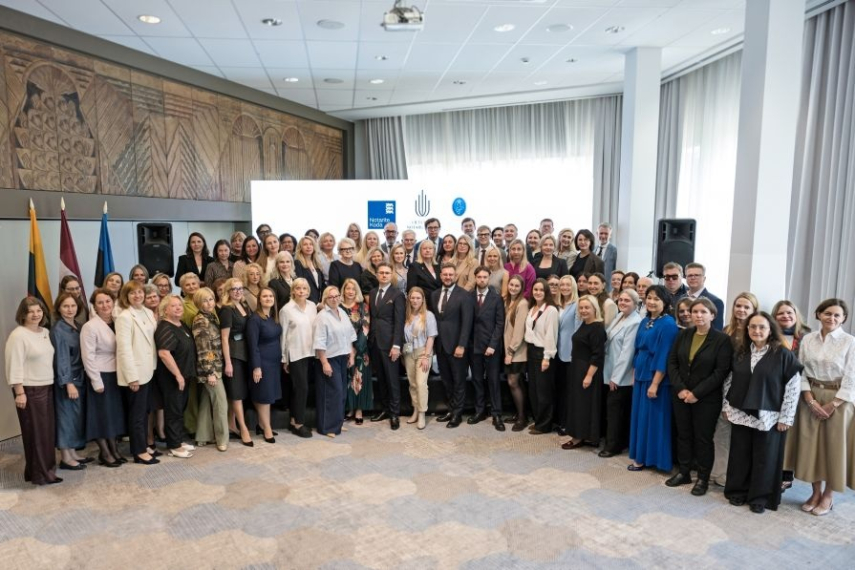

WARM WELCOME: Ahmadi Baz Mohammad's team were made to feel at home in Lithuania (Ahmadi first on left)
The Governor of the Ghor Province Ahmadi Baz Mohammad made a working visit to Lithuania Nov. 12-16 with seven delegates from his Ghor Provincial Recronstruction Team (PRT). He spoke exclusively to The Baltic Timesabout his impressions and hopes for the future.
How
do you view Lithuania's involvement in
rebuilding the province?
The Lithuanian PRT in our province really
helps and we have good cooperation on security. As the name implies it should
be more involved in the reconstruction side of the province. We aren't
satisfied so we also want to talk about the issue with the President and
parliamentarians.
Since
this is your first time in Lithuania, what have you found most
interesting?
This is the first trip for all of us. We foundLithuania a very beautiful country and the people are very hospitable. It's
the cold season, and the kindness of the people can help us overcome the cold
climate!
What
are your most pressing needs in Afghanistan?
The needs are different from one province
to another. In our province, more funding is needed in healthcare and
agriculture but the top priority is road construction.
Why
is that top of the list?
Road construction is the top priority
because it opens the province to the other provinces in the country. What the
poor people in our province have is agricultural products. They can find
markets for such products so the roads would help to improve living standards
of the people. When the roads are reconstructed, the people will be able to buy
more [with the money that they are now earning] so prices will be lower and the
standard of living will increase. People will have access to other provinces
for marketing their products.
The construction of the roads also paves the way for other organizations, aid organizations and NGOs, to come to the province and do other development projects. The main point is they cannot access to the remote areas. They are not able to transport their equipment for projects so that's why they're not interested in implementing any projects in the provinces.
Another main point is that when there are critically sick people we don't have well equipped hospitals and clinics in our province. Roads connecting the provinces together would allow us to refer our patients to other provinces that have well-equipped hospitals and clinics. It would save lives.
The roads would help to maintain better
security in the areas because security forces would then be able to have access
to areas of criminal activity.
When
you visit remote villages and schools, what are some of the observations you
find from students and families?
Actually 15 to 30 percent of the schools in
our province have school buildings. So it means that the rest are in tented
schools or open air schools and the problem is that students are standing under
the sun or sitting on the wet ground. You don't see enough books. We don't have
professional teachers who have education in a particular subject. Also, we
don't have any libraries for students to study for exams. But fortunately, the
people in the area are really taking care in one issue - security - so that
their children can go to open air schools without any fear of being attacked.
There
was a rocket attack in your province recently. Fortunately no-one was seriously
injured, but how safe is Ghor province?
Indeed our country has enemies. The
fundamentalists, Al-Qaeda and the Taliban, are trying to show that security is
not good throughout our country. The explosion one month ago was the enemy's
investment of a year. After a year of planning they succeeded in firing some
missiles. Fortunately, there were no losses or damages. I don't have concerns
about it, comparing Ghor with other provinces, especially other neighboring
provinces; we are the safest because the people are not supporting the enemies
of the government. We have tried to identify who were behind the explosions and
will arrest them soon. All of these activities are planned and implemented by
people not in Ghor province.
Lithuanian
Defense Minister Juozas Olekas said there is a possibility to train Afghan
officers in Lithuania. What are some of the
legal implications or funding necessary for such a move?
I'm not involved in that part of the issue. That
will be under discussion with the Minister of Defense. But what we have
suggested with our Lithuanian friends is that some Afghan police officers could
be trained in Lithuania. Then, they can go back and train the police in Ghor. So it will be
helpful.
Because we don't have well-trained police in our province, the main idea is that some of the officers, the talented ones, can go for a longer period of training for three to six months [in Lithuania] and then go back to the province and train the police.
What
do you say to the growing unpopularity among Lithuanians of the missions in Afghanistan and Iraq?
So the situation in Afghanistan is different from Iraq. We
have the international community in Afghanistan maintaining the security. We know that Al-Qaeda are not just
enemies of our country. They are enemies of our world. Doing a mission in Afghanistan means that you're not only assisting us to maintain our security
but somehow you are maintaining your security and taking part in world
security. So hopefully, this Lithuanian mission will continue and they will assist
us to maintain security and have a part in maintaining peace and the stability
in all over the world.
The world is like a village. If there is a
problem or insecurity in a corner of this village, it affects the whole
village.
We have good cooperation, security and a
long-lasting relationship but what is being done with reconstruction, we should
have more activities as the name implies."

Please enter your username and password.

2026 © The Baltic Times /Cookies Policy Privacy Policy