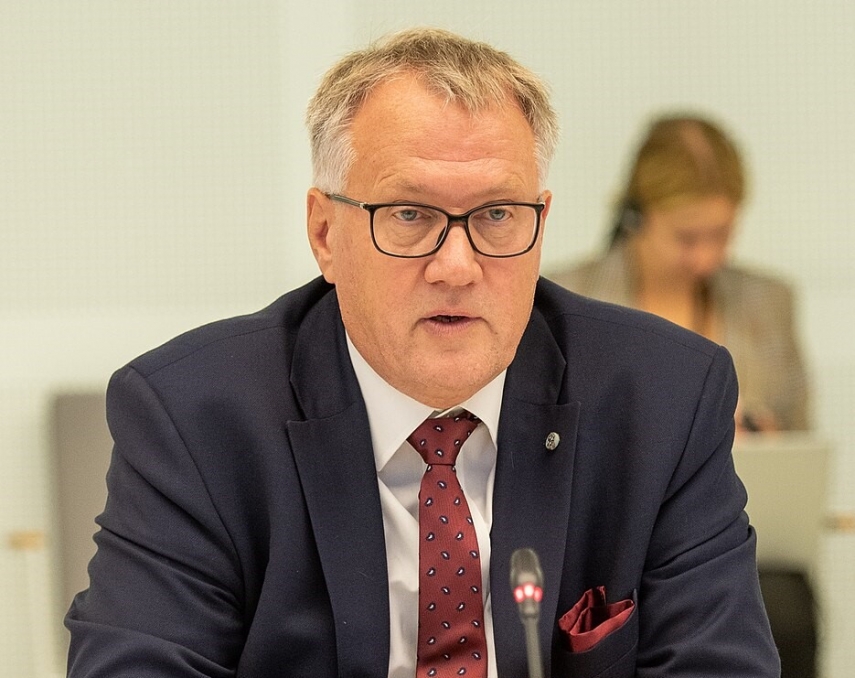
RIGA - Smart Administration and Regional Development Minister Raimonds Cudars (New Unity) has promised to rewrite the proposal for the Nature Protection Plan for Marine Protected Areas, the minister's spokeswoman Sabine Spurke informed LETA.
In light of the views expressed by stakeholders, including coastal fishermen and water sports representatives, on the proposals for marine protected areas and the rules for their protection and use contained in the nature conservation plan, the public consultation on the Nature Protection Plan for Marine Protected Areas has been suspended.
Consequently, the Nature Conservation Agency's proposals will not be pushed forward, and work will continue to rework the plan.
At the beginning of December, a public consultation on the Nature Protection Plan for Marine Protected Areas was held at the Nature Conservation Agency's Salacgriva office.
As Ilze Sabule, the manager of Nature Conservation Agency's Life Reef project, informed LETA, the task of the nature protection plan is to balance the interests of nature protection and economic activities, ensuring the preservation of natural values, as well as undisturbed development.
The Marine Protected Area Network was established in 2010 and is part of the Natura 2000 network of nature protection areas in the territory of the European Union (EU). Its purpose is to ensure the conservation of marine habitats, species, and the protection of feeding and wintering grounds for migratory birds.
In the project, marine biodiversity was mapped in the waters of the Exclusive Economic Zone, reviewing available data on marine waters adjacent to Latvia, and proposals were made for expanding the network of marine protected areas, while creating different functional zones to ensure sustainable conservation of biodiversity and implementation of economic activities.
Coastal fishermen have voiced their opposition to the draft plan, arguing that it would disproportionately restrict fishing.
According to the fishermen, the Nature Conservation Agency proposes to substantially restrict fishing in vast marine territories off Latvia's coast. According to the fishermen, this would have an extremely adverse impact on commercial activity in many villages and towns along the coast of the Gulf of Riga and the Baltic Sea, where fishing, fish smoking, and processing are important businesses for hundreds of families and companies.

Please enter your username and password.

2026 © The Baltic Times /Cookies Policy Privacy Policy