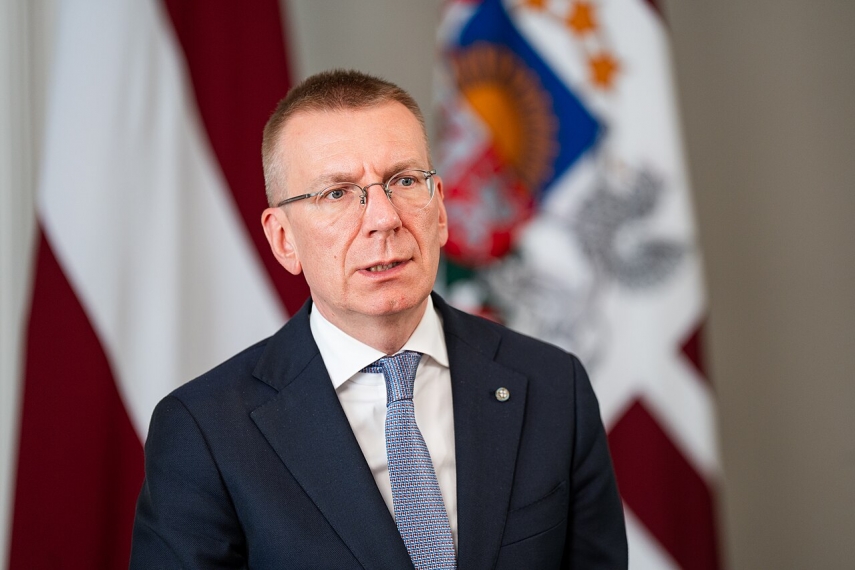
RIGA - The Military Council during a meeting at the Navy Headquarters in Liepaja on Friday discussed anti-mobility risks and solutions, including railroad tracks connecting Latvia with Russia and Belarus, President Edgars Rinkevics' advisor Martins Dregeris informed LETA.
Rinkevics heard the National Armed Forces' report on implementation of anti-mobility measures, potential risks to national security, and solutions to mitigate and avert such risks.
The Military Council discussed the need for a detailed and comprehensive report on the timeframes, scope of work and resources for the most effective protection of the country's eastern border.
The Military Council also emphasized military coordination with Estonia, Lithuania and NATO, as well as inter-institutional cooperation, while underlining that cooperation and communication with the public is also essential.
The Military Council discussed the status of NATO's capability objectives, the resources needed to meet Latvia's commitments, and adequacy of defense spending in 2026 to meet these objectives within the timeframes set.
According to the Military Council, the priority now is for Saeima to approve next year's budget and the budgetary plan for 2026-2028 in order to ensure funding for strengthening national security.
The Military Council and Navy Commander, Fleet Admiral Maris Polencs discussed development of the Naval Forces with a focus on the security situation in the Baltic Sea.
Discussion with Liepaja Mayor Gunars Ansins (Liepaja Party) focused on development of the military infrastructure of Liepaja Port, taking into account its strategic importance for meeting the needs of the National Armed Forces and allied ships.
As reported, several ministries and security authorities have been instructed to prepare an opinion by the end of the year on the impact of the demolition of the railway tracks on the Russian border on Latvia, commercial TV3 television reported on Sunday.
Rinkevics said that he would discuss the matter with the presidents of Lithuania and Estonia in Riga in early December.
If the government completes its analysis by the end of 2025, the issue will then be discussed by the National Security Council, where both the government and Saeima are represented, said Rinkevics.
TV3 learned that the possibility of cutting the railway tracks in the direction of Russia has been discussed in closed-door meetings in Latvia. According to Latvian and foreign military analysts, the existence of this link is the most immediate security risk.
Military and economic analysts interviewed for the TV program said they believe the existing rail links with Russia are a security threat. It would therefore not take long to dismantle these tracks.
Transport Minister Atis Svinka (Progressives) told the program that the situation needs to be assessed because the removal of the tracks towards Russia will completely stop transit business in Latvia, including for goods from Asia.
International relations and defense researcher Colin Smith told LETA in an interview that in order to strengthen Latvia's military security, at least the unused rail tracks east of Daugavpils to Russia should be demolished, because without the railway Russia's ability to launch an invasion of Latvia would be significantly complicated.

Please enter your username and password.

2026 © The Baltic Times /Cookies Policy Privacy Policy