TALLINN - The longer energy prices remain high, the more systemic their impact on the economy becomes, and the more they accelerate inflation and slow down economic growth, both in Estonia and in the eurozone as a whole, according to Tõnu Mertsina, chief economist at Swedbank.
"Uncertainty over how long the Strait of Hormuz will remain closed, along with the partial destruction of energy infrastructure in the Middle East, is keeping energy prices high. Although this is currently a serious geopolitical shock for commodity markets, which has hit the supply of energy and other raw materials, it is not thought to be a permanent problem," Mertsina noted in a press release.
The economist pointed out that, first and foremost, the rise in crude oil prices obviously affects fuel prices in Estonia. Motor fuel prices are strongly correlated with global crude oil prices. Petrol and diesel account for nearly 4 percent of the Estonian household consumption basket, while total energy expenditure makes up about 13 percent.
"Natural gas reserves, which will be used in the autumn, are currently being restocked at higher prices, which in turn will add to inflation. However, the share of natural gas in the Estonian economy as a whole, including in households' final energy consumption, is only 6-7 percent," Mertsina conceded.
The longer energy prices remain high, the more systemic their impact becomes on the economy. Consequently, the European Central Bank has already significantly raised its inflation forecast for this year and cut its economic growth outlook. "While in December, a price increase of 1.9 percent was expected for this year, it is now 2.6 percent. However, according to the central bank's assessment, eurozone inflation should fall back to 2 percent by next year, which is, as is known, the central bank's monetary policy target. This is consistent with the expectations of commodity markets, which suggest that the current high energy prices may be temporary," Mertsina explained.
However, financial markets are more pessimistic about eurozone inflation, he said. "While just last week, the European Central Bank was expected to raise interest rates twice this year from the current 2 percent, for a total of 0.5 percentage points, this expectation has now risen to almost three hikes. However, it should be noted that although the war in the Middle East has been going on for almost a month, there is a tendency to overreact at the beginning of crises," the economist said.
This does not necessarily mean that the financial markets' expectations are wrong, he added. "While it was recently felt that the central bank had too little firm evidence of the need to raise interest rates, several major international banks have now emerged who believe that at least a temporary tightening of monetary policy is inevitable," Mertsina added.
According to him, the pessimism of the financial markets is demonstrated by the rapid rise in Euribor and its interest rate expectations in March. For example, while the 6-month Euribor had already risen to nearly 2.5 percent by March 26 - almost 0.6 percentage points above the low point in the middle of last year - an interest rate of just over 3 percent is expected by this December. "However, it must be borne in mind that this is only an expectation reflecting the current situation, which will change along with the war in the Middle East and the outlook for energy prices," the economist stressed.
Despite the rise in market interest rates, the demand for housing loans in Estonia has grown. In Mertsina's view, higher-than-expected inflation may slow the improvement in the purchasing power of Estonian households, but it is unlikely to reduce it. With the abolition of the tax hump, the weighted net wage of households is expected to see a strong increase this year, which will still ensure an improvement in purchasing power at current higher energy prices.
"For example, at current fuel prices, the difference from last year is not significant when comparing how much car petrol can be bought with the average net wage. However, the faster general price increase affects lower-income people more strongly - especially since the effect of abolishing the tax hump is modest for them," the economist noted.
At the same time, according to Mertsina, households with loan obligations must add slightly higher interest payments to the increased costs due to faster price growth, which may ultimately slow the recovery of private consumption.
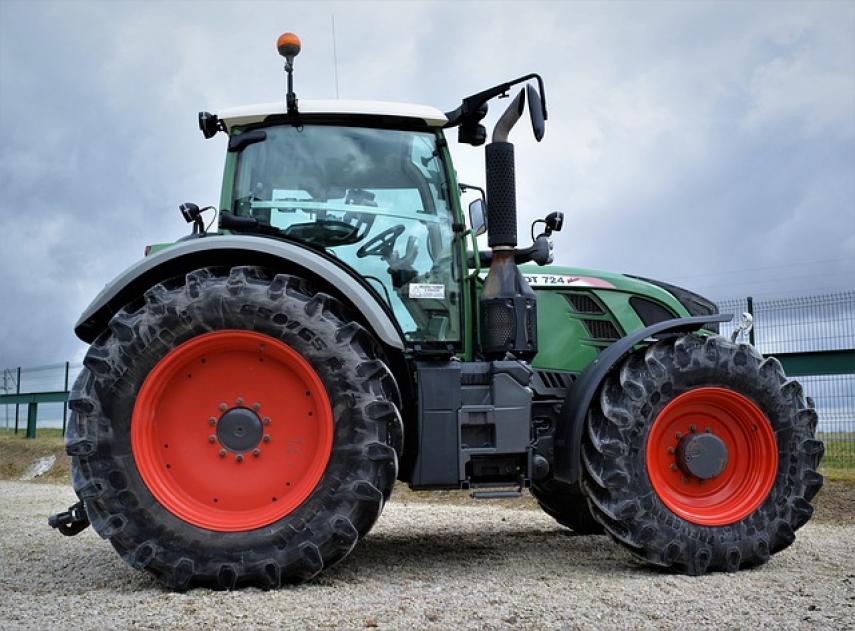
"In Estonia, higher energy prices affect the transport sector and agriculture and forestry more than households. As recently as February, global food commodity prices were below the peak reached last summer. However, if energy prices remain high, the higher costs in agriculture, transport, and the food industry will be passed on more to food prices," Mertsina said.
In the manufacturing industry, higher energy prices have the greatest impact on the paper and chemical industries, as well as the production of industrial oils and building materials, he said. "According to a comparison of European Union countries from a few years ago, the share of purchased energy in net turnover in Estonian manufacturing was above the EU average. It was roughly the same as Lithuania, but considerably higher than in Finland and Sweden. As producer prices in Estonian manufacturing have risen more than the eurozone average over the last five years, and also faster than in our main trading partners Finland, Sweden, Latvia, and Lithuania, high energy prices could deal a new blow to the competitiveness of Estonia's export sector," the economist added.

Please enter your username and password.

2026 © The Baltic Times /Cookies Policy Privacy Policy