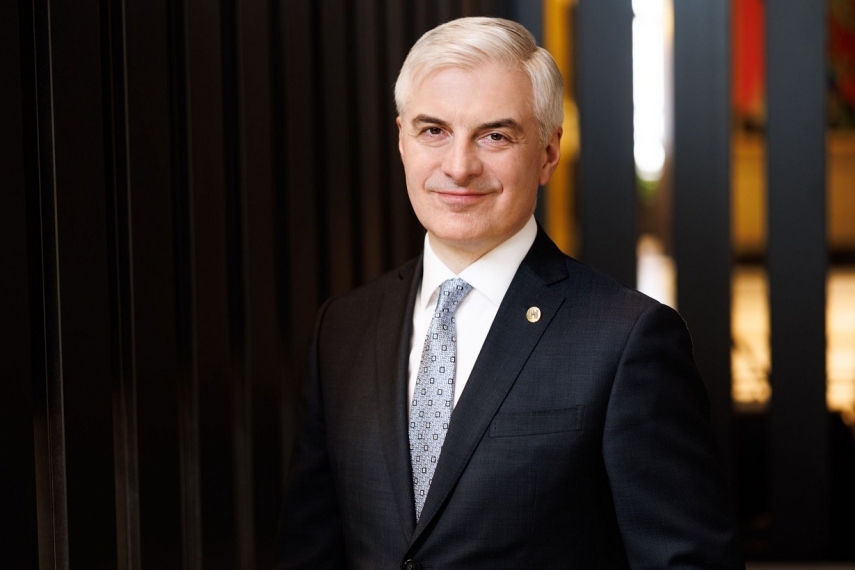
Photo: DRS Clinic is a family business: Ryte Samsanaviciene serves as Director, while her husband, Donatas, Doctor of Medical Sciences, is a plastic and reconstructive surgeon
In a market where personalization is often promised but not always delivered, Lithuania’s DRS Clinic has built its reputation by combining surgical precision in plastic and reconstructive surgery with impeccable legal and ethical governance, fostering long-term patient trust. Ryte Samsanaviciene, Director of UAB DRS Medicinos Grupe, which operates the clinic, and Head of the Justice Department, told The Baltic Times Magazine: “True personalization is not about offering more procedures – it is about building systems that protect patients even when saying no is the harder decisions. From consent protocols to recovery pathways, every detail at DRS Clinic is designed to support long-term wellbeing, not short-term trends.”
What gaps in the market inspired you to create such a specialized clinic?
DRS Clinic was founded to redefine personalization in modern plastic surgery. Combining surgical precision with legal and ethical governance, the clinic operates as a boutique, low-volume practice focused on natural results and long-term outcomes. Its leadership brings together medicine and law to create a patient-centered model built on trust, safety, and accountability.
When we started DRS Clinic, we were responding to several gaps we consistently observed in the market. The first was the disconnect between what patients were promised in terms of personalization and what they actually received. Most clinics talk about customization, but the care pathways are still largely standardized. We saw a clear opportunity to build a practice where every step – from assessment to long-term follow-up – is truly individualized to the patient’s anatomy, goals, and lifestyle.
Another gap was the overall patient experience. Individuals seeking higher-end aesthetic procedures often need to move between multiple providers for imaging, planning, and aftercare. That fragmentation creates uncertainty. We wanted to create a fully integrated environment where patients experience continuity, clarity, and accountability from the first consultation onward.
We also felt the market wasn’t serving people who value subtlety, longevity, and natural-looking outcomes. A significant portion of the industry is geared toward high throughput, which can compromise attention to detail. Our clinic was designed for patients who prefer a slower, more deliberate process and a surgeon who is willing to say no when a procedure is not in their best interest.
Finally, we noticed rising demand for privacy, discretion, and a boutique environment. By limiting our daily caseload and investing in advanced diagnostic tools, we created a setting where surgical planning becomes both more precise and more transparent. In short, DRS Clinic was built to fill the space between medical rigor and a deeply personalized, human experience.
At DRS Clinic, personalization goes beyond surgery. How does integrating nutrition, rehabilitation, and long-term follow-up change outcomes?
At DRS Clinic, personalization is not a slogan; it is the operational backbone of the practice. When we integrate surgical planning with individualized nutrition, functional rehabilitation, and long-term follow-up, the patient experience and outcomes shift in several meaningful ways.
First, this approach creates greater biological readiness for surgery. Patients who receive tailored nutritional guidance often exhibit better tissue quality, more stable inflammatory responses, and stronger overall resilience. That translates into smoother recoveries and more predictable healing trajectories.
Second, recovery becomes more structured and efficient. Rehabilitation is customized based on the procedure, the patient’s lifestyle, and their recovery benchmarks.
Third, personalization enhances aesthetic consistency over the long term. By aligning surgical technique, post-operative care, and ongoing maintenance strategies, we protect the results beyond the initial healing period.
You both come from different professional backgrounds – law and surgery. How do these perspectives complement each other?
Our dual backgrounds create a balanced leadership structure. From the surgical perspective, the clinic is built on clinical rigor, patient safety, and technical excellence. Every operational decision is grounded in medical integrity.
The legal perspective introduces discipline in risk management, regulatory compliance, patient rights, consent protocols, and governance. Together, these perspectives reduce operational blind spots and allow innovation to be implemented responsibly.
As a medical lawyer and academic author, how does your legal expertise influence standards at DRS Clinic?
My experience ensures that our consent and disclosure processes are exceptionally clear, evidence-based, and genuinely informative. We take a conservative approach to patient eligibility and procedural recommendations, declining requests that do not align with long-term wellbeing.
I also oversee policy development and regulatory compliance, ensuring operations exceed requirements in data protection, documentation, and cross-border patient management.
As a surgeon and PhD in medical sciences, how do you ensure precision and safety?
I maintain a research-driven clinical environment where techniques are adopted only if supported by robust data. Continuous training, strict surgical protocols, and detailed pre- and post-operative monitoring ensure precision and safety.
DRS performs around 1,000 surgeries a year with six surgeons. How do you maintain an individualized approach?
We rely on standardized planning frameworks, tight daily case limits, and a highly trained multidisciplinary team. Integrated digital workflows and internal calibration sessions allow personalization to remain scalable without dilution.
How do your personal hobbies influence your approach to patient wellbeing?
Healthy lifestyle writing reinforces sustainability and education, while cooking after surgery reinforces respect for timing, balance, and preparation. Together, these perspectives remind us that surgery is only one component of wellbeing.
How do you remain ethically grounded in a trend-driven aesthetic market?
We operate on clinical necessity, not commercial opportunity. Surgeons are evaluated by outcome quality rather than volume, and new techniques are adopted only after evidence-based review. Transparency and realistic expectations are central.
Looking ahead, what is next for DRS Clinic?
Our focus is expanded precision planning, deeper multidisciplinary care, and selective growth of specialized services. Our vision is evolution, not expansion for its own sake – strengthening quality, safety, and long-term outcomes.

Please enter your username and password.

2026 © The Baltic Times /Cookies Policy Privacy Policy