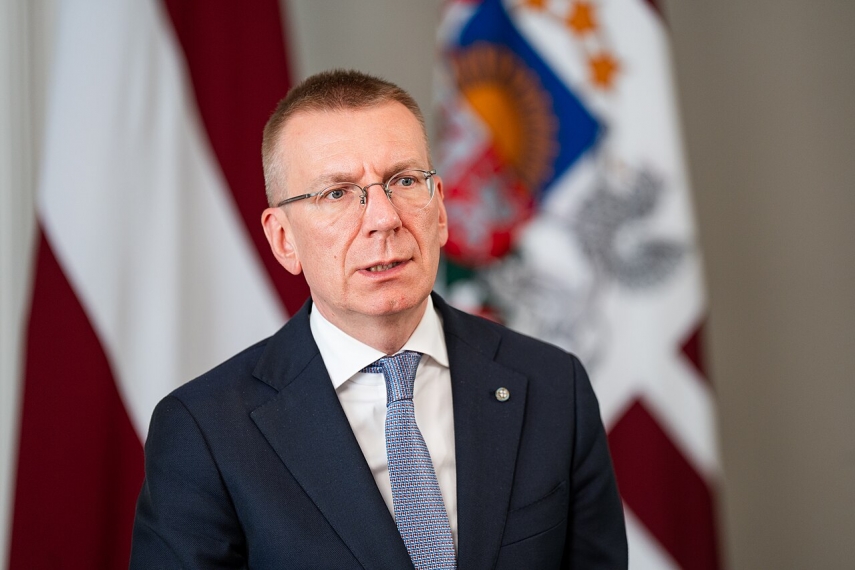
Photo: Karl Georg Sigurbjornsson is Honorary Consul of Latvia in Iceland
Karl Georg Sigurbjornsson, a lawyer by profession and Honorary Consul of Latvia in Iceland since January 2023, has played a key role in deepening relations between the two countries. “The idea of doing pro bono work as a Consul for the good of the Latvian Republic and Latvians appealed to me, as Latvia has been my second home for a long time,” Sigurbjornsson told The Baltic Times Magazine, reminiscing about the beginning of his tenure.
What motivated you to accept this position?
I assumed the role of Honorary Consul in January 2023. My motivation for becoming the Consul was numerous requests to do so from the Latvian Community in Iceland. The situation was that the former Consul for Latvia in Iceland had resigned because of his age, and there was no Consul here for approximately two years. My wife, who is Latvian, is active in the Latvian Community in Iceland, and the fact that I am a lawyer helped me to step forward and apply for the position. The motivation was also the idea of helping Latvians to navigate the systems in Iceland and do good for them, and there was a real need for that service. The idea of doing pro bono work as a Consul for the good of the Latvian Republic also appealed to me, as Latvia has been my second home for a long time. When I assumed the role of Honorary Consul, I had the privilege to meet H.E. Edgars Rinkevics, then Foreign Minister of Latvia and soon thereafter the President of Latvia. I am proud to be able to serve the citizens of Latvia that live in Iceland.
How has your consular work and the scope of your activities evolved over the years?
Surprisingly, the role as Consul for Latvia in Iceland is way more time-consuming than I thought initially. There is an approximate population of 3,000 Latvians living in Iceland now. Also, there are Latvian companies that are interested in the Icelandic market with requests for connections with Icelandic companies. Therefore, it can be challenging to serve all requests that I get as the Consul. The market in modular wooden houses, for example, is expanding in Iceland, and a lot of Latvian companies are involved in that field here.
Can you recall an extraordinary case in which you successfully assisted a Latvian national?
I have helped numerous Latvians in all sorts of activities, and there are a few stories that are memorable. One such story is that I helped to facilitate getting a national identity number for a Latvian in Iceland who had lost his documents. The documents were needed to get the Icelandic identity number, and the Latvian was in dire need to get it instantly because of his physical condition and access to a health centre, but the computer said no. By involving the National Police Commissioner and the Director for the National Registry in Iceland, we managed to get the identity number in a few days. These stories, however, are often about tragic events like the loss of lives and the help of the Consul in the aftermath of such events.
How large is the Latvian – and more broadly, the Baltic – community in Iceland, particularly in Reykjavík?
The Latvian community in Iceland is around 3,000 persons, but the Baltic community is around 8,000 to 10,000 persons. Lithuanians are thought to number around 5,000, and Estonians around 1,000.
Which Icelandic–Latvian business ventures would you highlight as the most successful examples of cooperation?
I would think now the most successful examples of cooperation between Latvia and Iceland are the projects with modular wooden houses that are ongoing in Iceland. There have been a few hotels built, and there is one ski hotel recently built in the northern region of Iceland. There is also rising interest in Iceland in Latvian drone technology, which is very sophisticated and futuristic.
What would be your thoughtful suggestion to the Latvian authorities for improving consuls’ efficiency and availability in carrying out their duties?
The cooperation with the Latvian government has been flawless, and there are very talented Latvian diplomats working in the Foreign Ministry and Embassies of Latvia. In Iceland, the Latvian embassy in Oslo, Norway, is responsible for Iceland, and there has been good support from the embassy for me as the Consul in Iceland. Our wish here in Iceland is to have more Latvian cultural events in Iceland and even help to stage artistic or cultural events here with the support of the Latvian government.
How would you describe the current cultural and economic relationship between Iceland and Latvia, and where do you see potential for deeper collaboration?
The cultural and economic relationship between the two countries is strong and getting stronger every year. There are cultural exchanges, and there are investments being done in both countries by respectively both nations. What has happened and is ongoing is the great kinship that has evolved between the Nordic countries and the Baltic countries. There is great potential for deeper collaboration for these nations together in economic and cultural forums in the years to come.
In your view, what role can small nations such as Iceland and Latvia play in promoting stability and cooperation in the region and beyond?
These nations can play a big role in promoting stability and cooperation within Europe and the North Atlantic region by leading by example and ensuring that civil rights are held high. Small nations have a voice in the international theatre and can be heard.
How would you describe the Icelandic people’s perception of the three Baltic states?
The perception Icelanders have of the three Baltic states is favourable. People from the Baltic states are honest, dedicated, and hard-working. Travelling to the Baltic states has become increasingly easier thanks to direct flights from Iceland to Riga and Vilnius. More Icelanders are visiting the countries, and therefore the Baltic States are getting increasingly recognized for their nature and culture in a favourable way.
Being fluent in the unique Icelandic language – and able to correctly pronounce the name of the volcano whose eruption once caused major air traffic disruption – have you learned any Latvian? What do you find most fascinating about both languages?
Eyjafjallajokull is a relatively simple Icelandic word (smiles) and there are more difficult words in Icelandic like Sauðarkrokur or Vestmannaeyjar. My understanding of the Latvian language is limited, but I understand basic things because I am married to a Latvian woman, and the Latvian language is spoken every day in our home. It is fascinating how different the languages are — Icelandic with such a hard accent, while Latvian is softer and more flowing.

Please enter your username and password.
2026 © The Baltic Times /Cookies Policy Privacy Policy