Germany has become the top country for applications to Estonia's e-Residency program: in 2025, applications by German residents grew by roughly 50 percent over the previous year, and German e-residents founded one-third more companies than in 2024.
"Cross-border entrepreneurship is gaining momentum in Europe, driven by startups and investors pushing to reduce fragmentation and simplify business across borders. Meanwhile, German entrepreneurs are increasingly discovering that Estonia already offers the advantages expected from the so-called 28th regime of the European Union," remarked Mats Kuuskemaa, head of German-speaking markets for the e-Residency programme.
In 2025, German citizens submitted 1,122 new applications to Estonia's e-Residency program, a 49% increase over the previous year. At the same time, entrepreneurial activity grew: the number of new Estonian companies founded by German e-residents reached 395, representing a 32% year-on-year increase and the highest figure in the past three years. The most popular field of activity among German e-residents' Estonian companies is business and management consulting (nearly 20%). A similar number of companies operate in programming, IT consulting, and software publishing. Over the years, more than 8,500 Germans have become e-residents, founding nearly 3,000 Estonian companies.
A Civey survey conducted in Germany at the end of 2025 on behalf of e-Residency revealed that the entrepreneurial spirit remains strong in Germany despite a complex economic environment. Among those who had not yet started a business, 27% cited bureaucracy as the biggest hurdle.
"Estonia’s main advantage is its fast, affordable, and fully online company registration, which is accessible to e-residents without physically traveling to the country. In Germany, where establishing a company is traditionally a time-consuming process, managing a company remotely using Estonian e-Residency has become an attractive alternative, especially for startups aiming to launch and scale quickly. Many German entrepreneurs say that managing a company in Estonia is less stressful than in their home country," Kuuskemaa noted.
According to Kuuskemaa, the growth of e-Residency in Germany is also linked to a broader trend of changing needs, as more entrepreneurs are operating internationally from day one and seek a clear, transparent, and digitally functional way to do so. "Entrepreneurs are not only looking for a good business idea, but also for an environment where bureaucracy does not impede growth, where things move quickly, the demands and rules are clear, and costs are reasonable. Estonia provides exactly that, as evidenced by the fact that half of e-residents are citizens of the European Union," Kuskemaa commented.
He added that since the main goal of the 28th regime is to help startups scale quickly across Europe and raise capital, Estonia's entrepreneur-friendly tax environment and its renowned unicorn-producing startup ecosystem further support the case for founding a startup in Estonia.
German e-resident: talent and a strong growth environment don't always come from the same place
Damir Tomicic, a German e-resident who has been building technology companies in Estonia for over 20 years, says Estonia's advantage lies in its digital state and business-friendly environment. Tomicic led Axinom Group for 23 years, growing it into a global software company serving the aviation, media, and entertainment sectors. He has since launched two new ventures through e-Residency: Business in Tech, which provides AI and cloud consulting, and run.events, an AI-based event management platform.
"Germany gave us engineers, but Estonia gave us the infrastructure to scale. Over the past 20 years of building technology companies across Europe, I've learned that great talent and great infrastructure don't always come from the same place. The smartest thing a founder can do is stop waiting for that to change and start building their company where the system works. For run.events, that meant starting in Germany and expanding through Estonian e-Residency. German engineering talent is world-class, but Estonia shows what happens when a country designs its business environment around people who are truly building the future," said Tomicic.
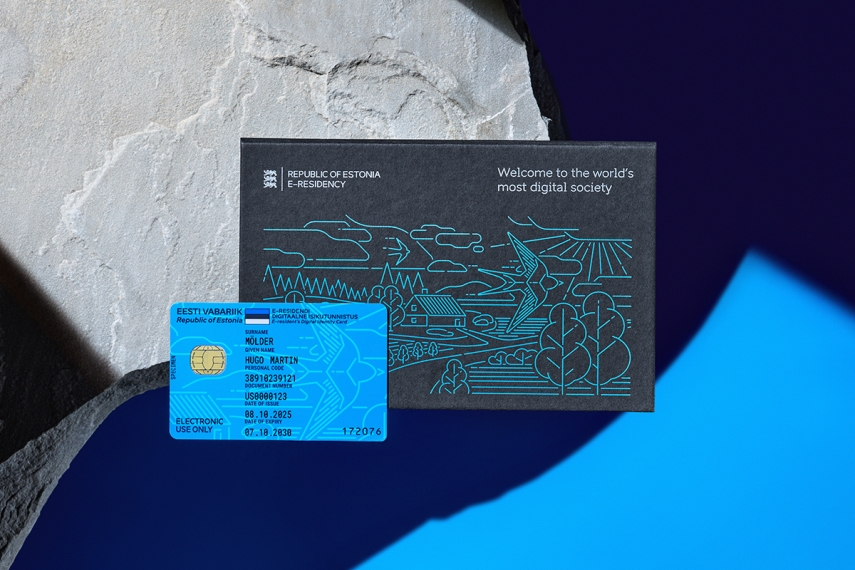
The e-Residency program was created at the end of 2014 to provide foreign citizens with secure access to Estonia's e-services and the ability to establish and manage Estonian companies. E-residents found one in five new Estonian companies each year, and over time, they have created more than 40,000 Estonian companies. Moreover, 38% of companies in Estonia's startup sector are linked to e-residents. The total revenue to the Estonian state by e-Residency has reached €418 million (including labor taxes, special income taxes, and state fees paid by companies founded by e-residents). In addition, e-resident entrepreneurs spend more than €15 million annually in Estonia on local business services. The e-Residency program is managed by the Estonian Business and Innovation Agency.

Please enter your username and password.

2026 © The Baltic Times /Cookies Policy Privacy Policy