Photo: AI generated
Waste sorting in Latvia is becoming increasingly important, as it has a direct impact on resource sustainability. However, sorting is often not of sufficient quality - many residents do not know how to properly separate glass, plastic, metal, paper and BIO waste, and are also unaware of how important it is to prepare waste for recycling. When knowledge and habits are not yet firmly established, mistakes can happen that reduce recycling possibilities. Yet with small improvements, each of us can significantly strengthen the positive environmental impact of sorting. The main obstacle is not unwillingness to sort, but a lack of practical knowledge and confidence. To make sorting effective and deliver real benefits, “Getliņi EKO” has compiled five tips on how to improve waste sorting at home.
Start with small steps and a convenient system
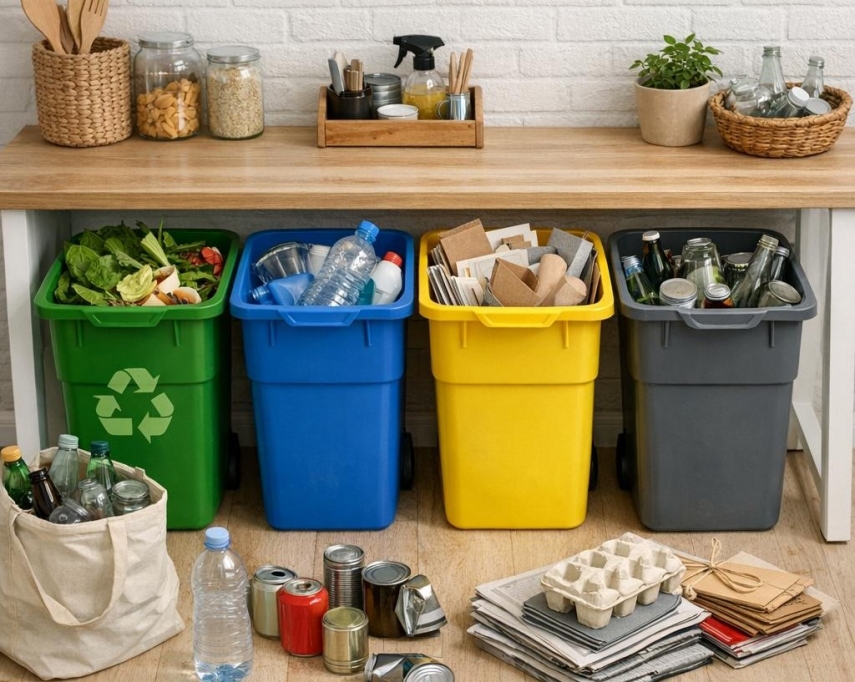
To make sorting at home simple and effective, you don’t have to change your entire household routine at once. Start with a simple, clearly organised solution - for example, a separate small container for each waste type, ideally in different colours. This approach helps build a consistent habit that gradually becomes part of everyday life, making sorting feel natural, convenient and motivating.
With a clear system that fits into daily routines, sorting more easily becomes an integral part of everyday life. At the same time, it becomes immediately visible how much and what kinds of materials can be sent for recycling. By starting with small, practical actions, sorting becomes not only easier and more hygienic, but also encourages continued environmentally friendly behaviour, because the results are visible and easy to track.
Before you throw it away - rinse it!
Correct sorting begins with everyday habits at home, not only at the containers. Packaging should be emptied and, if necessary, lightly rinsed before it is thrown away so that no food residue remains. Packaging that is too dirty can contaminate other materials in the container and make them unsuitable for recycling. It is also recommended to separate parts made of different materials - for example, remove metal lids from glass jars or plastic elements from cardboard packaging and to flatten packaging to reduce its volume. These simple steps significantly improve the quality of sorted waste.
Make sure you’re putting the right items in the right container!
We often assume: “If it looks recyclable, it must be recyclable.” Unfortunately, not all plastic, paper or glass packaging can be recycled. For example, paper packaging that has been in contact with food or grease is no longer suitable for recycling, because moisture and fats damage the structure of paper fibres. Paper towels and hygiene products are also not recycled due to their use and material composition. Special attention should be paid to glass waste - only packaging glass is suitable for recycling, while mirrors, window glass, ceramics and porcelain must not be placed in glass containers, just like perfume bottles. Their composition includes other materials that are not suitable for recycling. Window glass is generally considered construction waste and should be taken to a sorting facility. Therefore, plastic, paper or glass items that do not meet the requirements for sorted waste and are not construction waste should be placed in the mixed (non-sortable) waste container.
Make BIO waste sorting simple and convenient!
Sorting BIO waste at home can seem unpleasant, but with the right approach it becomes easy and hygienic. To avoid unpleasant odours and liquid build-up, it is recommended to store BIO waste in a small, well-ventilated container and dispose of it regularly, without waiting until it is full. For collecting BIO waste, paper bags or specially designed compostable bags are recommended. It is also important to avoid letting liquid food leftovers end up in BIO waste and, whenever possible, to drain food scraps first. Properly sorted BIO waste is used for biogas production and composting, reducing landfill burden and greenhouse gas emissions. Therefore, it is essential to ensure that plastic, metal or glass do not end up in BIO waste, as they interfere with this process.
Expand your knowledge about waste sorting!
To make waste sorting truly effective and conscious, general knowledge is just not enough. “Getliņi EKO” recommends expanding knowledge by learning sorting skills in an interactive and structured way. For example, the sorting courses created by “Getliņi EKO”, with the involvement of top-level athletes, help people learn about different types of waste, recognise common mistakes, and understand how correct sorting affects the environment. This kind of learning ensures that sorting becomes a conscious and effective everyday habit.

Please enter your username and password.
2026 © The Baltic Times /Cookies Policy Privacy Policy